







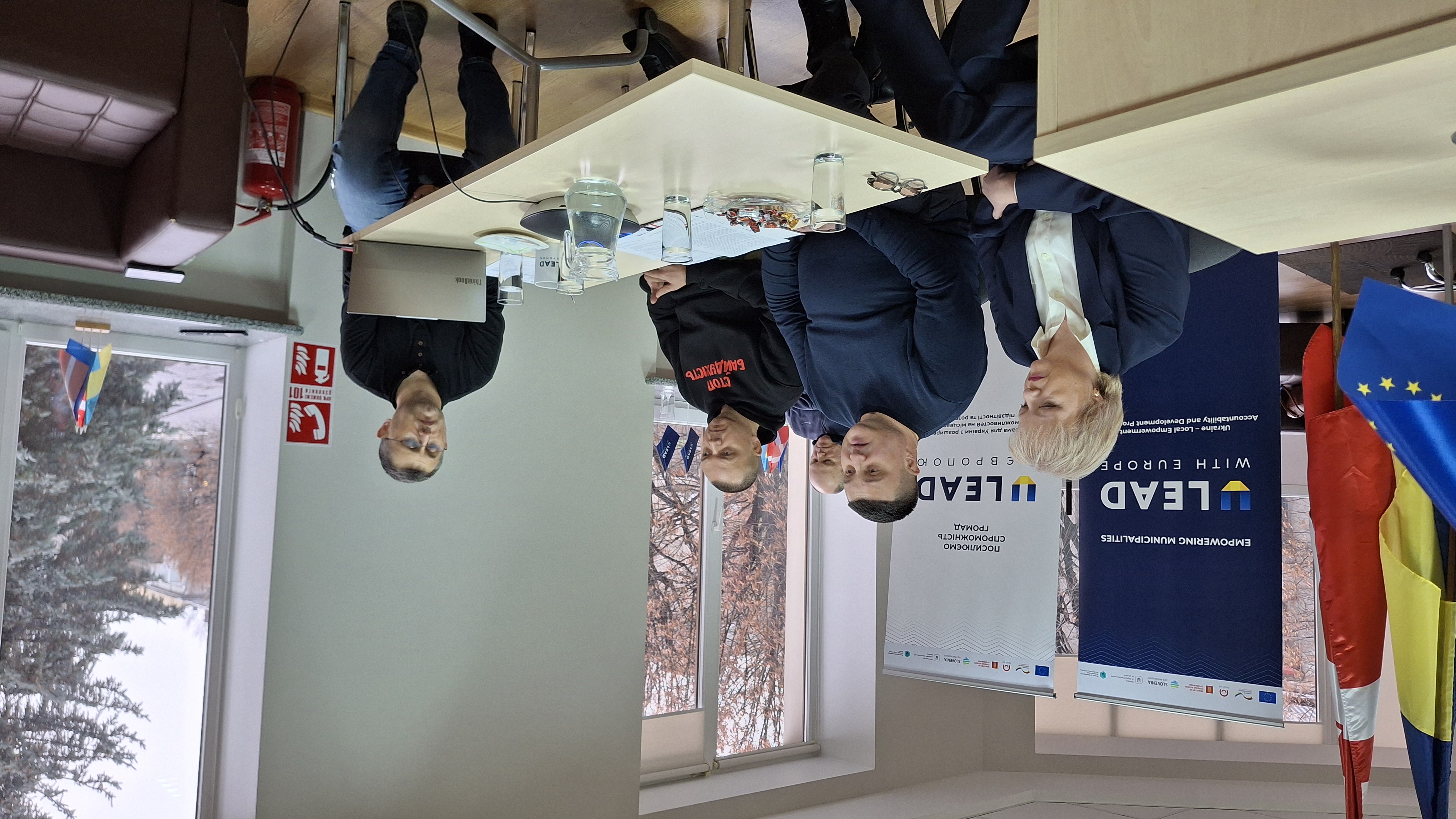
The Regional Office of U-LEAD with Europe together with the Department of Urban Planning and Architecture of the Volyn Oblast State Administration held a partnership event was held in the Volyn Oblast. It provided municipalities with important information about urban planning innovations and discussed the challenges associated with creating an inclusive barrier-free space.
Barrier-free is not an option but a necessity
During his speech, Anatolii Parkhomiuk, Head of the Regional Office of U-LEAD with Europe in Volyn Oblast, emphasised that creating an accessible environment was among the key tasks of municipalities, especially in wartime:
“The issue of accessibility has never been this pressing. Today, barrier-free spaces are not only about comfort. They are also about safety. This applies to our wounded defenders, people with limited mobility and parents with strollers. Municipalities must create comfortable and safe conditions for each of their residents.”
Achieving results, he added, requires establishing a dialogue between municipalities, the regional administration and experts. Joint activities enable a better understanding of the tasks and prompt the necessary support on the ground.
National Barrier-Free Strategy: the key role of municipalities
Vasyl Vasylenko, Head of the Department of Urban Planning and Architecture of the Volyn Regional State Administration, spoke about the importance of implementing the National Barrier-Free Strategy by 2030. According to his detailed explanations, the strategy covers six directions — from physical to digital and information accessibility:
“The everyday barrier-free experience is formed at the municipality level. People should feel supported and comfortable here, while studying, working or seeking shelter.”
The expert called on municipalities to create local accessibility councils as a tool for monitoring and implementing barrier-free standards at the design and construction stages: “Sometimes a ramp is there, but it is not functional — too steep or too narrow. It is vital to ensure control and cost-effectiveness at all stages.”
Municipal experience and problems on the ground
Public activist and war veteran Yevhen Syvoplias shared the results of inspecting pharmacies and social institutions in Lutsk for accessibility. Most turned out to be inaccessible to people with limited mobility: “Unfortunately, most facilities do not meet the needs of people with limited mobility. We must adjust approaches to factor in the interests of all residents.”
Olha Mamedova, Head of the Branch of the State Construction Expertise Department of Ukraine (UkrDerzhBudEkspertyza) in the Volyn Oblast, underlined the importance of the examination of urban planning documentation and control over compliance with standards.
“Municipalities often underestimate the need for barrier-free access, believing that this applies only to people with disabilities. However, the low-mobility population includes both the elderly and young parents. Creating a barrier-free space is a legal requirement that must be met,” she said.
Summing up the meeting, Anatolii Parkhomiuk urged municipalities to actively implement solutions to create barrier-free spaces and cooperate with experts to oversee the quality of work.
“Barrier-free access is a touchstone of the municipality development. Together, we are building a Ukraine where every resident feels comfortable and has equal opportunities. Municipalities must spearhead these changes,” he said. Furthermore, as he stressed, only through joint efforts of the authorities, the public and experts can progress be achieved in creating barrier-free spaces for everyone.