


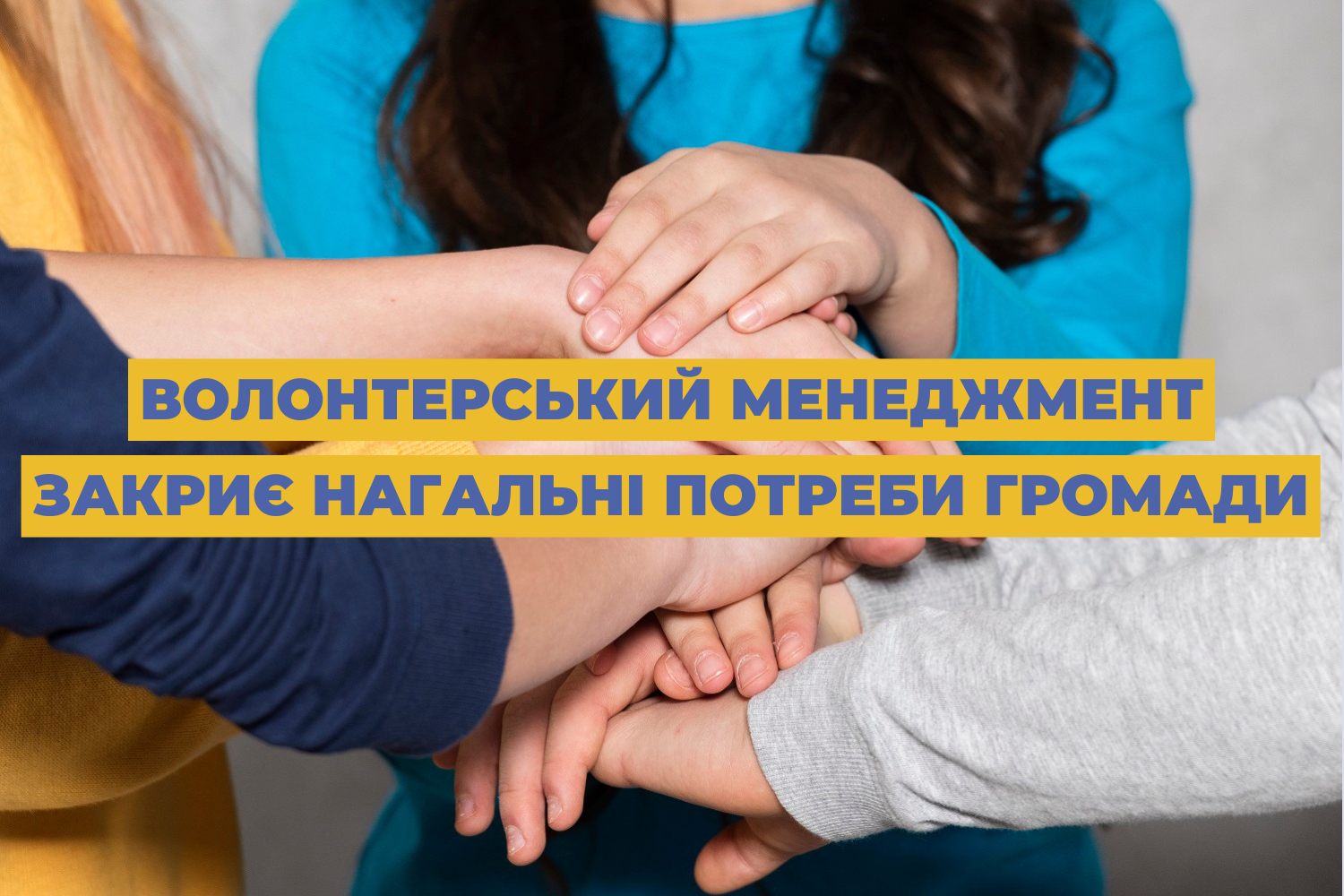
U-LEAD with Europe held an info session on the engagement and effective coordination of volunteers in the municipality. Local municipal officials learned about the basics of volunteering and volunteer management.
According to Mykhailo Shelep, Volunteering Direction Coordinator and Adviser on Decentralisation and Local Self-Government of the Regional Office of U-LEAD with Europe in the Rivne Oblast, volunteering had been a somewhat unusual direction for local self-government at first, but the situation has shifted greatly.
“Local self-government bodies are increasingly bringing up the need for high-quality communication and interaction with volunteers. Such cooperation is reciprocal and mutually beneficial. Our experts are conducting a series of events aimed at helping municipal officials get the necessary tools to strengthen cooperation with volunteers,” said Mykhailo Shelep.
The info session featured experts from U-LEAD’s volunteer programmes, representatives of the Ukrainian Volunteer Service, Anna Bondarenko and Olena Vuzka.
Olena Vuzka stressed that volunteering means a voluntary, not-for-profit and public benefit activity aimed at solving or mitigating a certain social problem:
“The key aspects of volunteering are its voluntary and not-for-profit nature and public benefit. If even one component is missing, then we are no longer talking about volunteering, but about some other activity. Also keep in mind that a volunteer is a local public activist willing to spend their time, effort and talent for the benefit of society or a specific person in need of some help.”
She also highlighted 16 volunteering directions set forth in the Law of Ukraine “On Volunteering”:
“Volunteering covers dozens of directions and activities, from providing targeted assistance to those who need it to organising evacuation routes and holding weekly classes for children.”
Mykhailo Shelep reviewed the legal basis of engaging citizens in volunteer activities by local self-government bodies:
“Local self-government bodies and their officials provide favourable conditions for volunteering and its promotion among the public and otherwise provide support. For instance, they can raise awareness about organisations and institutions that engage volunteers. This is stated in the Law of Ukraine “On Volunteering”.
For those municipalities that lack active public associations or charitable foundations, or where the existing ones do not cover all the key directions in which people need help, other scenarios are possible. For example, local self-government bodies can involve the public in volunteer activities independently or through their municipal institutions”. According to Mykhailo Shelep, this is also provided for by legislation.
If this is the case, officials should have a good understanding of the concept of “volunteer management”, as the organisation engaging volunteers will be the local self-government body.
As was explained by Anna Bondarenko, local self-government bodies can engage volunteers to meet certain specific requests that may be related to the provision of humanitarian aid, support for the elderly or in other cases that require an emergency response to an event or problem:
“It is essential to provide continuous support of a group of volunteers and involve them in certain activities and joint planning of activities. These processes will enable planning volunteer management — an algorithm aimed at building sustainable relations between the body and the volunteer community, allowing for the joint and effective achievement of the set goals and bringing about the social change that the organisation seeks.”
The expert firmly believes high-quality volunteer management can ensure that pressing needs in the municipality are quickly covered and the interactions between officials and volunteers are more efficient, fostering a friendly volunteer community.
Anna Bondarenko gave an example of an eight-stage volunteer management cycle that must be taken into account when building cooperation with volunteers:
“The cycle consists of planning the program of volunteers’ activities, their engagement, selection, onboarding, motivation, support, recognition and involvement in the community. It’s a holistic tool that allows you to plan and implement work with volunteers in a high-quality manner.”
According to the expert, each stage of volunteer management is vital, and you should approach it prepared and think everything through. For example, this applies to methods of recruiting and motivating volunteers, as well as support formats.
It was noted that local self-government bodies could allocate a certain budget to work with volunteers. They usually cover travel, accommodation or food costs for volunteers. They can also allocate human resources by engaging employees in the implementation of a programme. No less important are informational resources — public outreach to attract volunteers in social media, the website of the local self-government body or traditional media. Volunteers also need certain tools for work, communication means or access to the Internet or the power grid, which can be provided by the local self-government bodies.
“Although volunteers are not compensated for their efforts, they must have a clear understanding of the areas and boundaries of responsibility, the conditions for providing and reporting on volunteer assistance, as well as the support they can receive from local self-government bodies,” said the expert.
Info sessions on “Attracting and Effectively Coordinating the Activities of Volunteers in the Municipality” will continue as part of open information events, "Wednesdays with U-LEAD". You can also apply to the U-LEAD with Europe Programme for consultations on issues related to volunteering.