





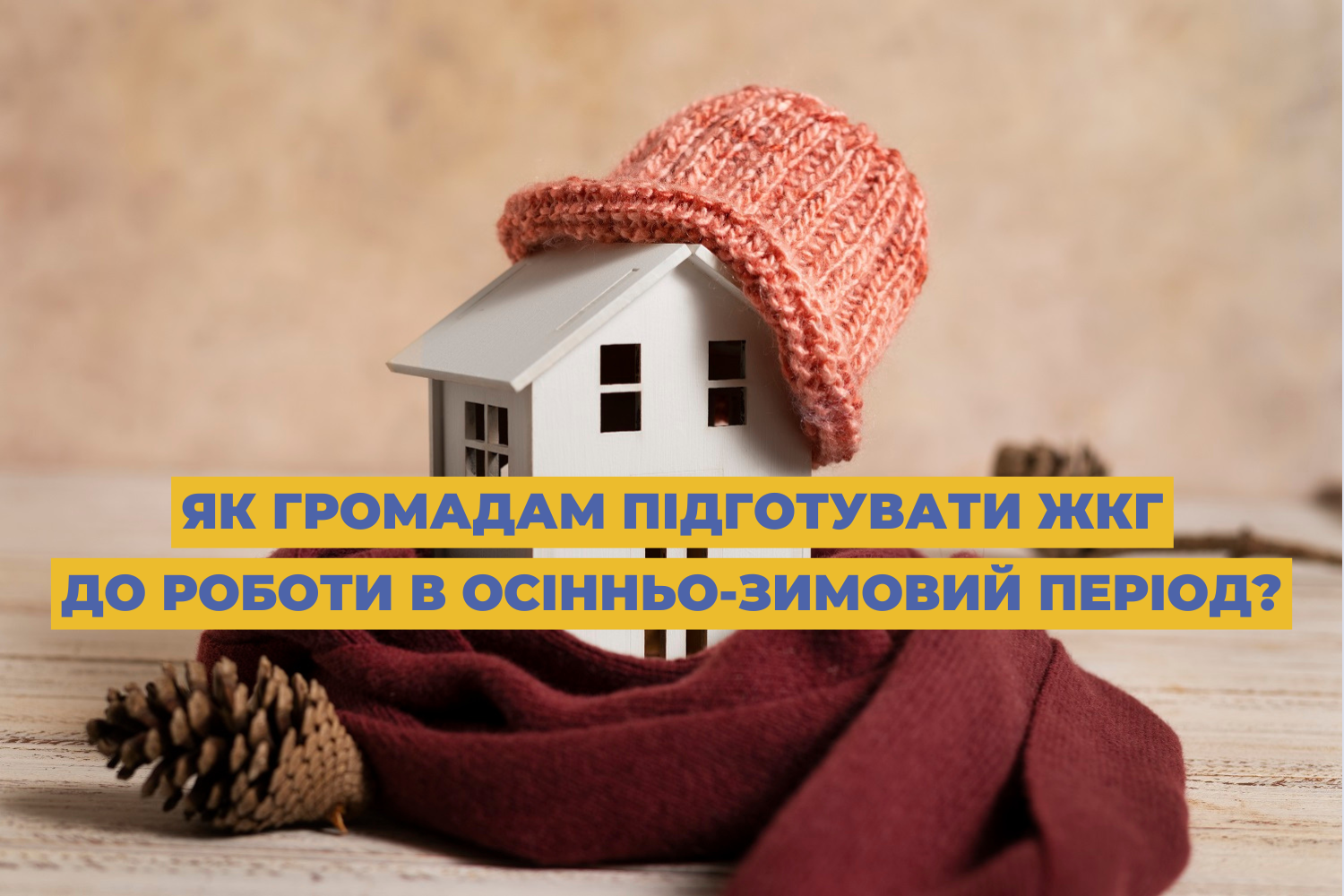
Oksana Levkivska, Chair of U-LEAD’s Working Group on Municipal Services, stresses that municipalities should get ready for a precarious winter, potentially accompanied by emergencies, freezing temperatures and possible shelling of critical infrastructure. She stated this while giving a summary of a series of events organised by U-LEAD for municipalities to ensure effective preparation of the housing and utilities sector for the cold season.
“Although we cannot predict the temperatures, exact emergencies that might arise or intensity of shelling of critical infrastructure, we must prepare for anything and be ready for any challenge. That is why, in addition to traditional steps and measures to prepare for the new heating season, taken by municipalities as part of their routine operation in order to reliably and safely navigate through this period, municipalities need to consider the ways to increase energy independence of the housing and utilities sector,” said Ms Levkivska.
How can we achieve that? Oksana Levkivska calls for the use of appropriate mechanisms by local self-government bodies, such as raising public awareness, seeking additional funding, engaging relevant professionals and retraining existing ones, procuring additional materials and equipment, etc.
What are the legal powers of municipalities in the process of preparing housing and utilities infrastructure for the autumn-winter season?
According to Oksana Levkivska, the Law of Ukraine “On Local Self-Government in Ukraine” imposes extensive obligations on local self-government.
Specifically, they include keeping records of the housing stock and monitoring its use, managing the housing and utilities infrastructure and ensuring the proper maintenance of municipal property.
They also include supervising the provision of public amenities for settlements and managing household waste, appointing managers of flat buildings and setting consumption targets for utilities. Raising public awareness and educating people about preparing for the winter season fall within the scope of its powers as well.
What are the main objectives for municipalities when properly preparing for the autumn-winter season?
According to the Chair of the Working Group, the first objective is starting the preparation of the infrastructure for winter by conducting a technical inspection of buildings and networks and providing alternative sources of energy.
The second objective is energy independence, namely providing municipalities with alternative sources of energy during possible emergencies and energy crises.
The third objective is efficient energy consumption: optimising the use of energy resources in budget institutions and residential buildings through energy-saving measures. Preparation for emergencies is the fourth objective. You should stock up on repair materials, develop step-by-step procedures for interaction with energy suppliers and create Points of Invincibility.
Where to get funds to implement measures required to prepare housing and utilities infrastructure for the winter season?
Firstly, Ms Levkivska points toward the main thing readily available to the municipality, budget funds allocated through state and local support programmes. Secondly, grants and international technical assistance. If the municipality has not managed to receive such additional resources this year yet, start preparing relevant applications already for the next heating season.
Another option available to the municipality is cooperating with banks, receiving leasing funds and attracting funds from NGOs, sponsors and benefactors.
Life hack from the municipalities of Novoyavorivsk and Chornomorske. How did these towns prepare for winter?
The town of Novoyavorivsk (Novoyavorivsk municipality) is a great example of the successful preparation of housing and utilities infrastructure for the autumn-winter season. All flat buildings of the municipality — 119 buildings in total — have created building co-owners associations. The town managed to raise over UAH 80 million to modernise the buildings.
Three housing stock support programmes are currently active in the municipality: the energy saving programme for the public and building co-owners associations (under which the city council reimburses bank interest until full repayment), the major repairs support programme for building co-owners associations and the Revolving Fund for Cities Programme of the Energy Efficient Cities of Ukraine Association. (The membership fee covered by the local budget of Novoyavorivsk is UAH 1.7 million.)
In turn, the Chornomorske municipality installed 10,000 m3 clean water tanks at the local water supply facility, as well as, with the support of the International Organisation for Migration (IOM) and the French Ministry of Foreign Affairs, a 52 kW solar power plant. The ESCO contract under the UNDP project “Removing Barriers to Increase Investment in Energy Efficiency in Public Buildings in Ukraine.
Through the ESCO modality in Small and Medium Sized Cities” was applied to sewerage networks. The modern blower was installed with the support of the German Society for International Cooperation (GIZ) as part of the International Technical Assistance Project “Promotion of Energy Efficiency and Implementation of the EU Energy Efficiency. Directive in Ukraine”. Furthermore, the assistance of DAEE of Ukraine, facilitated by GIZ enabled the installation of solar collectors on the roof of the kindergarten, and as part of the International Technical Assistance Programme “E-Governance for Accountability and Participation (EGAP)”, the administrative building of the city council was made energy-independent.
Conclusion. “You need to prepare for the heating season in advance,” stressed Oksana Levkivska. As we can see, it is vital to have a comprehensive approach to the preparation of housing and utilities infrastructure, use both state and local support programmes and attract grant and loan funds. This will secure a comfortable standard of living for the population and mitigate risks during possible emergencies.
“By actively using modern winter preparation strategies, municipalities can ensure the reliable operation of housing and utilities infrastructure even in the face of today’s challenges,” said Ms Levkivska.