




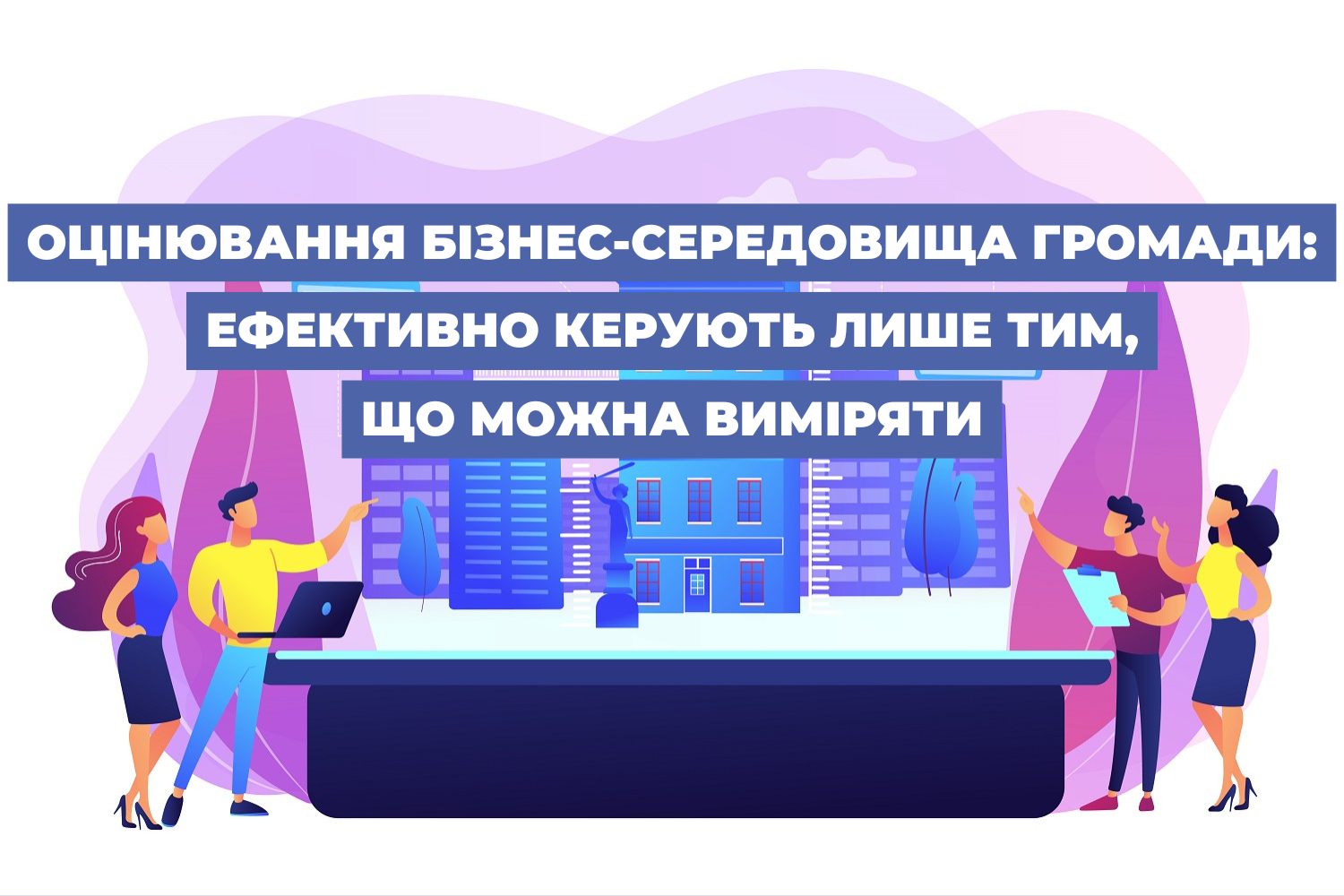
The first “Municipal Business Environment” Assessment and Development Programme has come to an end. It brought together 12 municipalities from five Ukrainian oblasts: Dnipro, Kirovohrad, Odesa, Poltava and Khmelnytskyi.
Olha Todorova, Programme Coordinator and Local Finance Advisor at U-LEAD with Europe commented during the final event:
“Municipalities cannot fully develop unless they focus on the sectors operating locally. That is why assessing the business environment is a key task for them. The assessment results you receive will allow you to understand the current state of the local economy, as well as identify specific steps to improve it. Conducting this sort of assessment also creates a solid foundation for dialogue between authorities and businesses — a must for informed decision-making. The cooperation between local authorities and the business community affects the quality of life of the population and will be a key factor in the further recovery and development of Ukraine.”
Survey as an assessment tool
The participating municipalities worked according to a specially developed methodology for assessing the business environment, which consisted of several components. One of them was a survey of municipality residents, including representatives of small, medium and large businesses, local self-government bodies and business promotion agencies. They were asked to answer questions on 8 key parameters: human capital, business infrastructure, access to investment facilities, regulatory efficiency, business promotion programmes and agencies, brand and reputation, social infrastructure, sentiments and trends.
Based on the data received, experts determined the index of respondents from participating municipalities and further calculated the difference in the assessment of the business environment by businesses themselves and local self-government officials.
“This difference is more or less pronounced depending on the municipality. However, this indicator allows us to see the extent to which the municipality perceives the situation objectively. There were cases where the business community gave a more favourable assessment to the environment than local self-government. It is important to take this difference into account in order to work out the assessment indicators and pinpoint the priority target audience to further improve this index or directly work on solving problems,” said Elvira Moldavan, U-LEAD expert.
Statistics are a source of facts that need to be interpreted correctly
The programme also covered the assessment based on 10 selected economic indicators of municipalities using available statistical data. Among them are the employment rate, including in private businesses, the level of salaries, unemployment rate, as well as the number of businesses in the municipality, certain budget indicators and the budget for promoting businesses in the municipality.
In summarising, U-LEAD expert Mykola Savuliak pointed out four indicators that are essential for assessing the business environment of the municipality:
“First and foremost, employment rate. The average employment rate of the population in the participating municipalities was 36%. This means that two-thirds of able-bodied residents are not registered as employees, entrepreneurs or unemployed. Conversely, the average unemployment rate according to the same survey is a little over 1%. This speaks of unreported employment and hidden unemployment. This is the growth area that we need to tackle in the coming years. This implies, on the one hand, bringing business operations out of the shadows, as well as, on the other hand, legal employment of workers. After all, 60% unemployment rate is certainly not the reality in our municipalities.
According to the expert, another important indicator is per capita income within the municipality. This is an indicator of the success level of the municipality itself. It varies greatly among our municipalities. High per capita income allows these funds to be converted into social infrastructure and, therefore, improves the standard of living.
Mykola Savuliak also emphasised the significance of the municipality’s business tax revenues:
“This indicator was 37% on average in the participating municipalities. Its impact is fairly significant. It is important to keep in mind and convey to council members that supporting entrepreneurship brings revenues to the municipality budget. It is also worth highlighting the revenues from micro and small businesses. After all, they can account for a significant portion of employment, are less dependent on external factors and less risky in times of crisis.”
The expert also advised municipalities to keep an eye on the indicator “Budget for Promoting Businesses in the Municipality”. In fact, two-thirds of municipalities do not allocate a single hryvnia for tools to promote entrepreneurship. This means that on the one hand, local governments expect entrepreneurs to pay taxes, and on the other hand, they do nothing for them except administration. Experts, however, advise allocating about 4% of the budget revenues to tools to promote entrepreneurship.
Done measuring? Let’s move towards a better version of ourselves!
As part of the programme, experts also offered municipalities a list of tools to improve certain indicators they have figured out during the assessment. However, according to U-LEAD expert Ivan Kulchytskyi, tools need to be chosen based on their specific needs:
“Simply selecting a certain tool at random does not work. To do this, you need to allocate certain resources, assess the tool’s effectiveness, compare its impact against the costs involved. Build your portfolio of tools to improve the municipal business environment based on the results of the assessment, taking into account the available resources (both budget and work effort) and municipality priorities.
In general, to achieve better results, we recommend re-assessing the municipal business environment at least yearly. This will facilitate assessing the effectiveness of addressing problematic issues, identifying new ones, selecting other tools and developing a further action plan".
The experts stressed that the work on improving the business environment should begin with communicating the results of the survey to the widest possible circle of residents, businesses and local self-government officials. This will contribute to understanding the situation, support for management decisions and engagement in steps to implement improvement tools.
The participants, in turn, presented the results of the assessment in their municipalities, shared the chosen methods and channels for communicating the results, showcased their lists of selected improvement tools and expressly committed to conducting a re-assessment in order to track qualitative changes in the business environments of their municipalities.