


In August 2025, officials from over 60 municipalities across Ukraine embarked on a training programme entitled “Steps for Specialists. Public Participation in Solving Issues of Local Importance”. Over the course of five weeks, rather than simply attending training sessions, participants confidently progressed through the “steps of participation”, from basic dissemination of information to genuine partnership between local authorities and the public, whilst learning about the latest updates to the Law on Local Self-Government.
“We offered municipal officials a programme designed to help them understand how the extent of public participation and engagement affects trust and municipal development, which local regulations govern these matters, and what needs to be updated or adopted. To reinforce what they had learnt, we presented practical case studies on the application of various forms of participation and engagement in municipalities across Volyn Oblast, whose representatives kindly shared their experiences with our participants,” said Mykhailo Shelep, a Policy Advisor for Decentralisation and Local Self-Government at the Regional Office of U-LEAD with Europe in Rivne Oblast.
Among the 20 participants in the study visit was Olha Bosiuk, the First Deputy Mayor of Rozdilna. By her own account, she went to study in order to discover new ways of communicating and interacting with the local population.
“Our municipality has plenty of channels for sharing information, and we are always open to communication. However, this does not always translate into a desire among residents to use the available e-democracy tools, or into their participation in surveys, discussions or other activities. That is why we were so interested in this U-LEAD training programme,” she said.
Following the training, solutions emerged which Olha Bosiuk describes as having worked “right away”. The municipality adopted a charter, which enshrined the provisions on public hearings as a mandatory annex. They further adopted regulations on participatory budgeting and inclusive school participatory budgeting, which will be launched in the near future.
“We had been planning to roll out these public participation tools, but then the war broke out, and it seemed that the time wasn’t right, so we put these decisions on hold. However, the experience of the municipalities in Volyn Oblast convinced us that these mechanisms can work effectively even in wartime. So now we are preparing for the start of the project competition,” said the First Deputy Mayor of Rozdilna.
During the visit, the participants travelled to the municipalities of Vyshniv, Shatsk, Novovolynsk and Lutsk, where they learned about cases of effective cooperation between local authorities and residents, the activities of youth centres and advisory bodies, and saw first-hand how residents participate in the allocation of local budget funds.
Among other things, they were shown the work of the civic engagement centre, which has been set up within the public library, in Novovolynsk municipality. The centre’s manager spoke about various events and initiatives (ranging from language courses to volunteering activities) and explained that anyone is welcome to come along and suggest an idea or event, or run a workshop (free of charge, of course).
“As I listened to how it works, I thought about our situation: residents are often confused about the powers of local self-government and unsure of the specific channels for participation they can use or where to turn. That is what sparked the idea for a course on local self-government and forms of public participation for young people. I firmly believe that young people are the first ones we should start with. Because they can tell their parents at home and help spread the message,” said Olha Bosiuk.
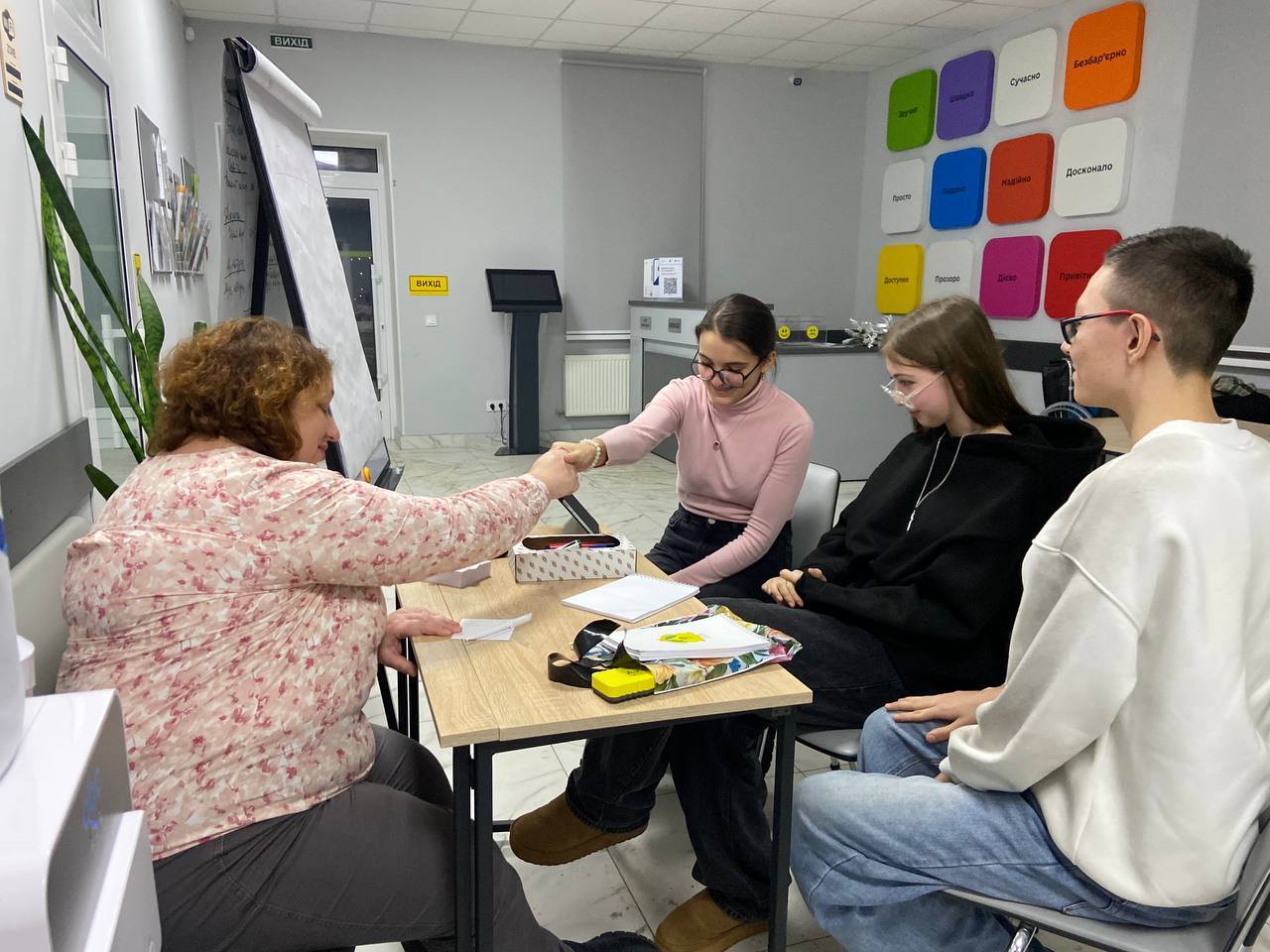
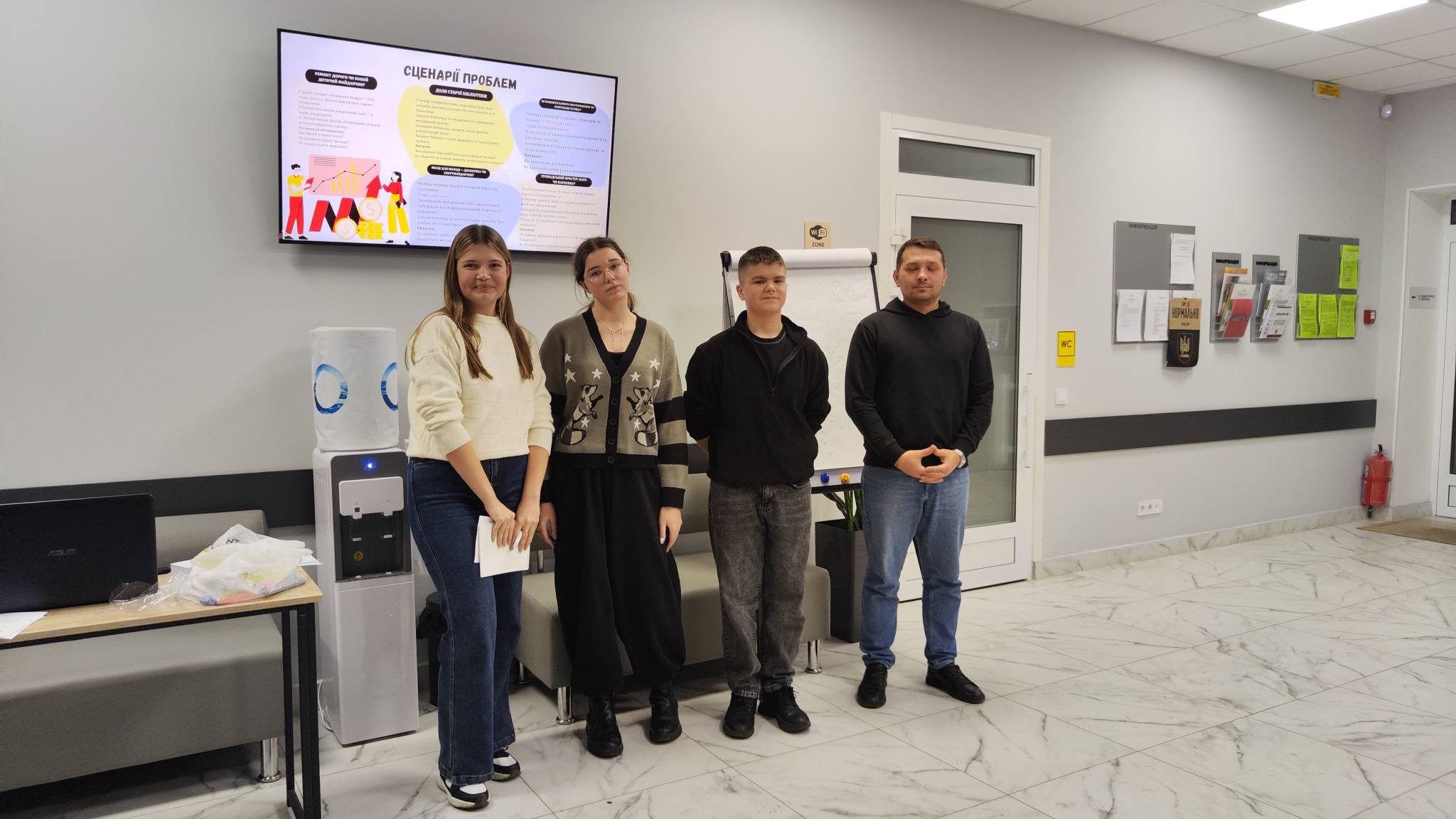
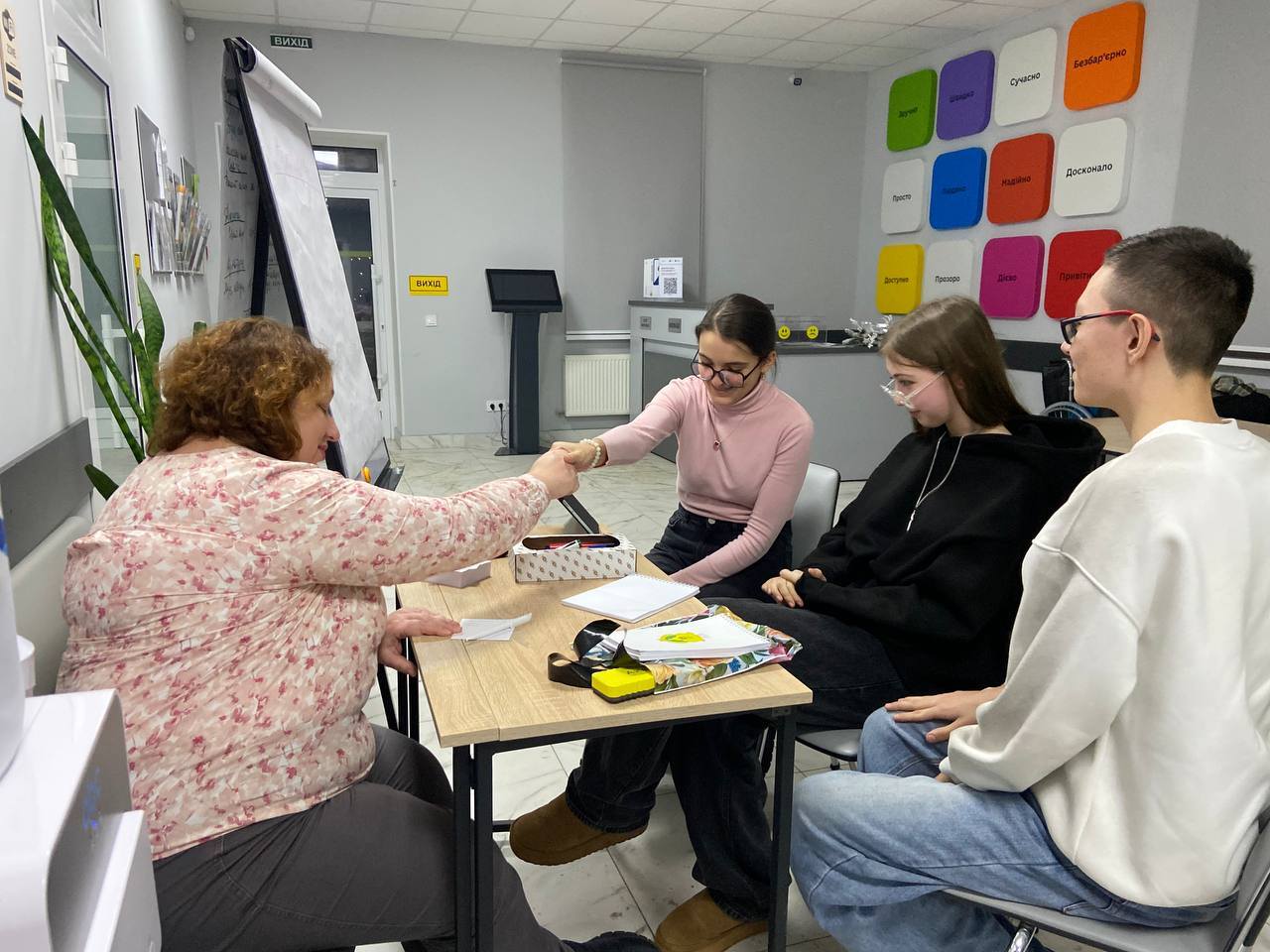
Upon returning home, she recorded a video address and launched online registration. Over the course of two weeks, 14 keen and motivated participants came together, because without motivation, knowledge does not “stick”. The course at the School of Local Self-Government consisted of eight sessions, held once a week.
Olha Bosiuk delivered the training sessions herself, as she has both extensive practical experience in local self-government and knowledge gained from the online course “Formats of Municipal Participation in Resolving Issues of Local Importance: Top 7 Basic Forms of Participation”.
“I’ve long wanted to explain to young people, in simple terms, the important things about local self-government that I only learnt about as an adult,” she said.
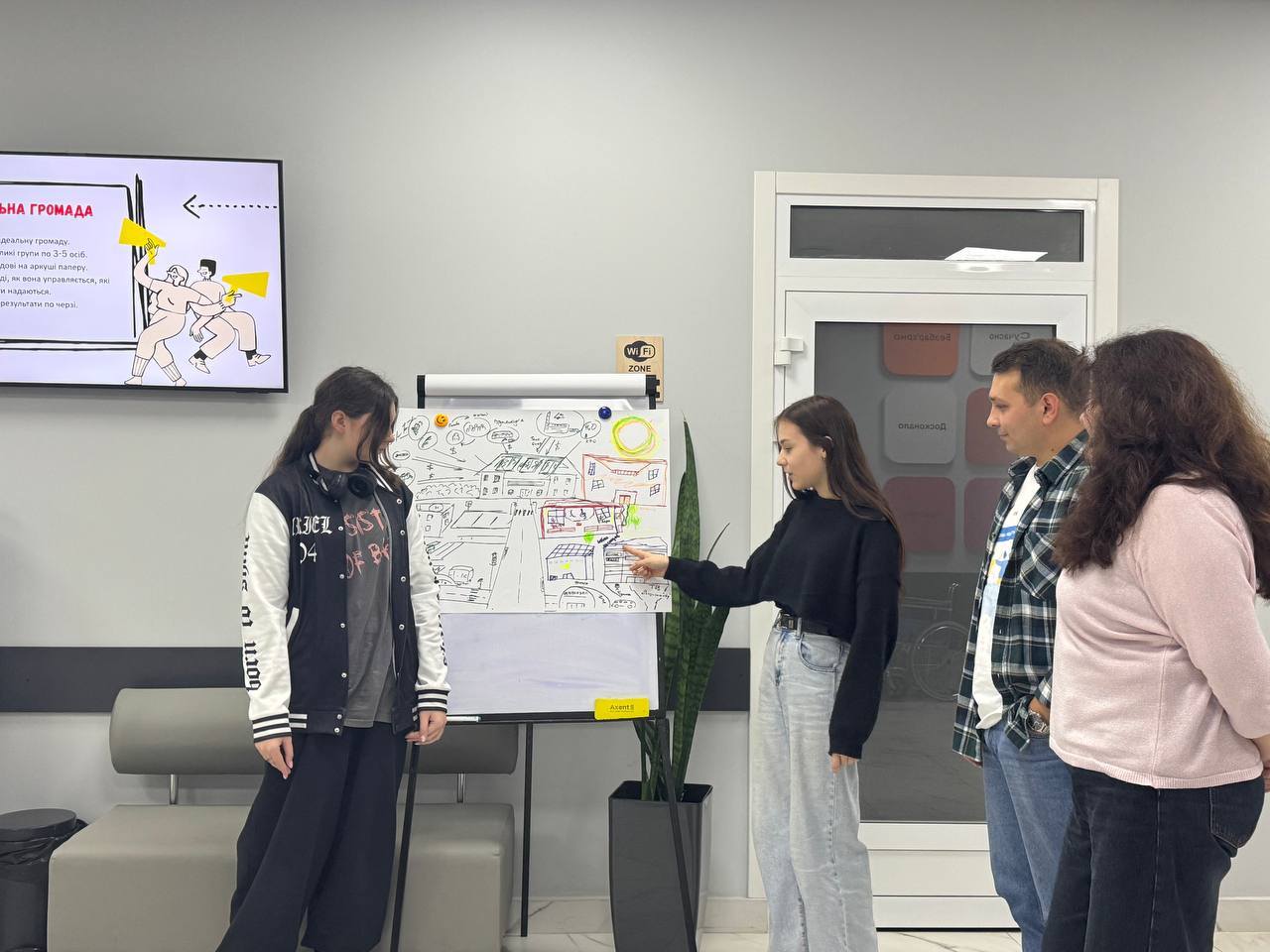
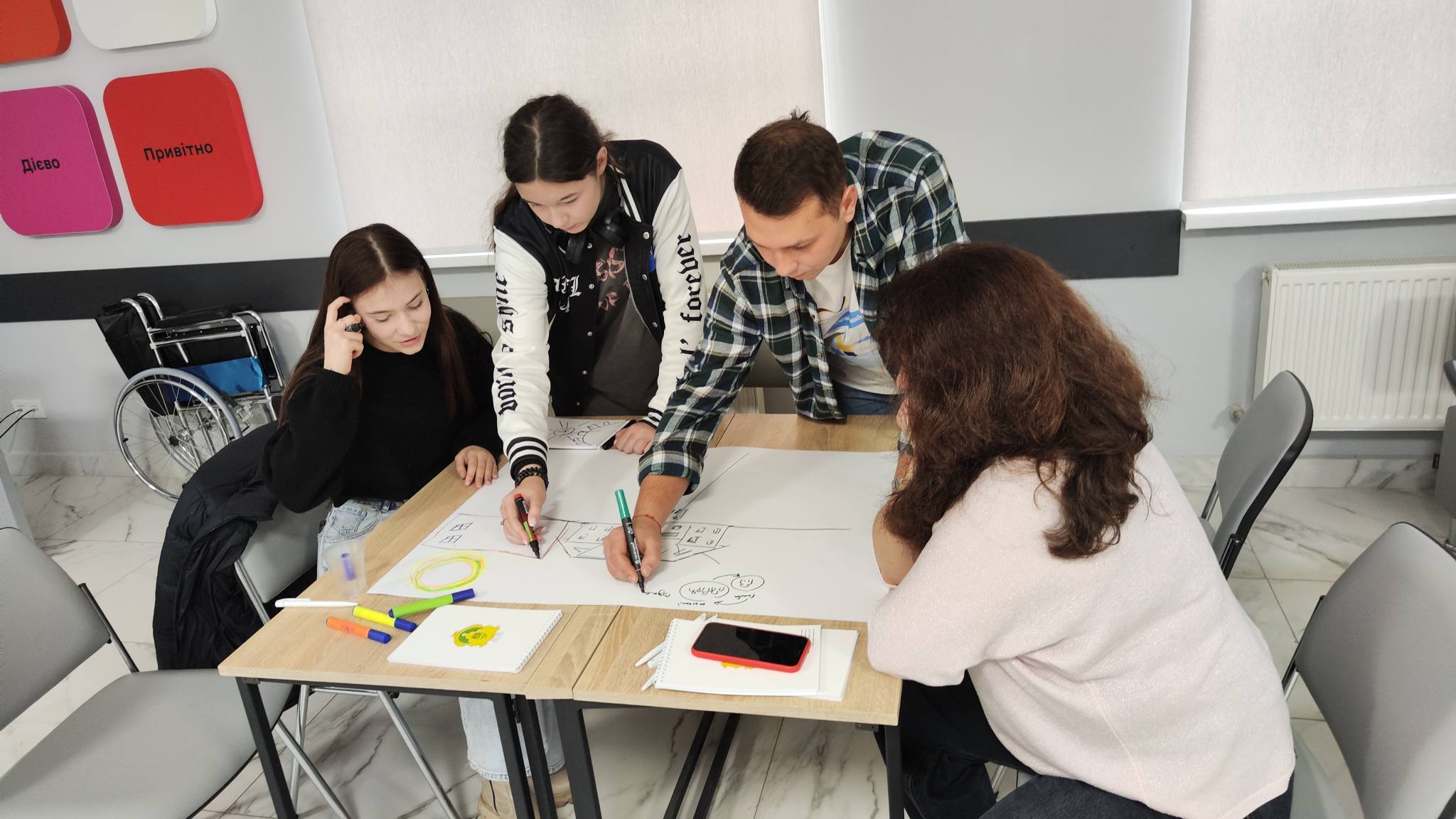
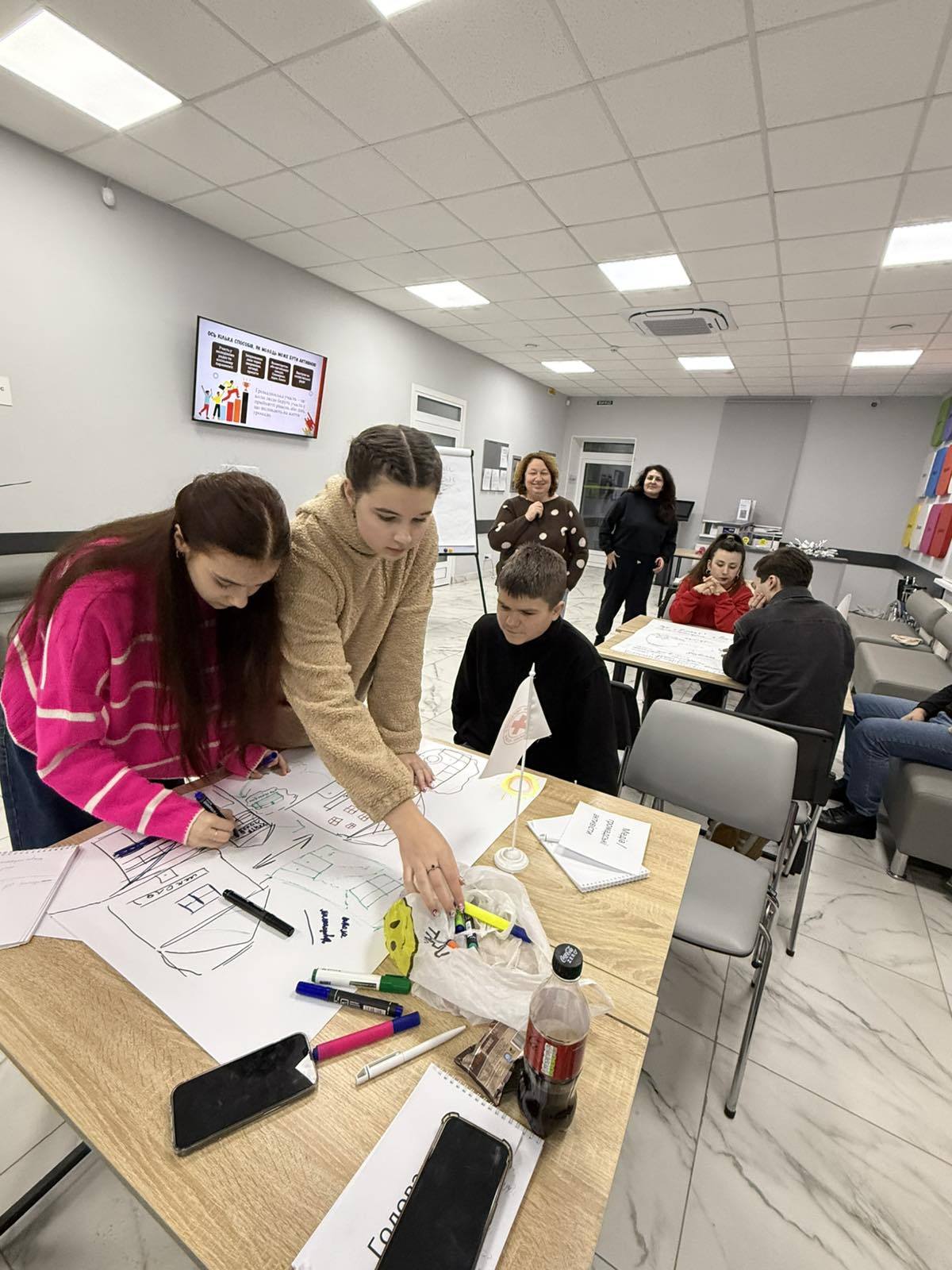
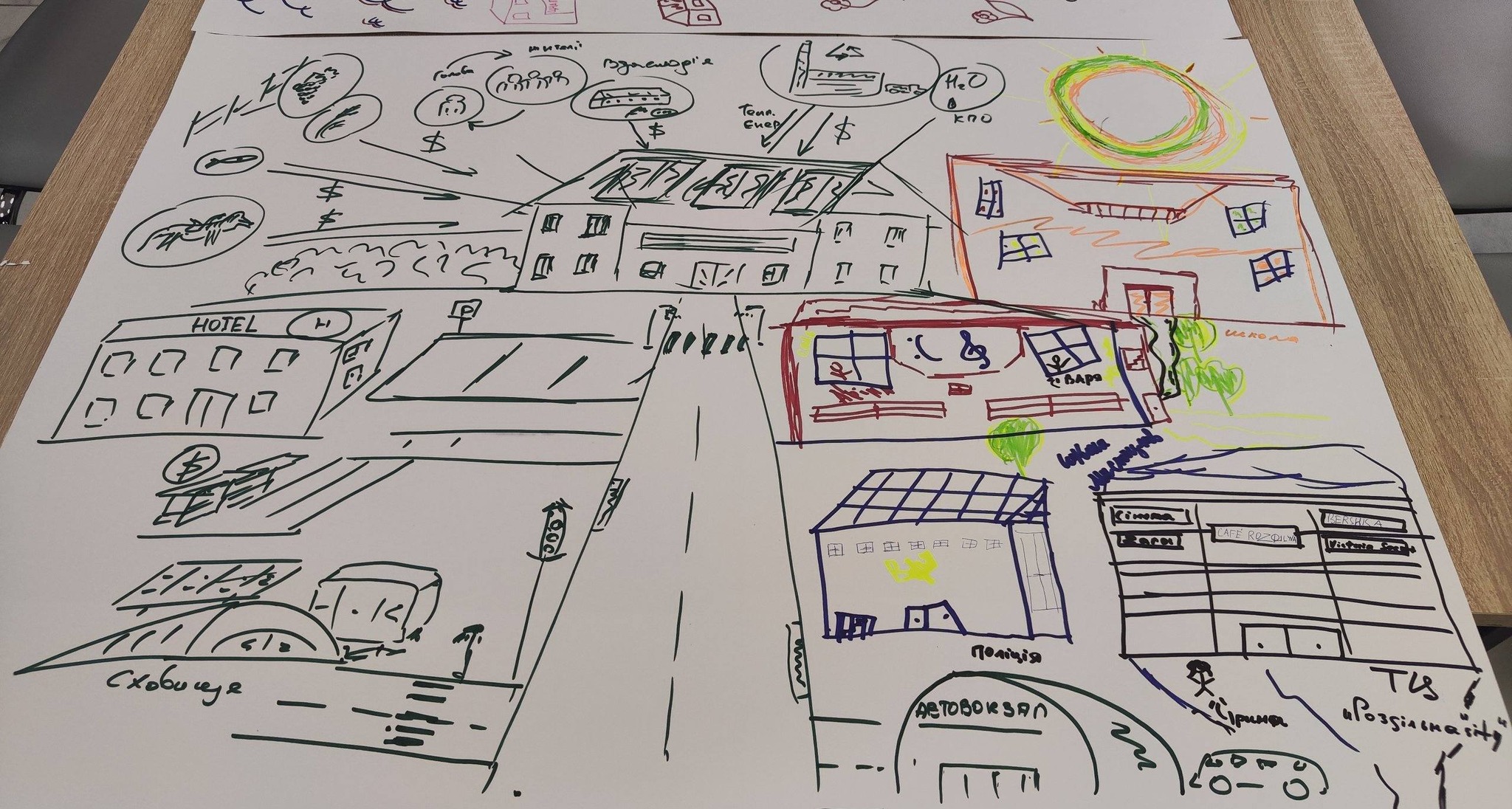
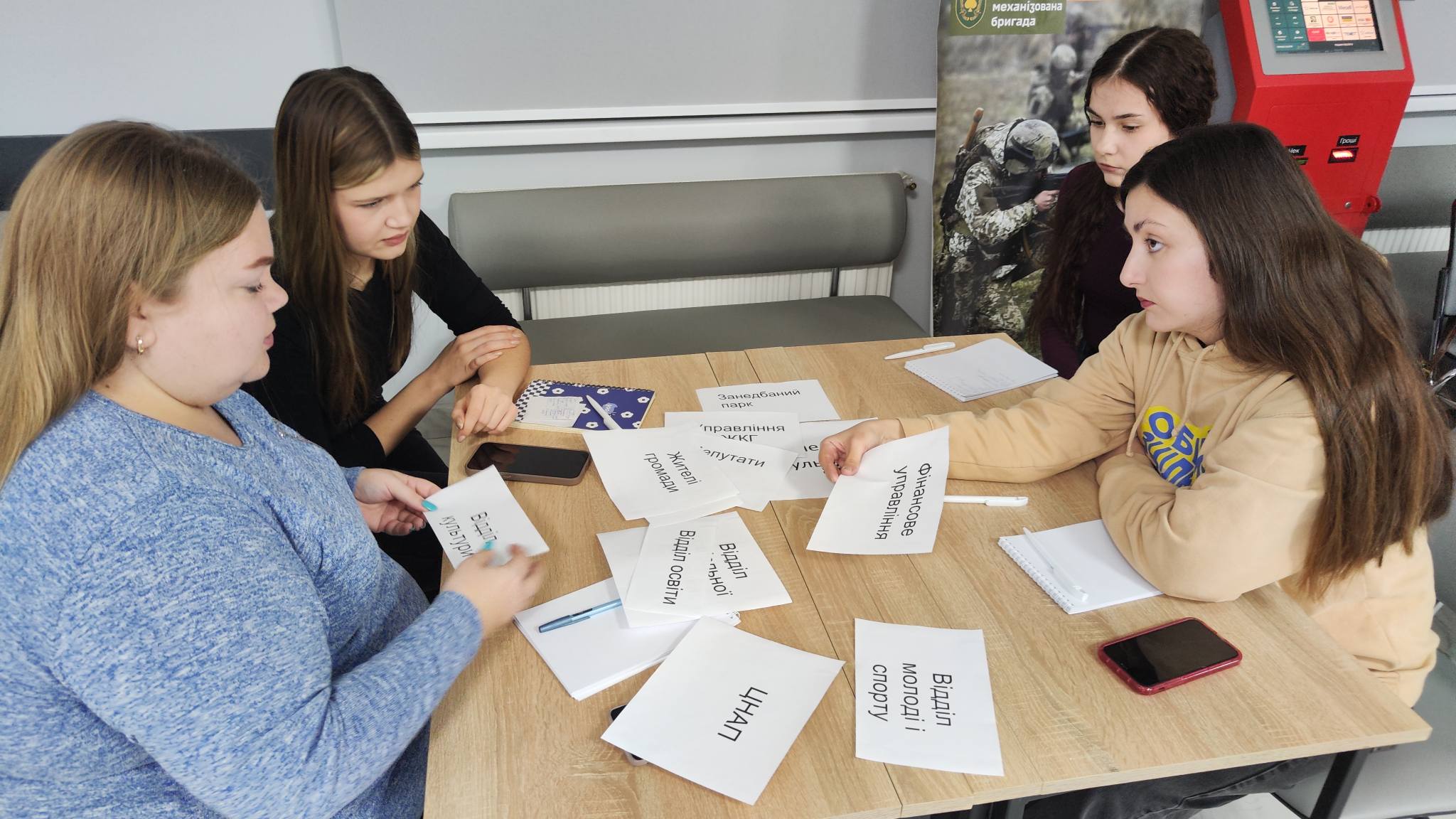
The aim was not to deliver a lecture, but to explain how the municipality works, how decisions are made, how residents and young people can have a say, how the budget is drawn up, and how to communicate with the authorities. The theory was mastered through discussions, meetings and practical tasks. The participants “drew the municipality”, role-played as the mayor and city council members, “allocated the budget” using hypothetical funds and justified their priorities, and presented their own youth initiatives. Incidentally, some of the participants were already members of the youth council, and for them, the training at the School served as an additional resource for understanding their role.
The course’s unique value lies in its simple yet effective insights. Olha Bosiuk cites the example of the “resident’s account” on the municipality’s website: young people were surprised to find that it was “very easy to submit a request” there. She suggested doing it straight away on their phones, and the teenagers realised they could quickly report the issue and leave their contact details for a reply. She believes that initiatives like this turn “local authorities” into a concrete channel for engagement, and that trust is built when issues are “worked through with the municipality” and residents feel a sense of ownership over the decisions.
The head of the youth council at Rozdilna City Council, Yuliia Marchenko, stated:
“The course covered practical matters. We now understand how to submit requests, how to communicate with the council and its members, how to develop projects and seek funding for them, and with the introduction of participatory budgeting, we will be able to submit our own initiatives for consideration”. She feels that this knowledge and these skills are useful for young people, who have become more engaged over the past two months. According to Yuliia, the young activists plan to register an NGO and hold joint events with the youth council and representatives of local and school councils in order to develop youth policy within the municipality.
A member of the Youth Council Oleh Zasoba believes that young people in the municipality have started to come together, and that the School has played a part in this. He took part in the training himself and now plans to run “Know Your Rights” workshops for high school students, as well as to get involved in the development of the NGO and project work.
“I realised that there are young people in the municipality who are genuinely interested in projects and the development of public spaces. We saw that we could work together with the local self-government bodies and that we needed to join forces. Learning the basics of local self-government has had a positive impact on young people; they are not afraid of the authorities and are willing to cooperate, so the first steps have already been taken,” said Oleh.
Olha Bosiuk shared that the youth’s enthusiasm and their awareness of their own potential had been a pleasant surprise to her and had inspired her to continue this educational work. That is why her next objective is to gradually roll out similar training programmes across the municipality’s starosta districts. “Active children and young people are everywhere; they just need a little nudge,” she believes.
Photo from Facebook page of Rozdilna municipality