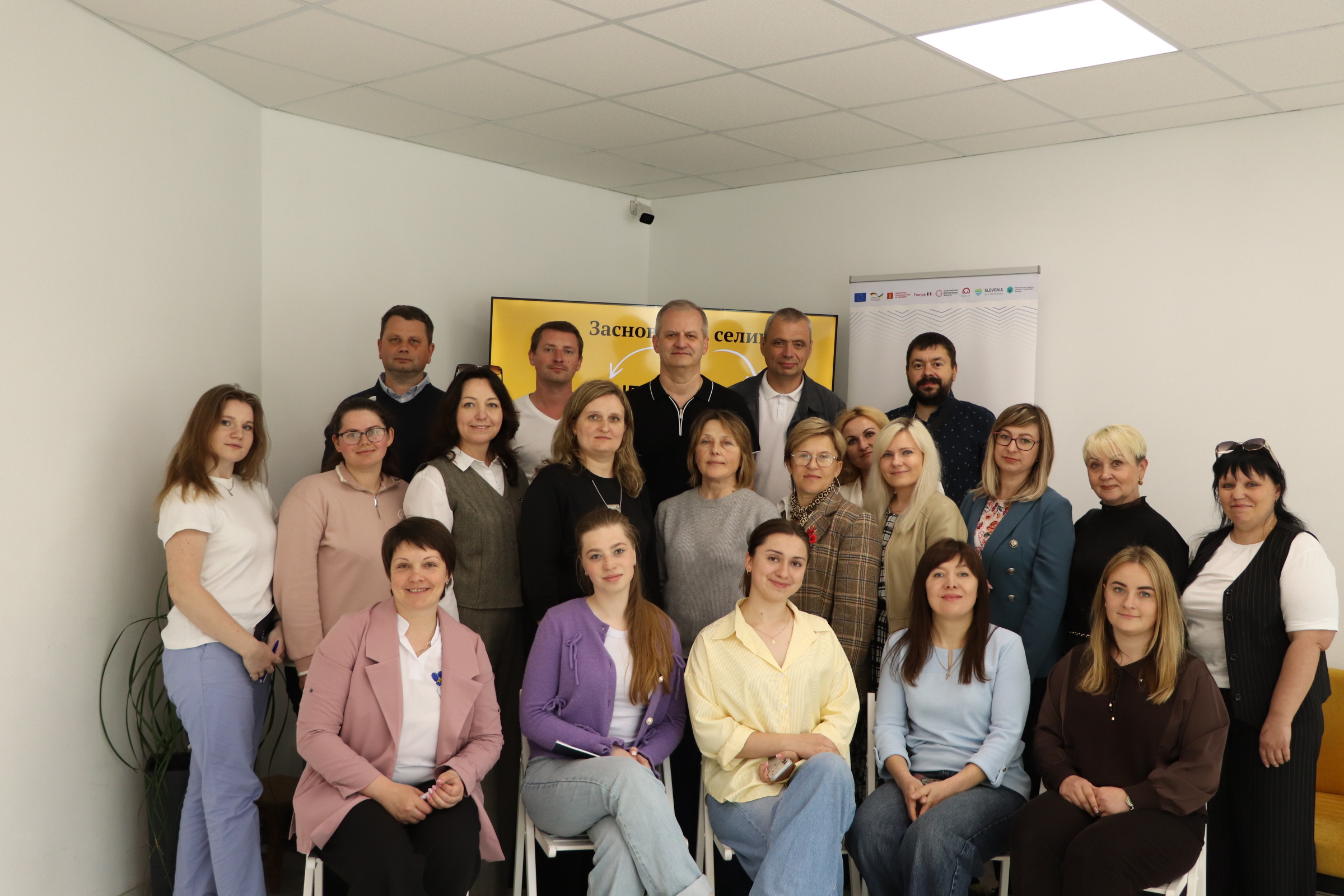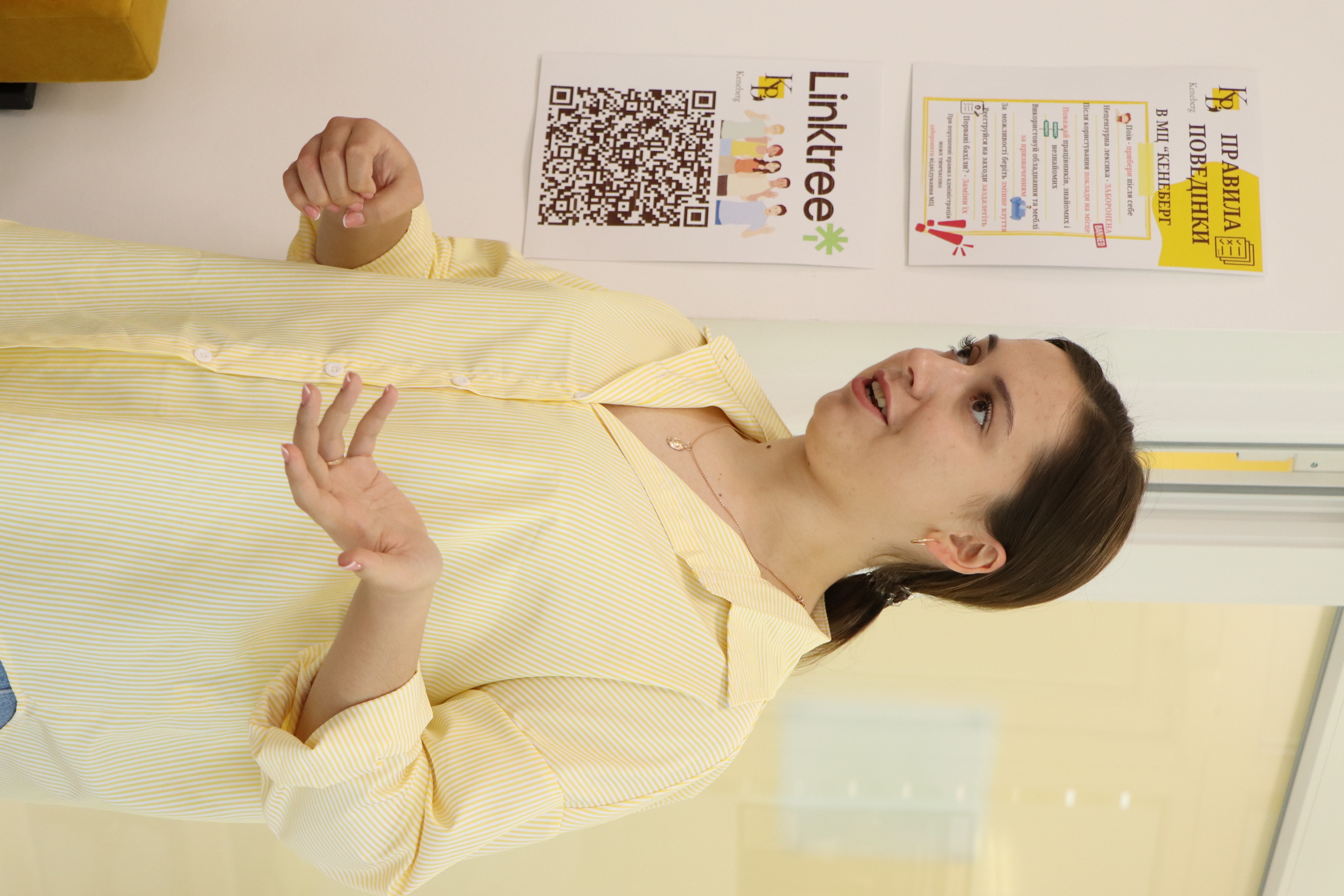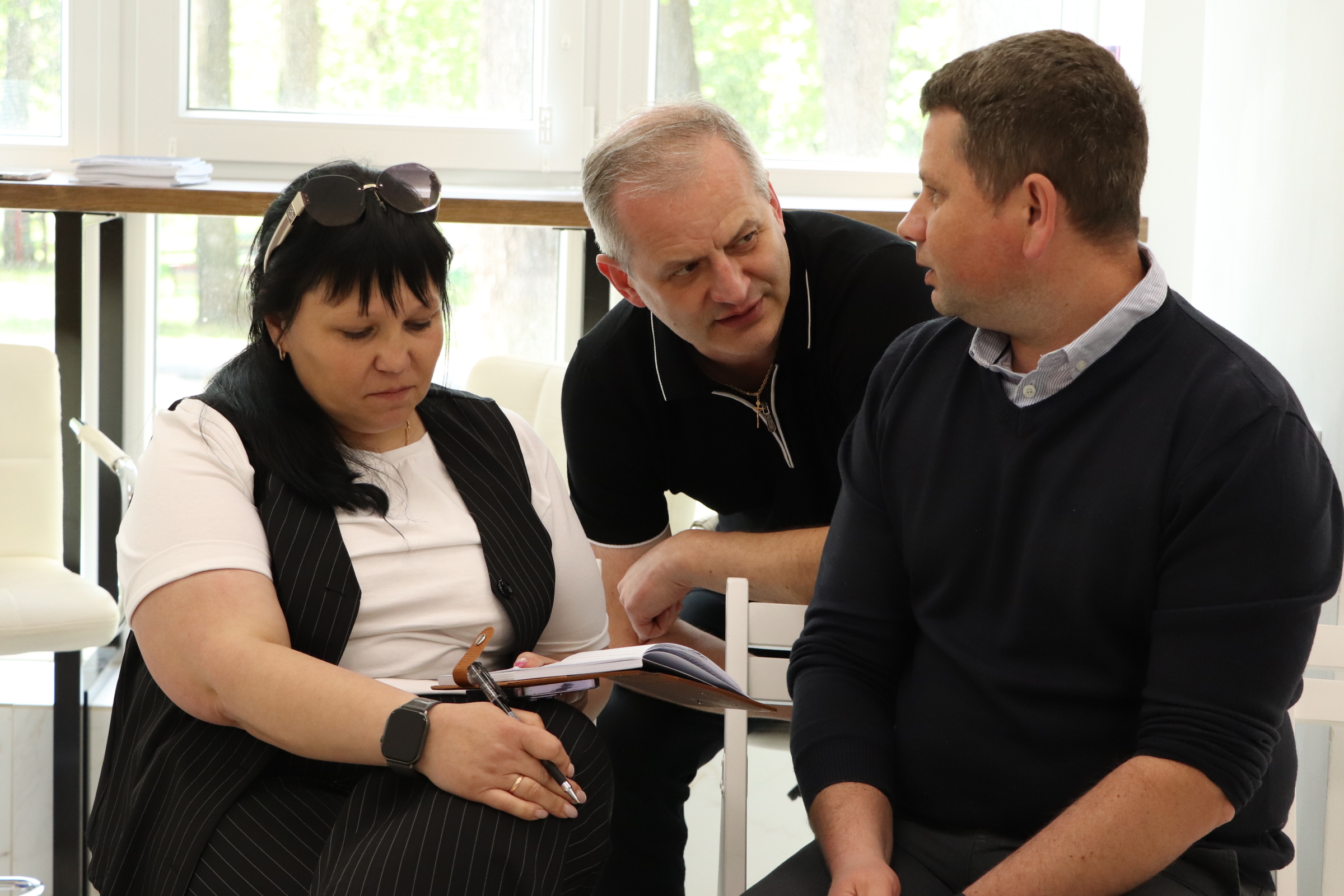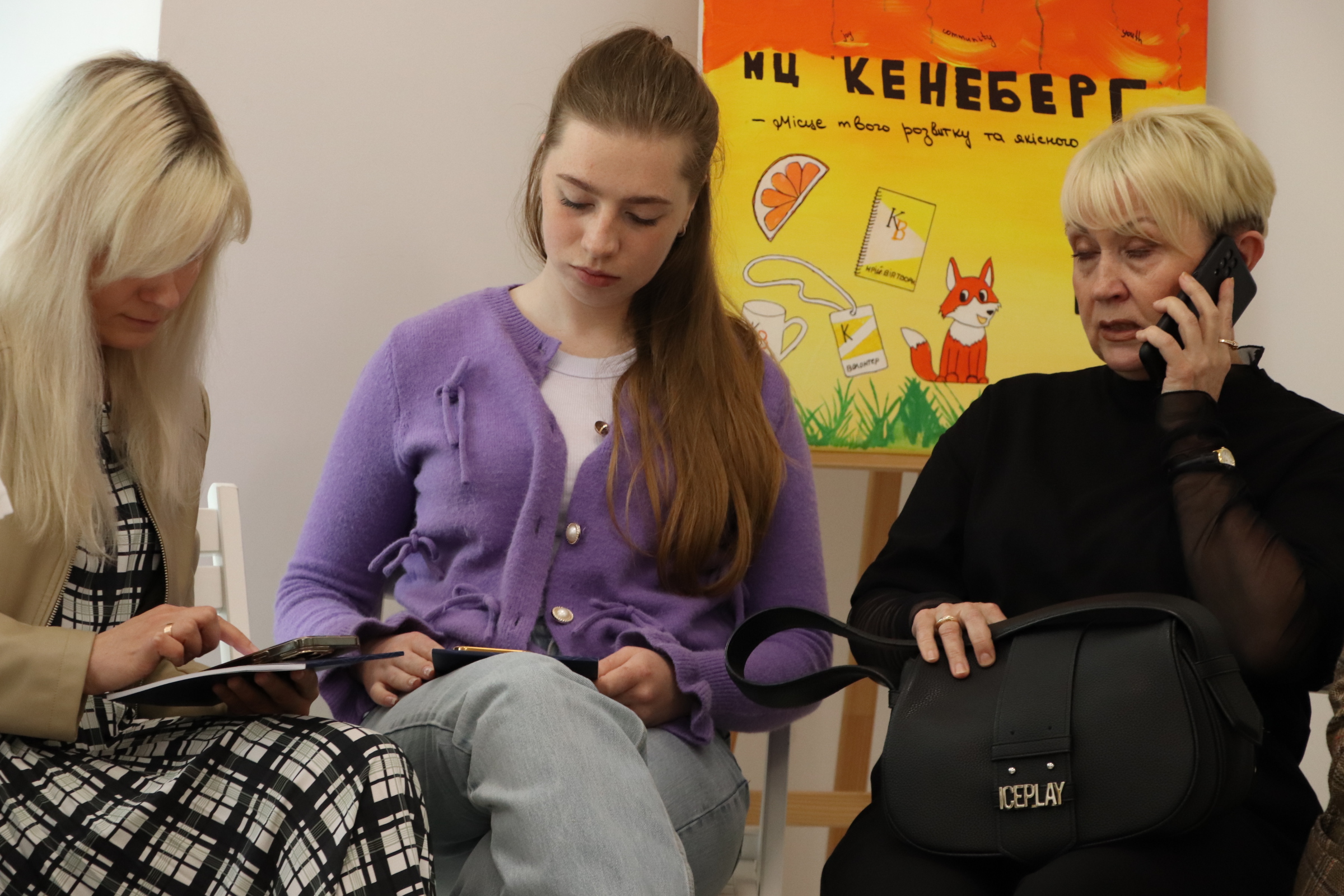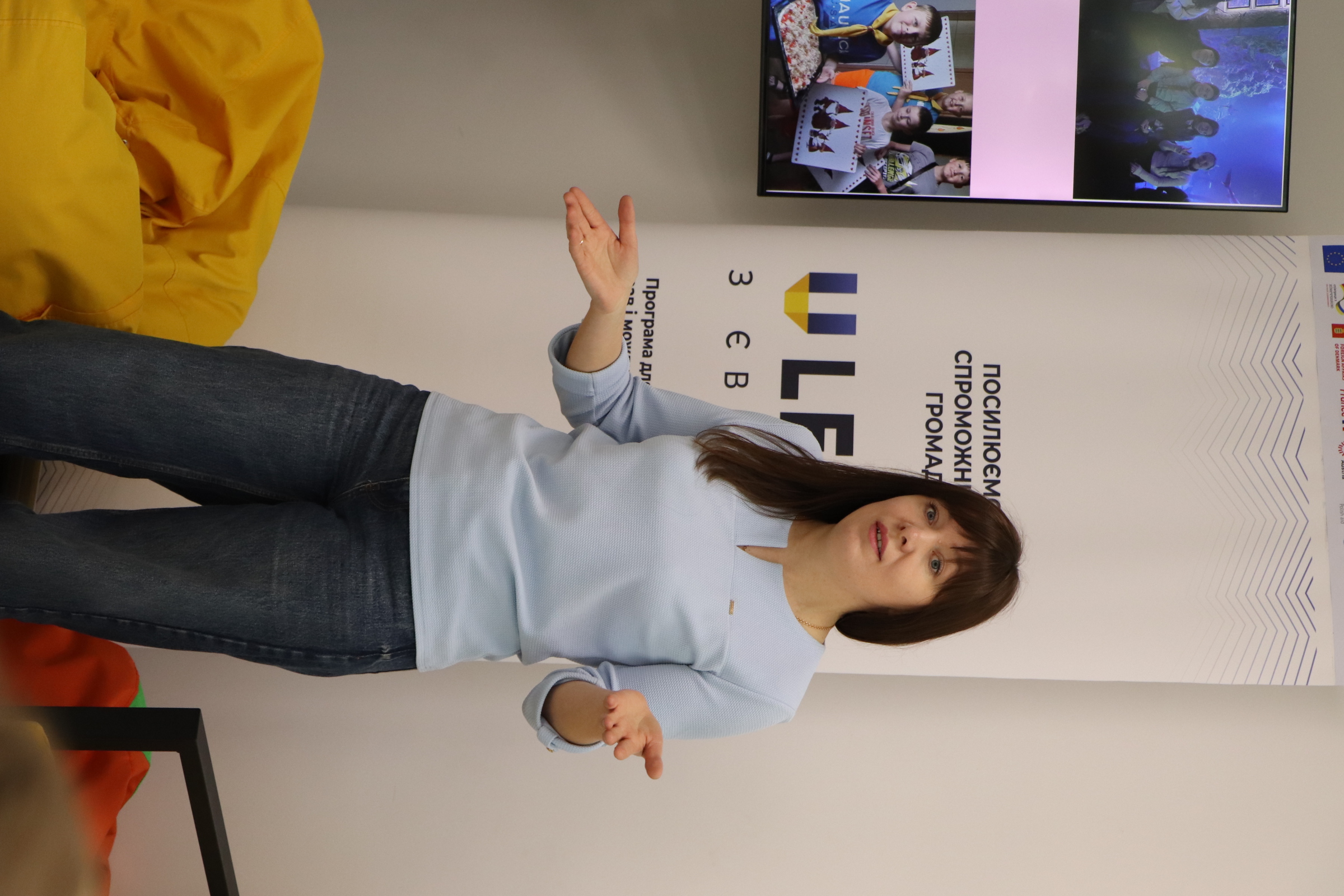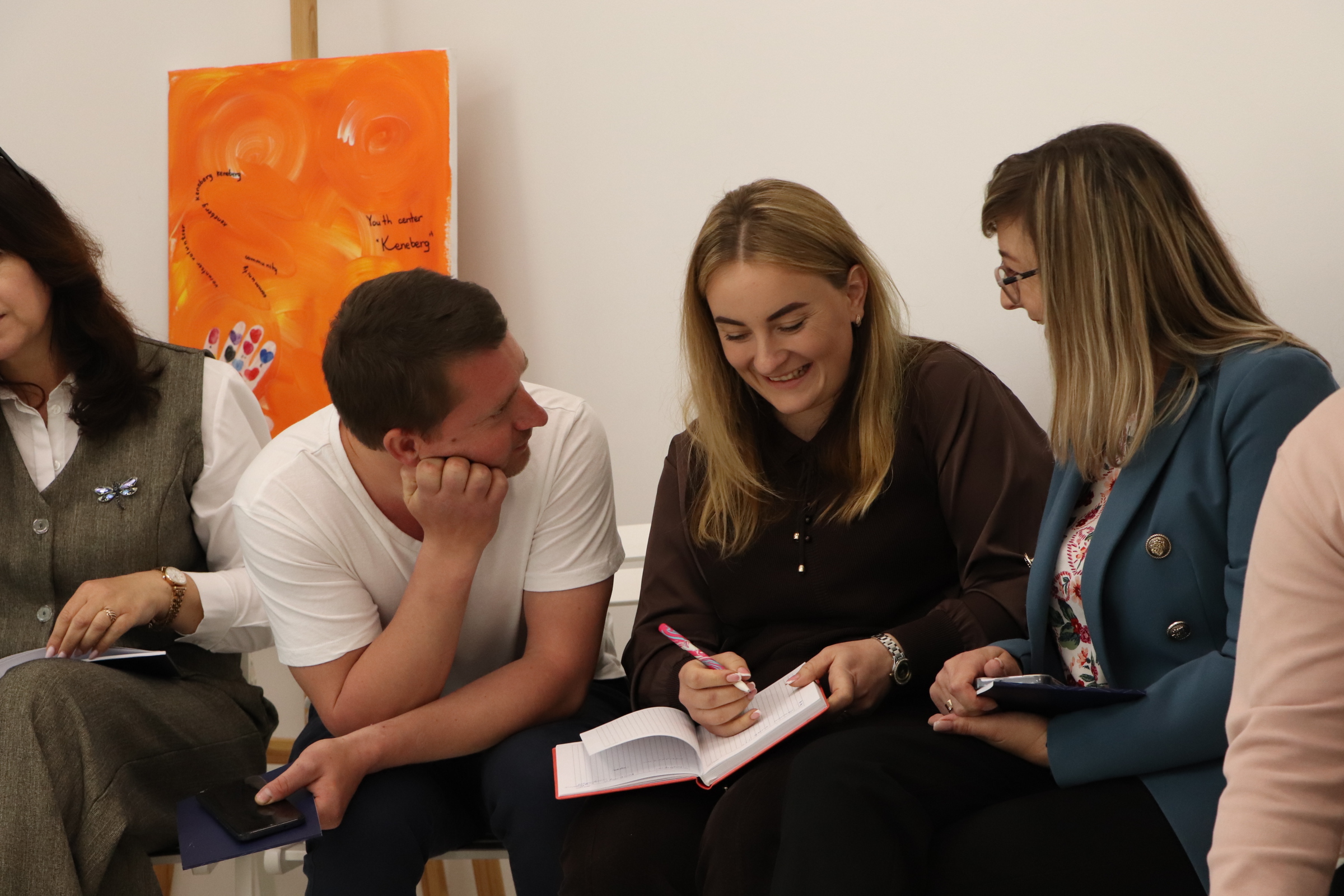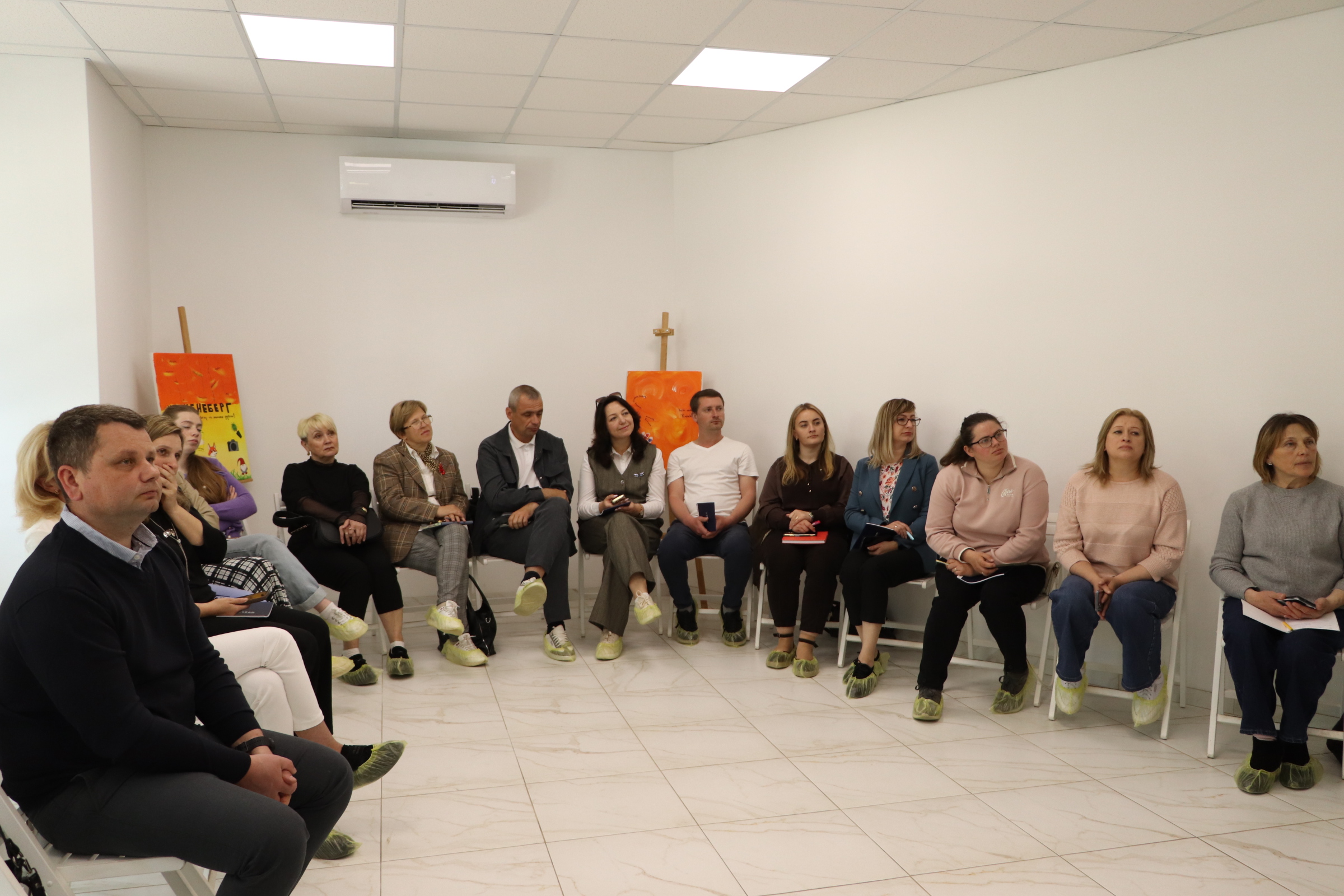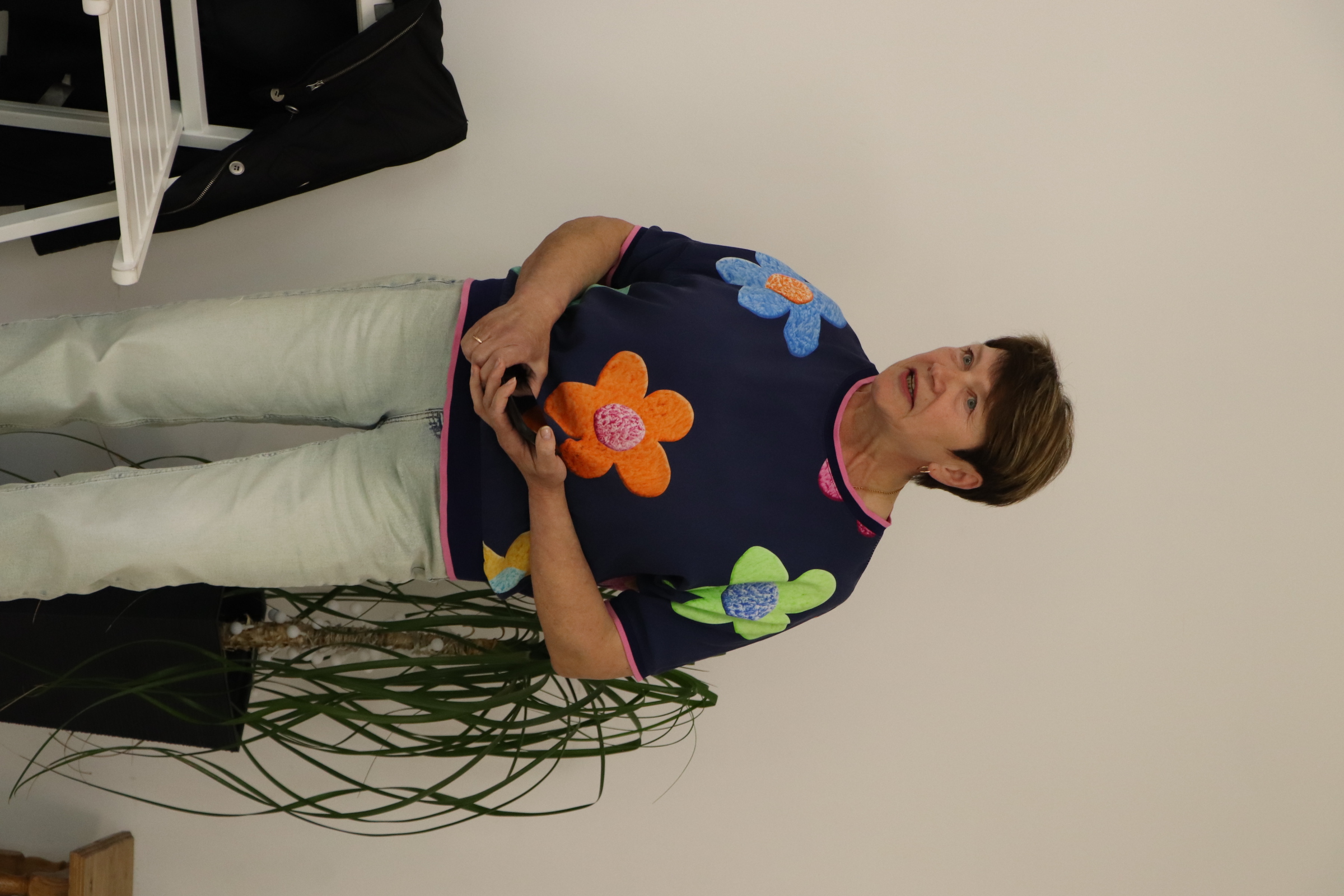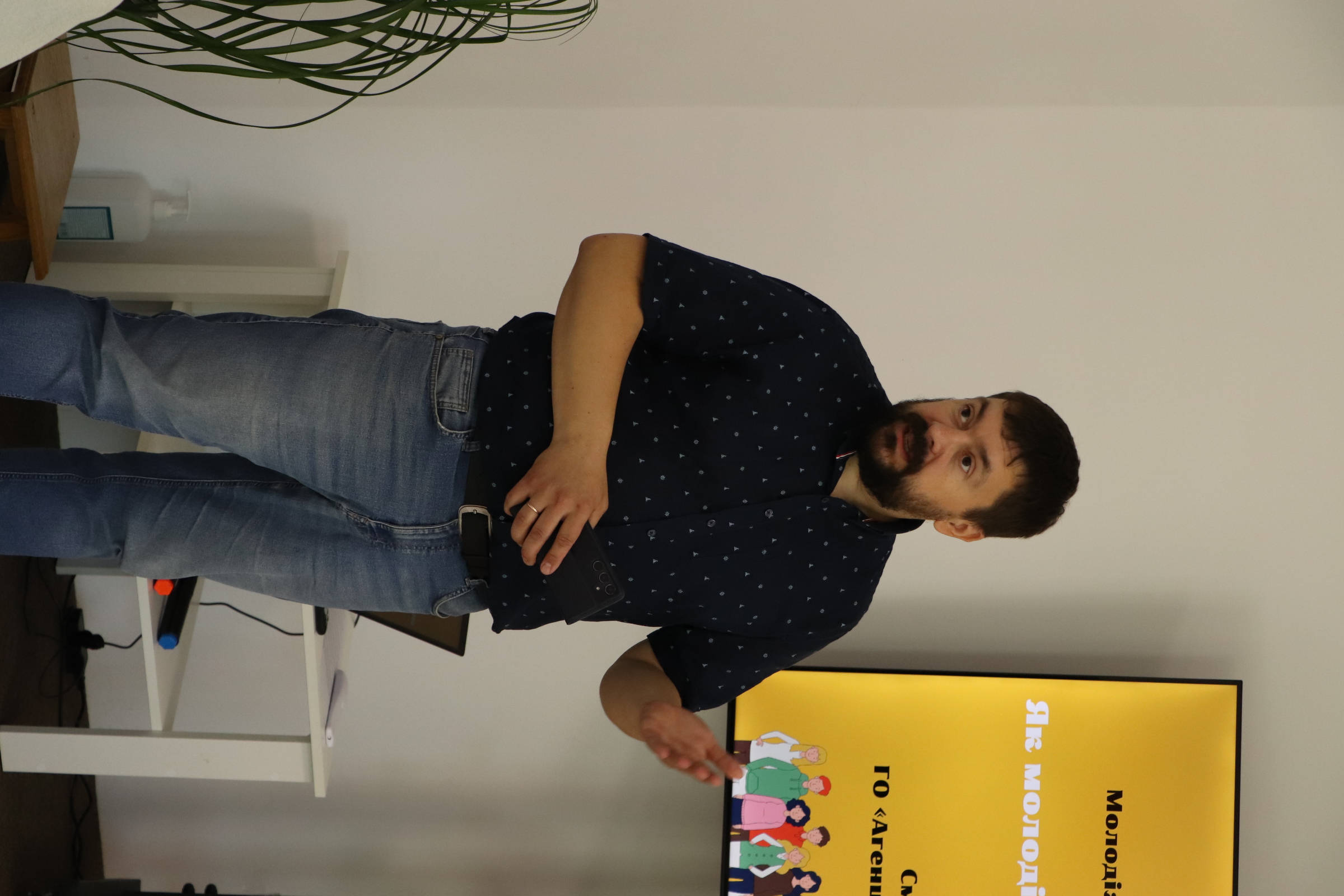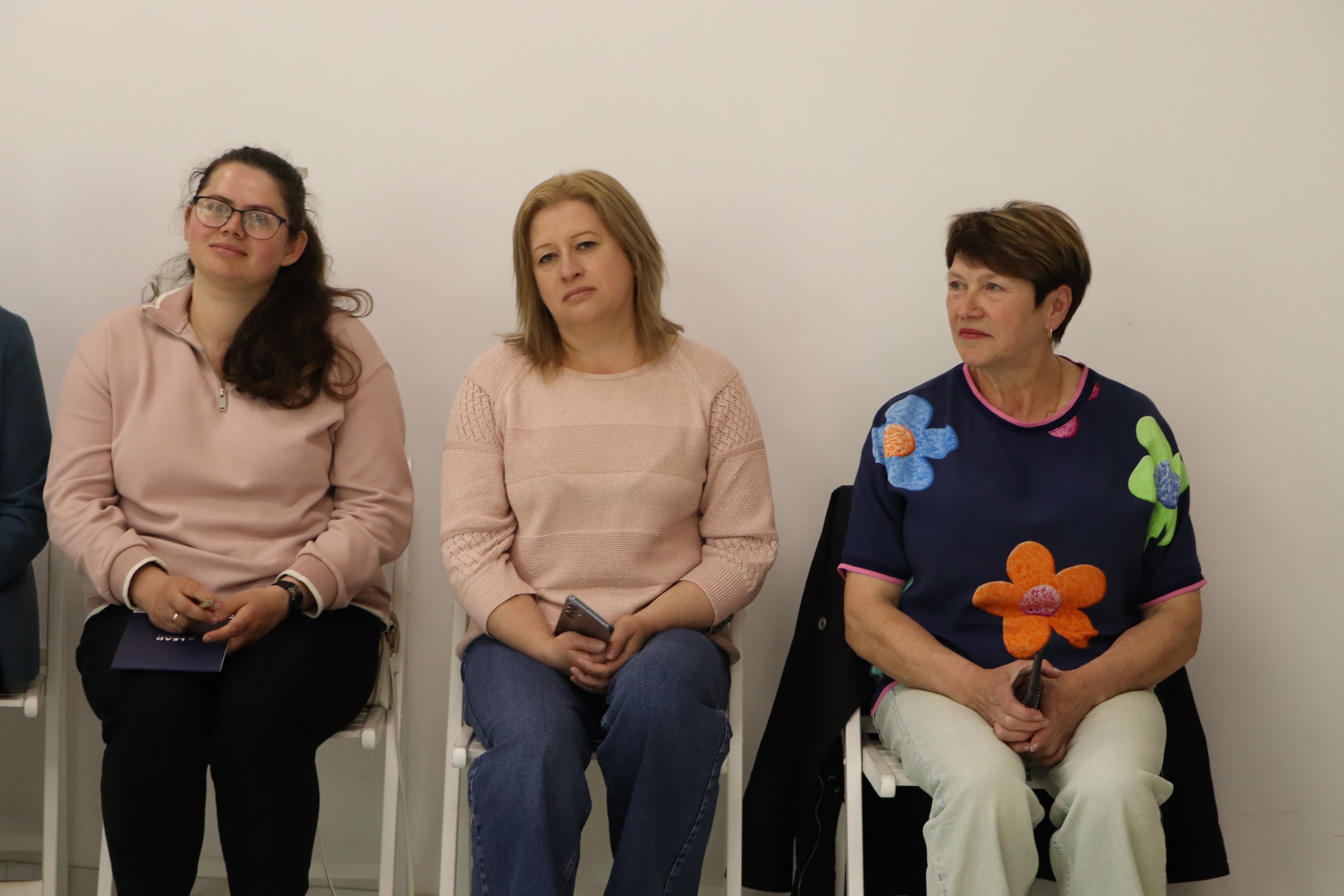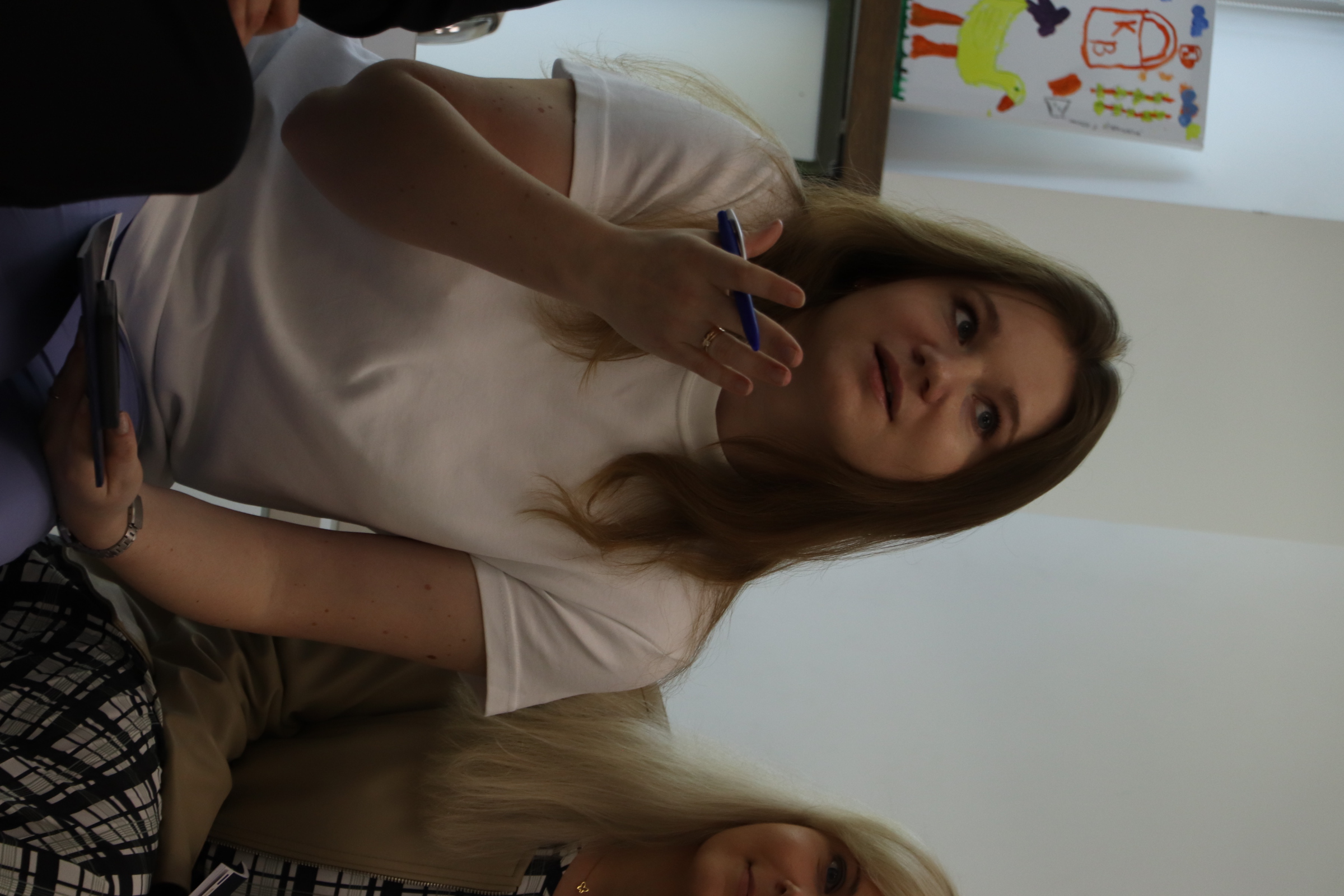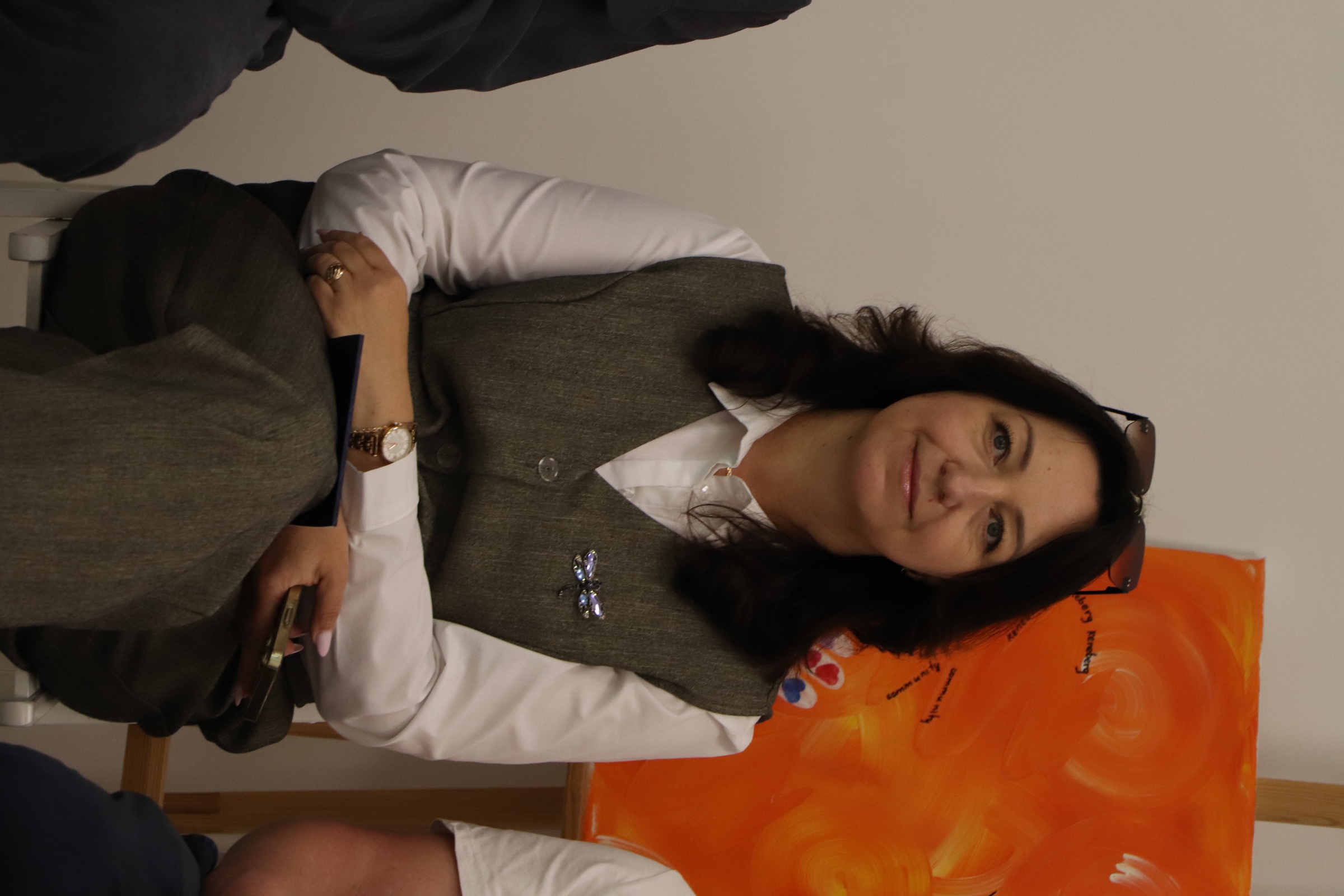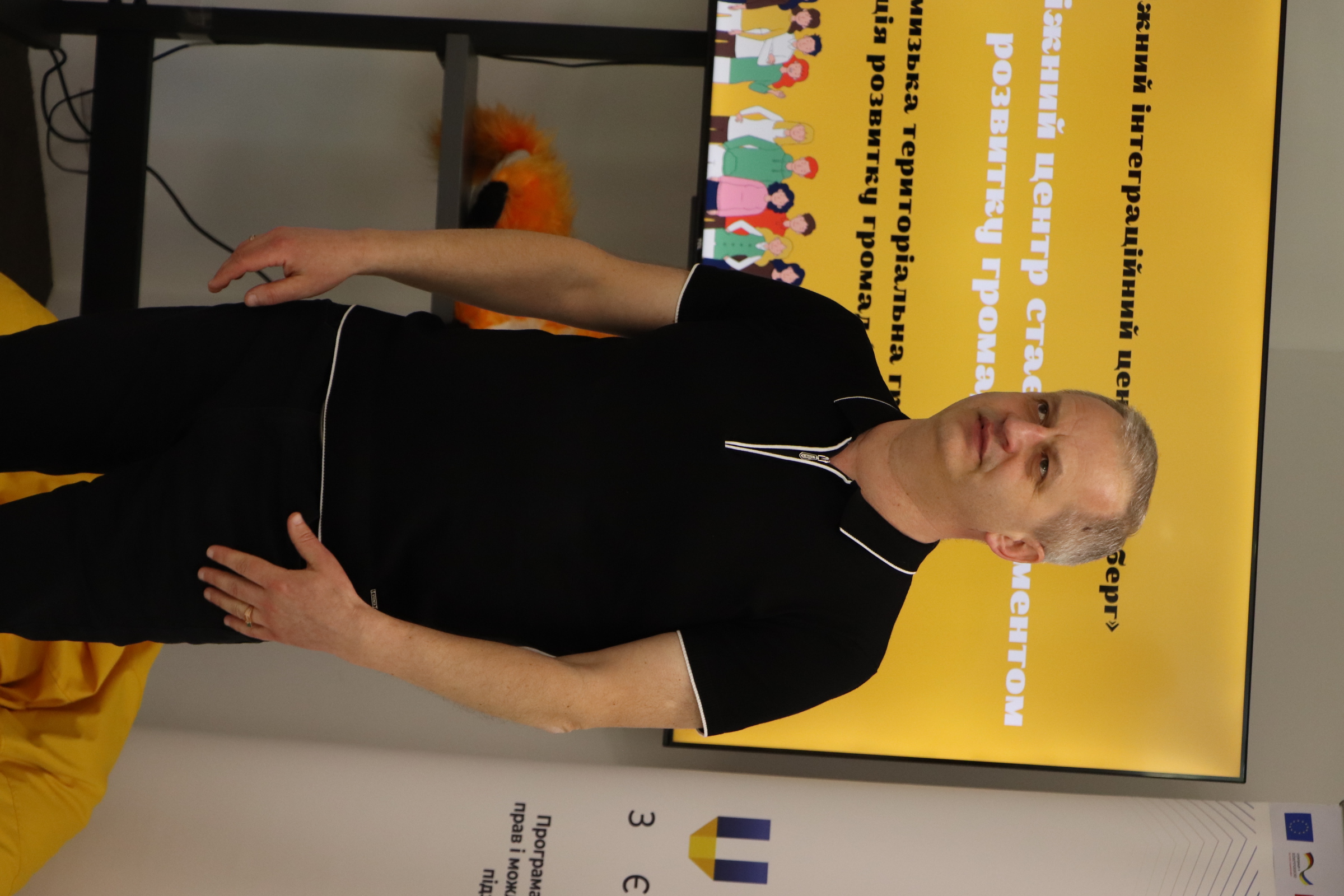




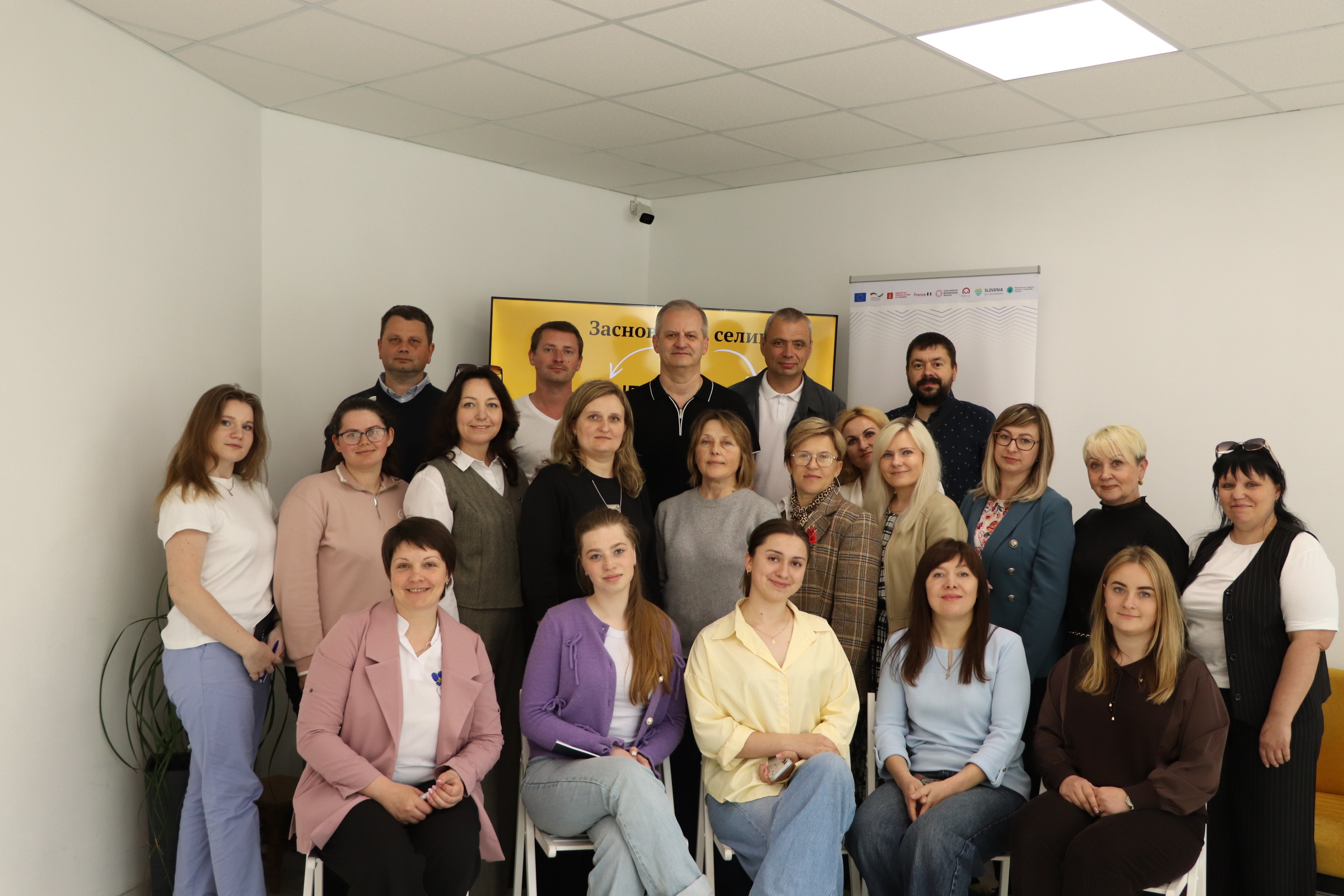
The main goal of the event was to get a first-hand look at the work of Keneberg Youth Centre. This space was established over two years ago by the Municipal Development Agency “Intonation of Change”, a local NGO. In a relatively short time, the centre has become the true heart of the municipality: 311 diverse events have been held here and 1,249 consultations provided.
From the first challenges to the first team
The centre’s journey began with limited resources and was driven by members of the local community. Viktoriia Kostiuk, the Head of the Intonation of Change, recalls that from the very start, the centre received no funding from the local budget. Essentially, the NGO became one of the main organisations working with young people in the village. Early on, the whole operation relied solely on two people, the head and a university student who acted as an administrator.
Realising that two people could not run the centre effectively on their own, the team reached out to participants from their previous projects.
“Within just three to six months, we had built our first community of teenage volunteers aged between 12 and 16,” says Viktoriia Kostiuk.
Every month, the teenagers planned their work, organised events themselves and actively told their friends and classmates about the centre. This helped to quickly raise awareness of Keneberg in the municipality.
Volunteer School: encouraging the youth to stay in the municipality
Over time, the organisers faced a new challenge: active local children were finishing school and leaving the village. To prevent the community they had built from falling apart, the centre decided to take proactive measures. The teenagers themselves initiated the Volunteer School, a special 10-week programme for children aged 9 and older.
Viktoriia Kostiuk explains that this approach helps to nurture a new generation of leaders long before they reach adulthood:
“In this way, we are essentially building a community of active young people from the age of 9, who by the age of 14 can already be fully involved in the life of the municipality”.
According to her, if a child does not develop a sense of belonging and the understanding that they are needed at home by the age of 14, they are likely to move to other cities when applying to college. The next step after volunteering at the centre is to foster an entrepreneurial mindset, so that young people learn to put their talents to use locally.
Support from the settlement council
The project’s success would not have been possible without the synergy with the local authorities. Smyha Settlement Council supported the civic initiative and leased out council-owned premises. The head of the settlement, Oleksandr Fedorov, noted that the idea of leasing council-owned premises to an NGO had fully paid off, as it is currently extremely difficult for young people to progress in life without access to informal education.
Today, the space operates consistently and systematically. Anna Kostiuk, the Coordinator of Keneberg Youth Centre, explains that the centre’s current priorities are informal education, volunteering, language clubs, international exchanges, social school entrepreneurship and the integration of young IDPs.
“We already have established practices in each of these areas, which we are ready to share with other like-minded partners,” adds the coordinator. The Agency has now agreed with the settlement council to develop a local programme to support the youth movement.
A centre starts with grassroots initiatives
The key takeaway that Smyha municipality shared with their peers is that youth work is a long-term strategy, rather than one-off initiatives to boost statistics. Many officials from other councils say they want such a centre, but lack the people to develop it.
“But it is people who are the driving force behind these centres — those who can rally a team around them and fill the space with meaning and activities,” says Viktoriia Kostiuk.
The Agency’s head adds that nowadays, a youth centre can provide a springboard for young people to establish themselves as freelancers, experts or civic activists. The organisation’s ultimate goal is to nurture children so that in the future they become skilled professionals in this very sector within their own municipality.
Practical tips for other municipalities
The experience of Smyha municipality sparked the interest of officials from all 12 invited municipalities. Ruslan Syvyi, the Head of the Regional Office, concluded that this kind of successful practice should be actively promoted and shared:
“It makes sense for municipalities to cooperate on joint activities, both through inter-municipal cooperation and through regular youth exchanges. They also need to explore their own ways of working, as there is no one-size-fits-all solution, and only a systematic approach yields long-term results”.