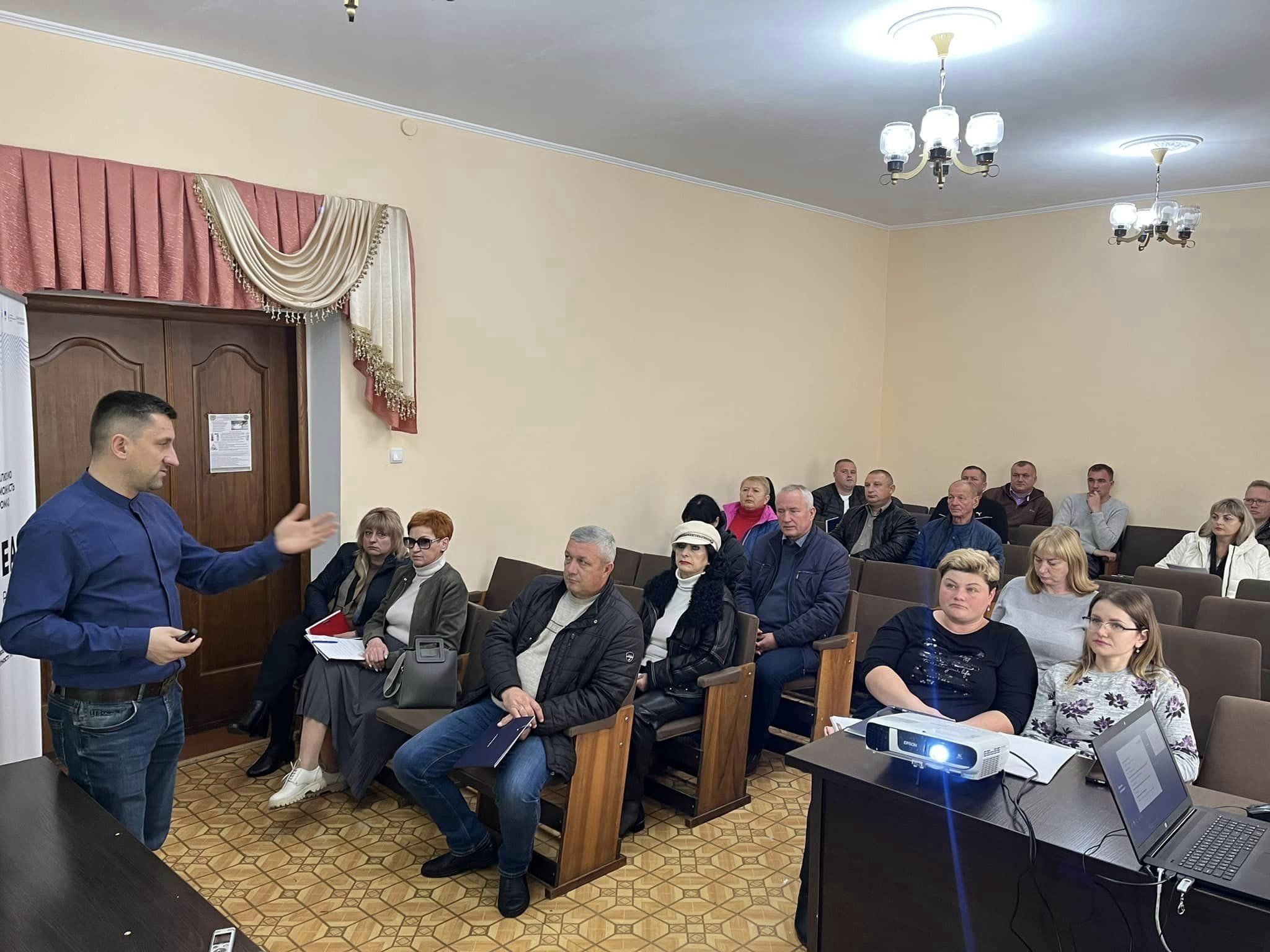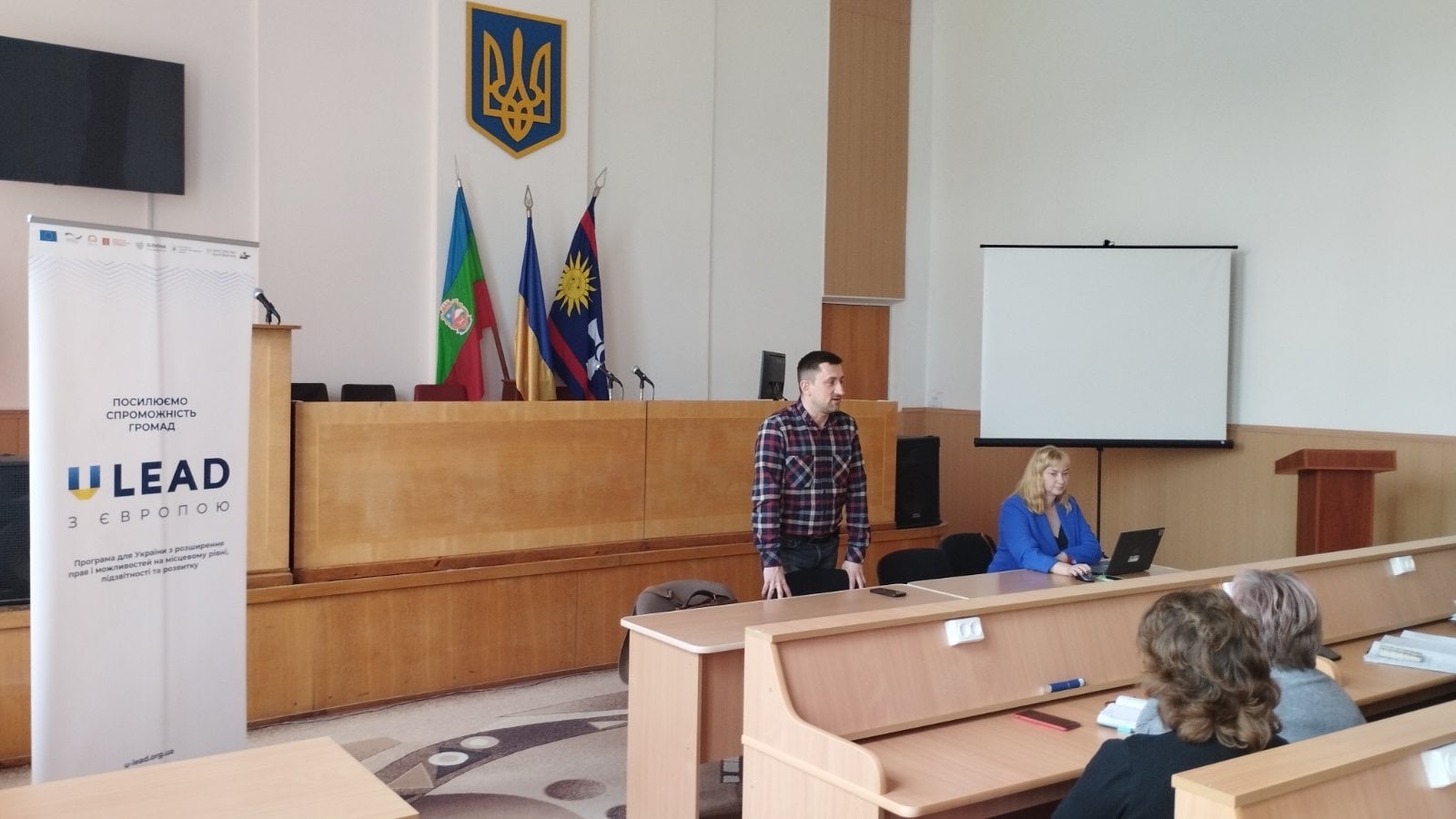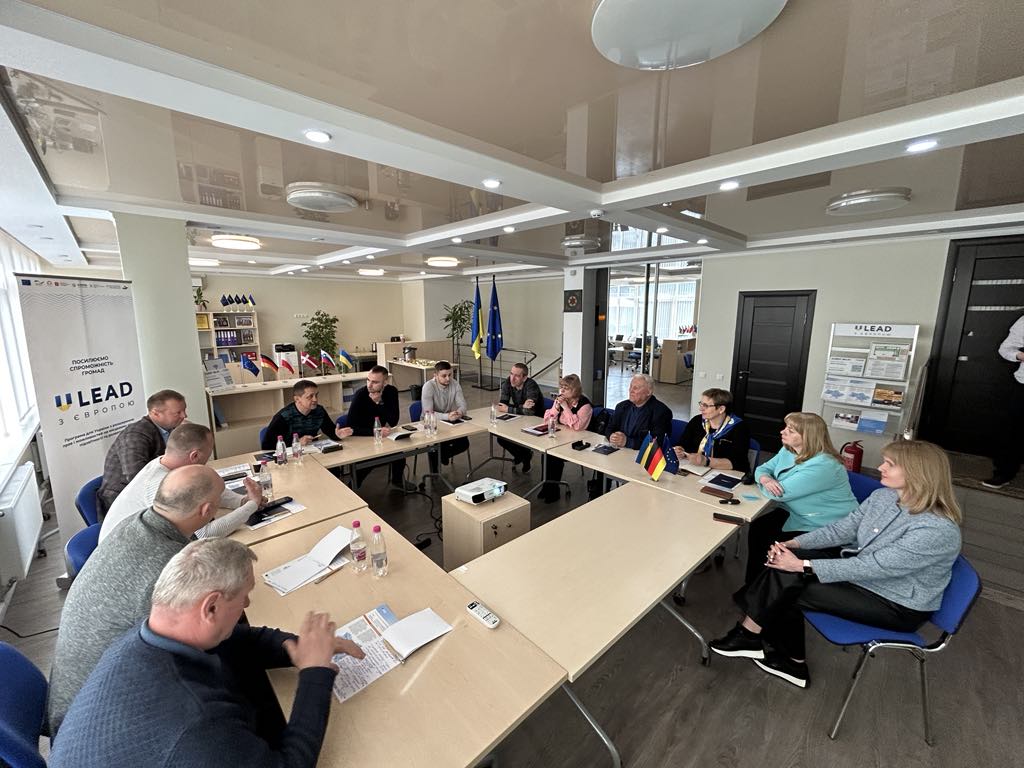







When the municipality of Haisyn, Vinnytsia Oblast, acquired a new administrative status in 2020, it inherited a lot, both in terms of powers and resources and, as it is often the case, outdated approaches to management. Following the amalgamation of the city council and 16 village councils, the municipality now consists of 42 settlements and the city of Haisyn. Since January 2021, the municipality has been operating with a new status.
"When the municipality first formed, we faced many problems and challenges. First, building cooperation among the newly added villages. There were often conflicts, pushback to the merger, uncertainty regarding powers and lack of trust. And the biggest pain point of them all, the lack of funding," says Inna Pastukh, the Head of the Financial Department of Haisyn City Council.
The newly formed municipality also inherited a number of unresolved infrastructure problems, such as unfinished water mains, bad roads, no street lighting, poorly maintained cemeteries, as well as an extensive network of institutions, new HR challenges and the need to completely revamp budget priorities.
Attracting additional resources to the municipality
Despite a difficult start, Haisyn has become a model of effective financial management in just a few years. Both internal management decisions and external circumstances were crucial. Basic analysis and support from U-LEAD allowed the municipality to devise an action plan to increase the revenue part of the budget.
"In 2021, we lacked funding even for basic needs. In 2022–2023 the situation improved significantly. We were able to raise over UAH 398 million due to the growth of the tax base, primarily personal income tax (PIT) and local taxes. Furthermore, our municipality became the leader in the region in terms of the assistance provided to the Armed Forces of Ukraine – UAH 299.3 million of subvention," says Inna Pastukh.
The municipality’s resources were also directed at:
- reconstruction of roads: UAH 176 million;
- updating vehicles and equipment for municipal services: UAH 90 million;
- creating a rehabilitation department for military personnel and IDPs: almost UAH 50 million;
- expanding social services and support for veterans and their families.
Educational reform: how the municipality overcame pushback and found balance
The reform of the educational network is one of the most controversial issues for any municipality. Haisyn was no exception.
"Optimisation of the network of educational institutions often causes pushback, outrage, concern and protests, and the Haisyn City Council was no different. The local public expressed their dissatisfaction with the closure of schools and kindergartens, took to the streets and demanded from the local authorities to suspend the optimisation process, arguing that “no school meant no village.” It is perfectly understandable that no one wants to leave their comfort zone, especially in wartime. Still, Haisyn municipality embarked on the process of transforming the network of educational institutions. The most difficult part was to prove to parents that their children would benefit from all the changes we proposed," recalls Inna Pastukh.
The municipality conducted an analysis of the educational network that accounted for the student enrolment, the quality of educational services and financial indicators. Following the assessment, a Network Development Plan was approved. After a long discussion, some schools were closed. Four school buses were purchased, routes for transporting children were mapped, and teachers were employed.
"They have come a long way, overcoming the municipality’s resistance to change as well as the need for effective communication with parents. Ultimately, Haisyn municipality was able to explain the goals of the reform to the public and gradually implement its decision," states Inna Sviatna.
The funds saved were used to improve the infrastructure of the schools that accepted the students. The process is ongoing, as the municipality is preparing for further optimisation of institutions with low enrolment in 2025–2026.
Centralised accounting: introducing financial autonomy
The educational network of Haisyn municipality needed modernisation and a change in approaches to accounting. The previous system failed to enable accounting for business transactions in educational institutions, and the accounting itself was inconsistent with or outright violating the effective laws. To remedy the situation, the municipality introduced financial autonomy for schools and created a separate municipal institution for accounting.
"Before the reform, schools and kindergartens did not have their own accountants or contracted third parties, which actually violated the legislation and employment rights of employees. With the support of the Regional Office of U-LEAD, the municipality established proper accounting in institutions. It is compliant with the legislation, allows teachers to maintain their tenure benefits and ensures proper accounting of the assets," explains Inna Sviatna.
"Financial autonomy enables heads of institutions to independently create the structure, budget, staff list, enter into agreements, make procurements, pay their employees, improve staff qualifications and attract extrabudgetary funds. This increased transparency, efficiency and accountability," says Inna Pastukh.
That said, the new approach also brought some challenges: there is a shortage of personnel, resulting in one employee servicing several institutions, often with overtime. And so the search for ways to optimise performance continues.
U-LEAD: supporting changes at all stages
Haisyn municipal team stresses that without U-LEAD’s expert support, many decisions would have been either postponed or implemented to a lower standard: ‘The U-LEAD team in Vinnytsia Oblast is our dedicated partners. We regularly turn to them for advice. They hosted online sessions, visited the municipality and helped with the transition to institutional autonomy. Without them, these processes would have been much lengthier,’ says Inna Pastukh.
"We worked with Haisyn very closely, both online and during field trips. It is the case of a municipality that does not wait for someone to decide but takes responsibility, while also openly engaging experts," adds Inna Sviatna.
"I advise my colleagues to adopt the best practices of other municipalities and use the support of U-LEAD with Europe in all processes that take place in your municipalities," sums up Inna Pastukh.
This case is about the transformation that is possible due to the determined efforts of the municipality itself and the support of the professional community. Haisyn set an example of how to get things in order while treating people with respect and taking responsibility for the future.