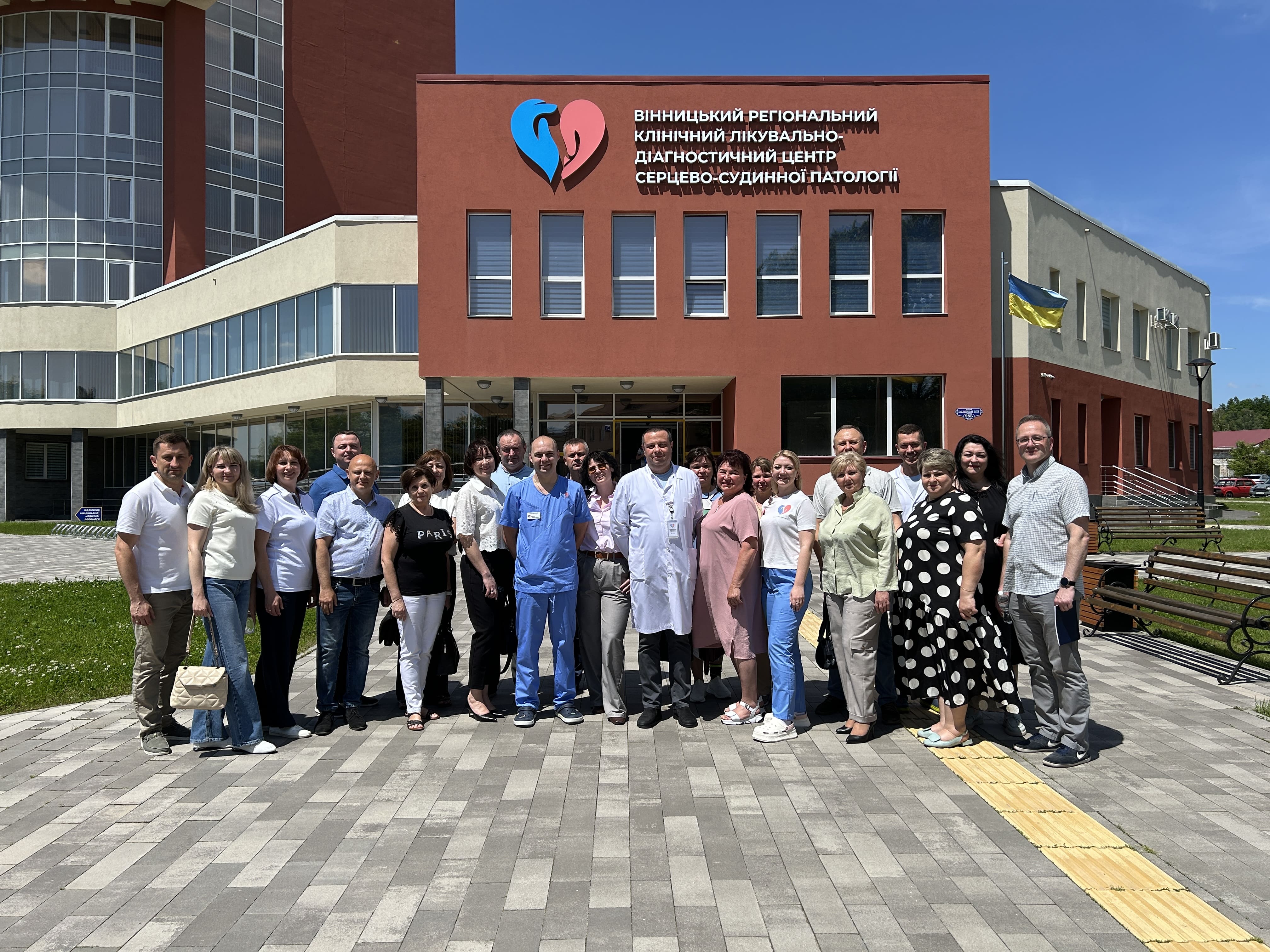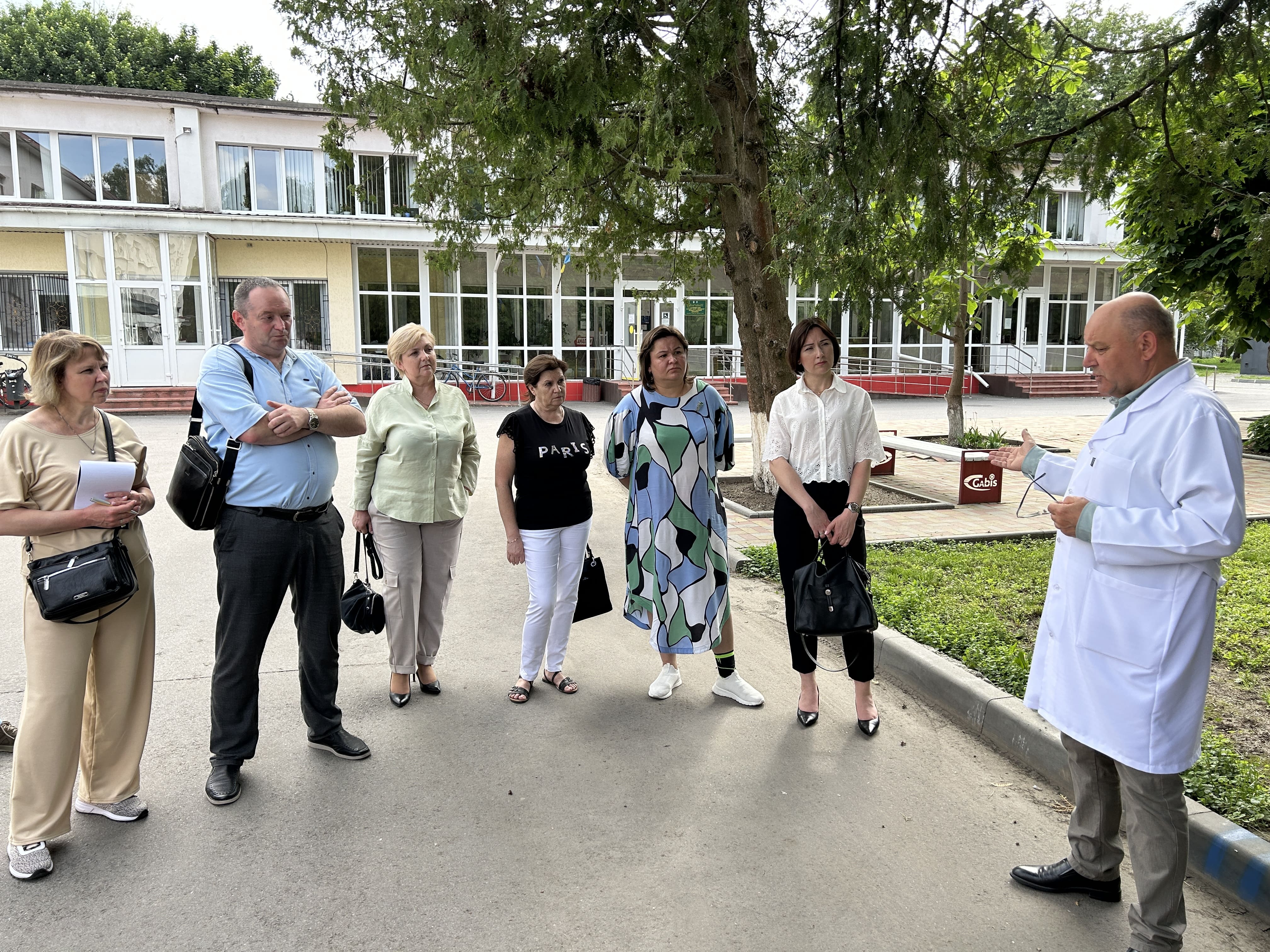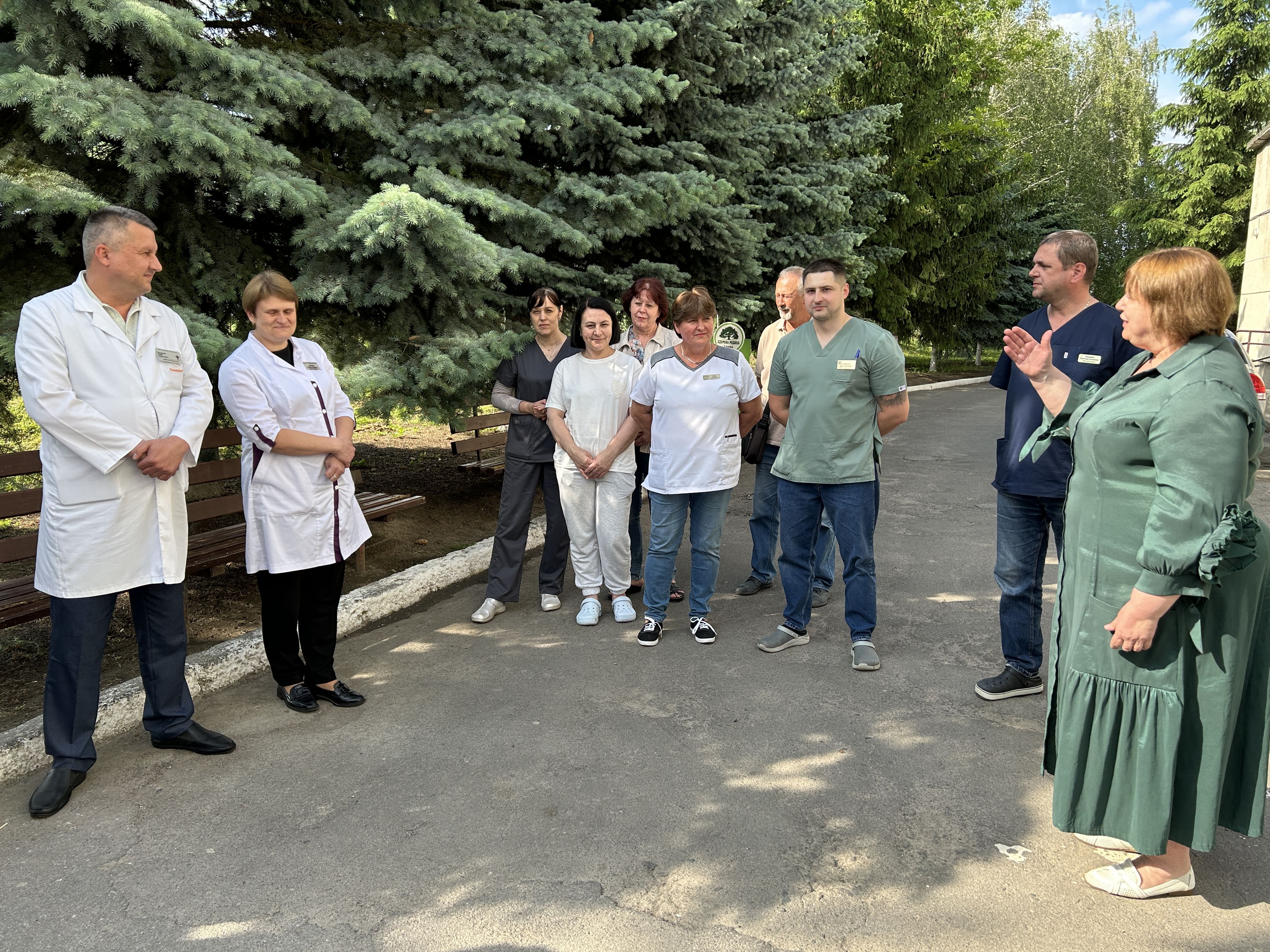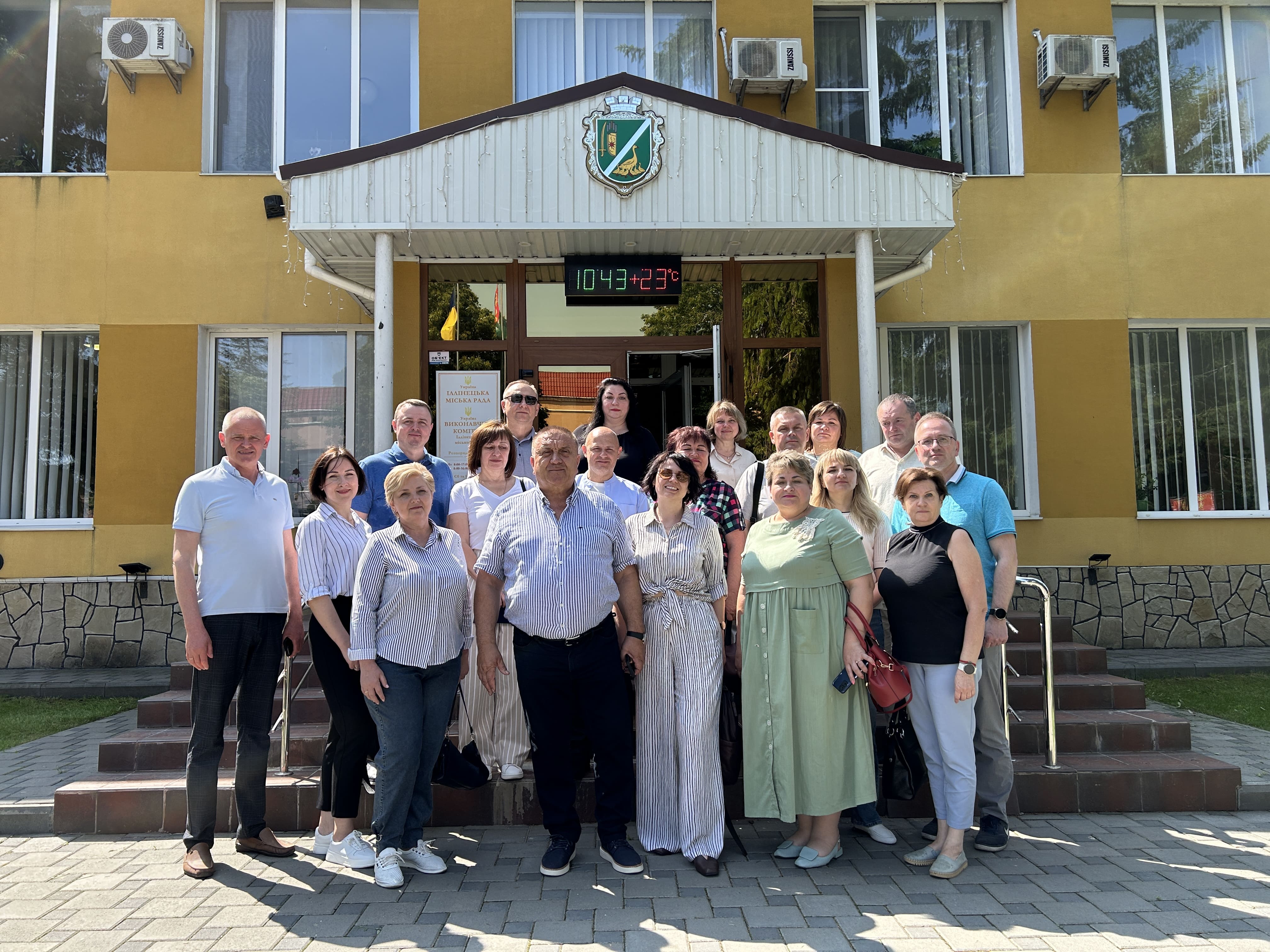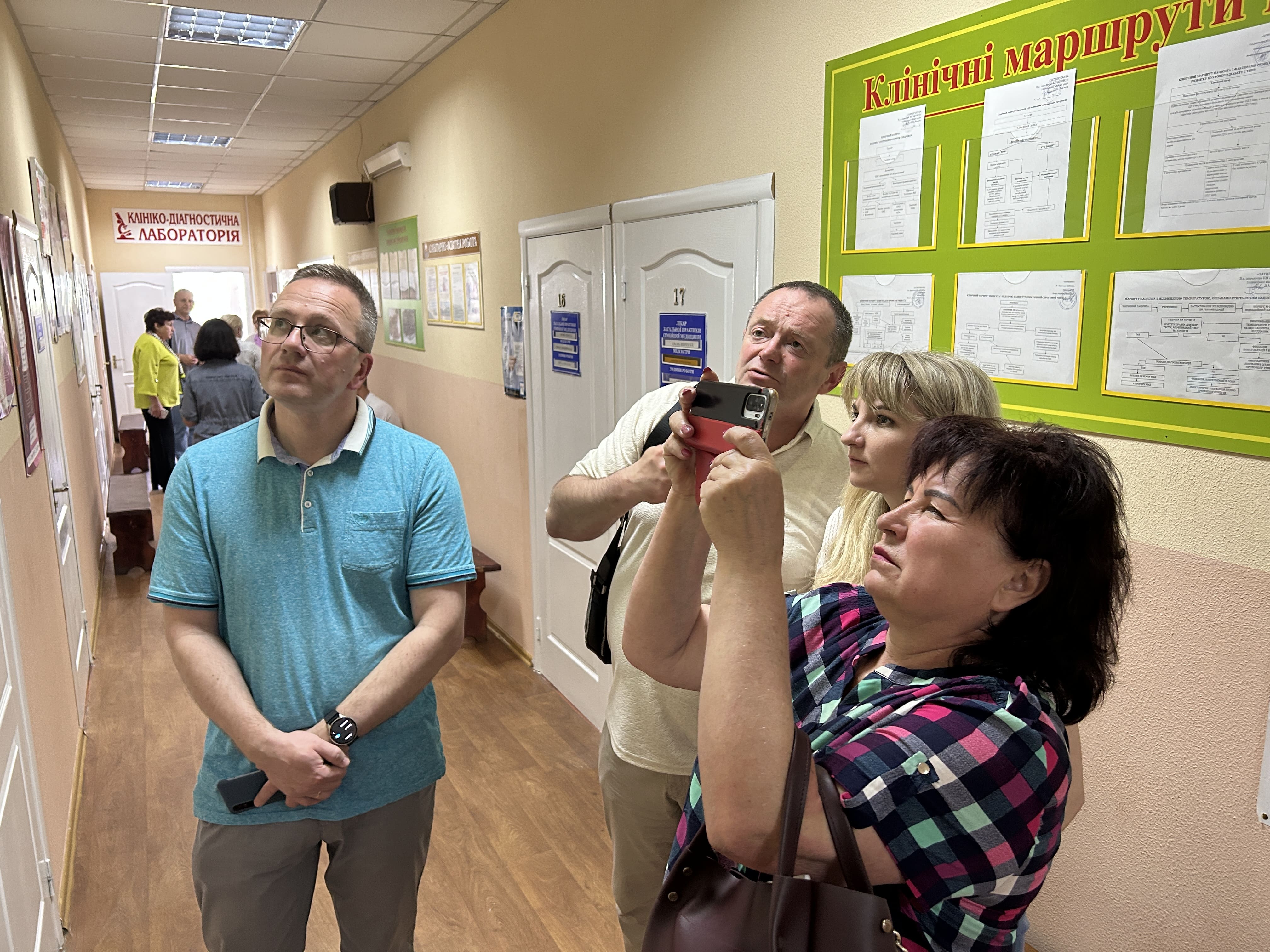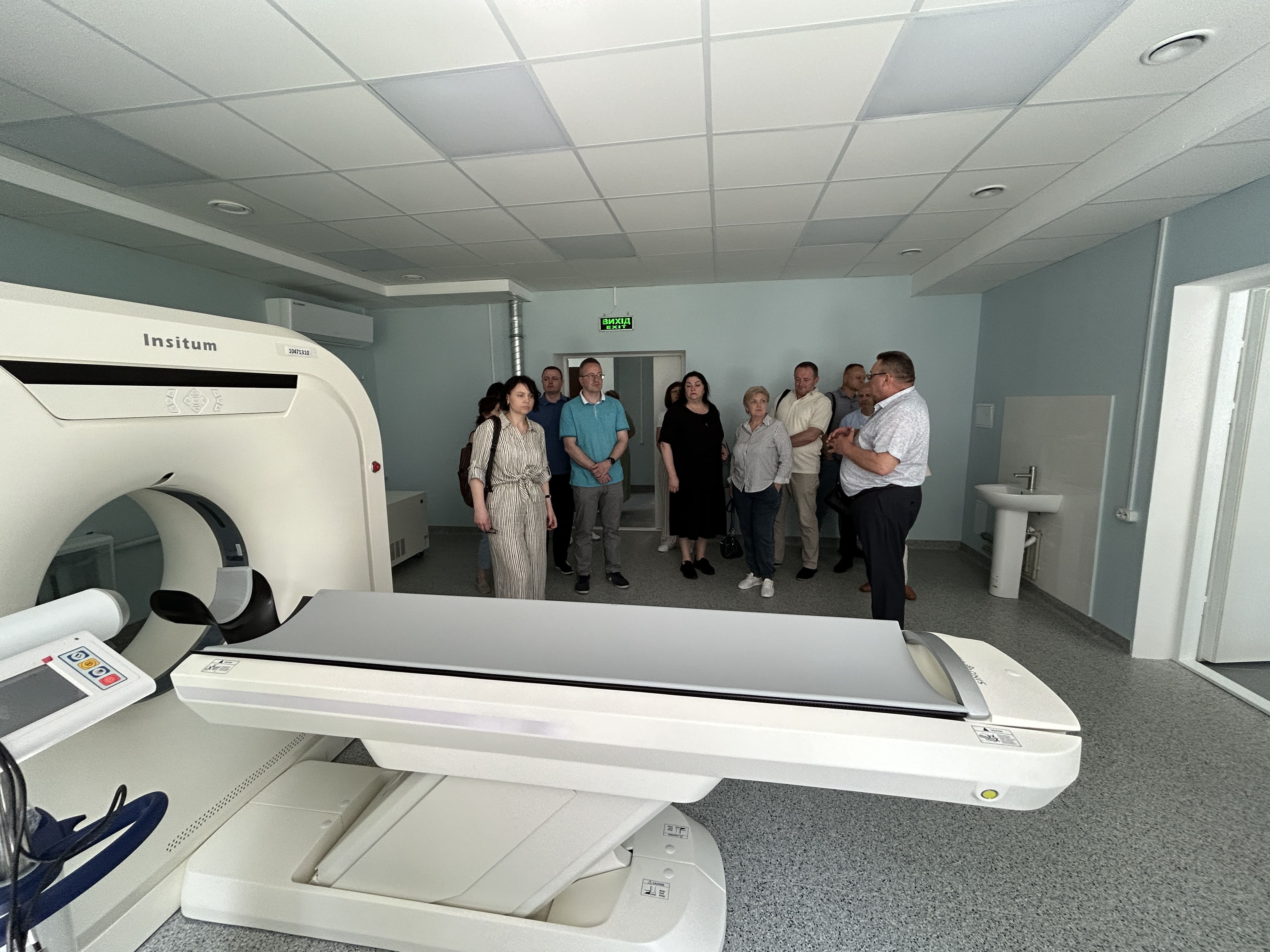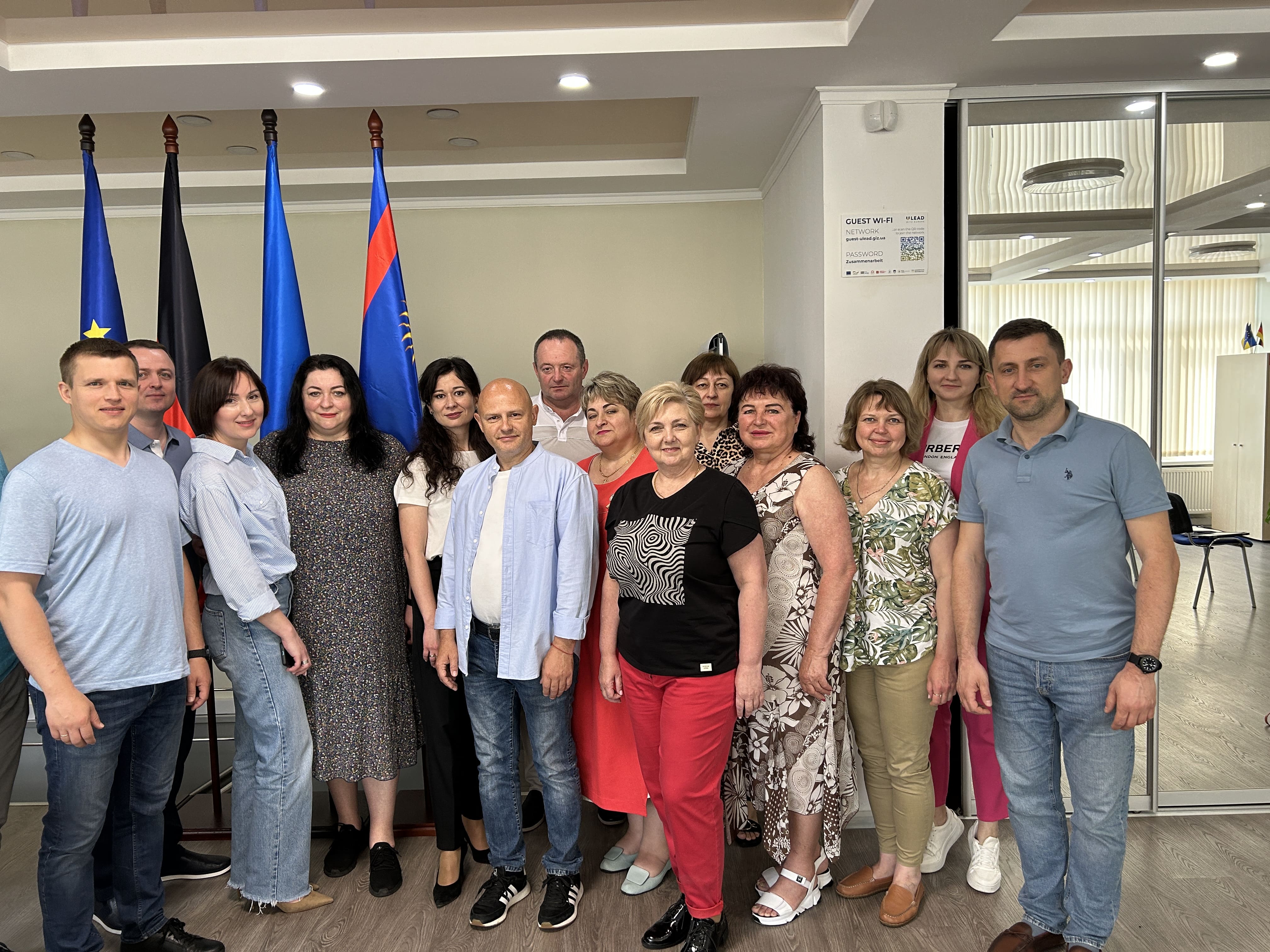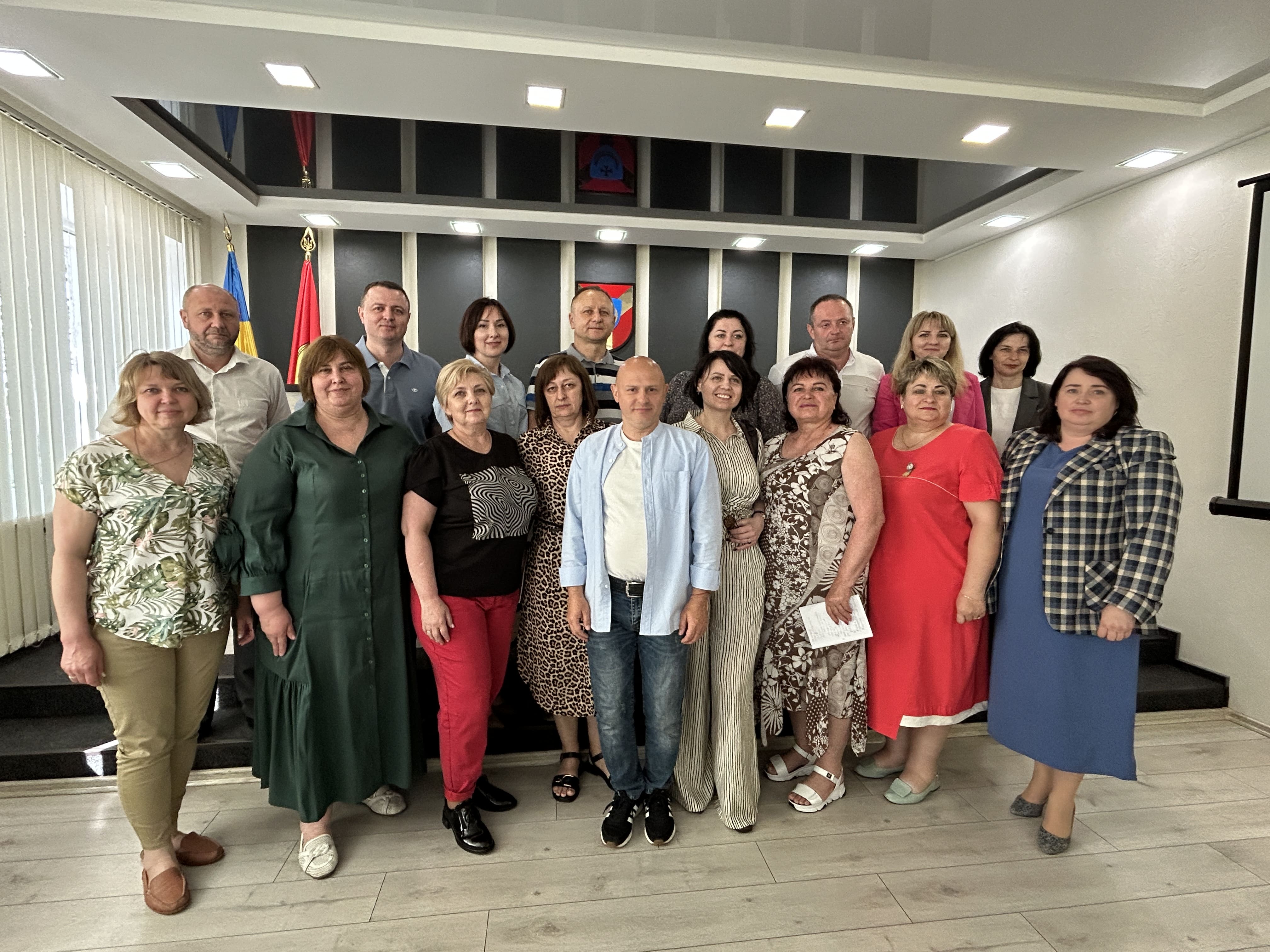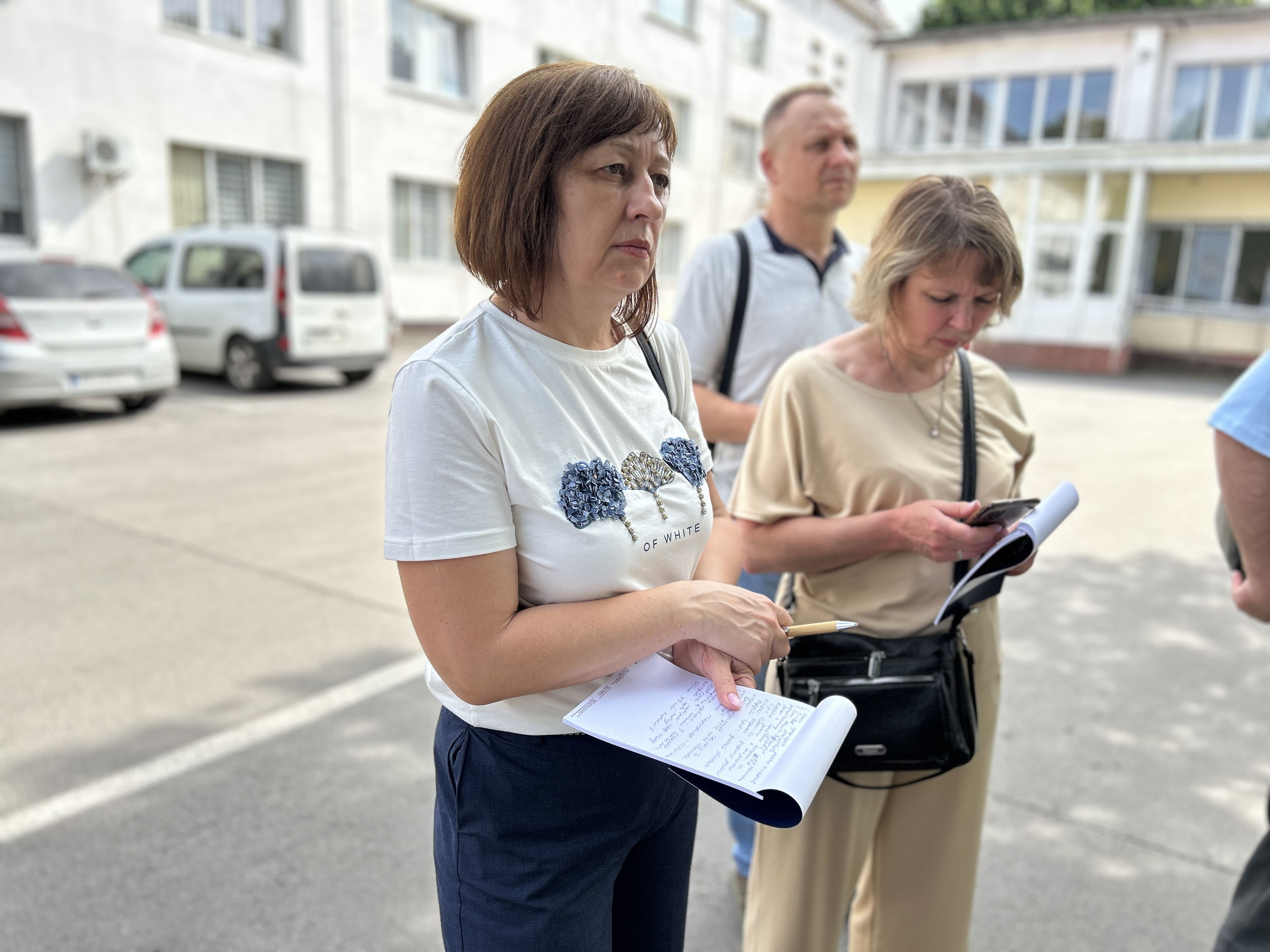



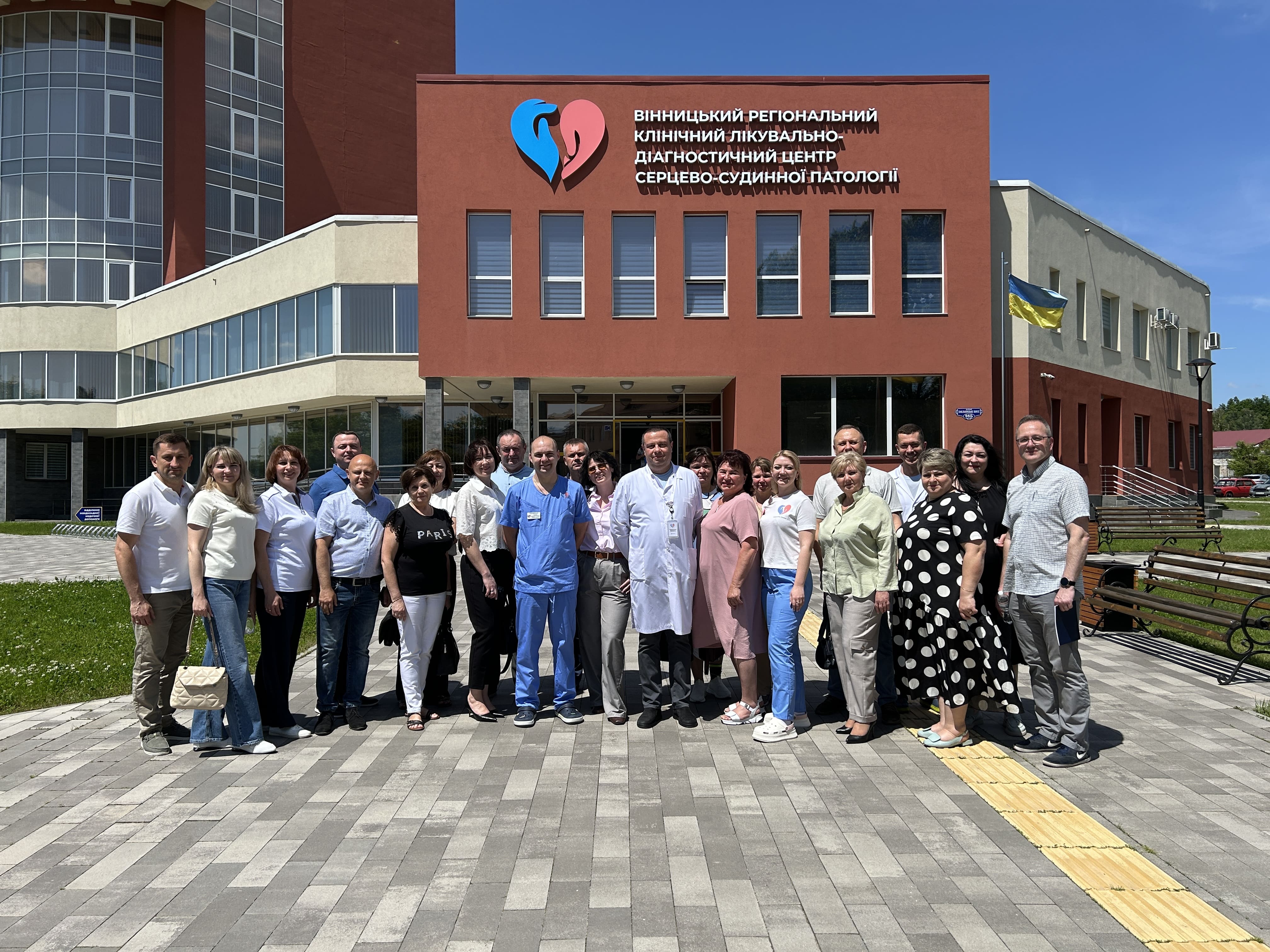
During several busy days the representatives of municipalities from several oblasts of Ukraine – local self-government officials and heads of municipal healthcare facilities – studied the practices already working in Vinnytsia Oblast municipalities.
"A study tour is always more about practice, than theory. The participants in the integrated health management training programme in practice consolidated the knowledge they had acquired during their online training. We applied a comprehensive approach to preparation of the study visit to Vinnytsia Oblast and offered the participants to explore the whole healthcare system of this oblast and also deepen the practical experience of direct management of municipal facilities in the municipalities," says Vitalii Shvets, the Head of the Regional Office of U-LEAD with Europe in Vinnytsia Oblast.
The participants of the study-tour not only heard about but also saw with their own eyes:
-
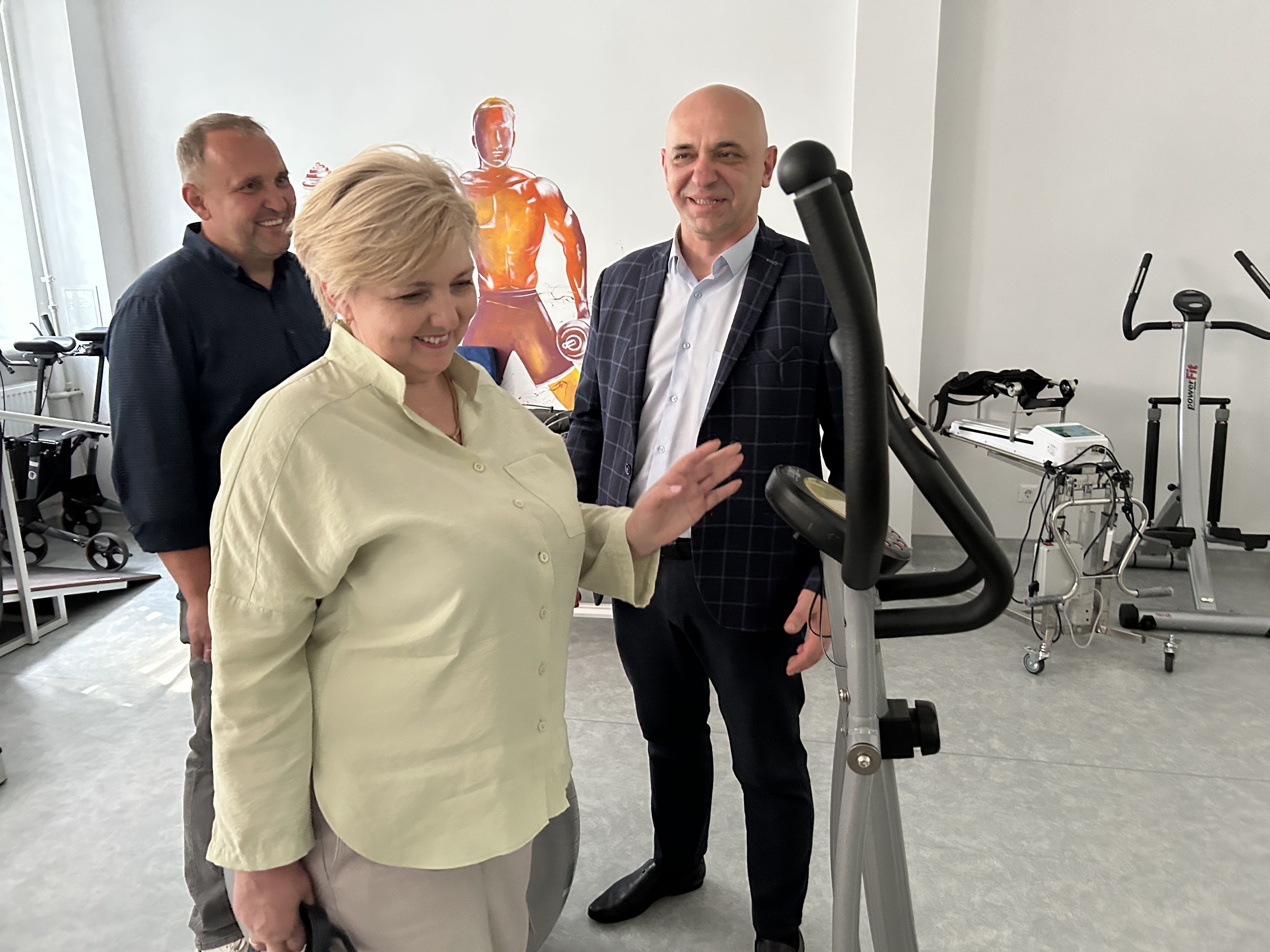
How medical rehabilitation works in Kalynivka municipality — with an overview of equipment and a discussion of practices adapted to the needs of IDPs and military people.
-
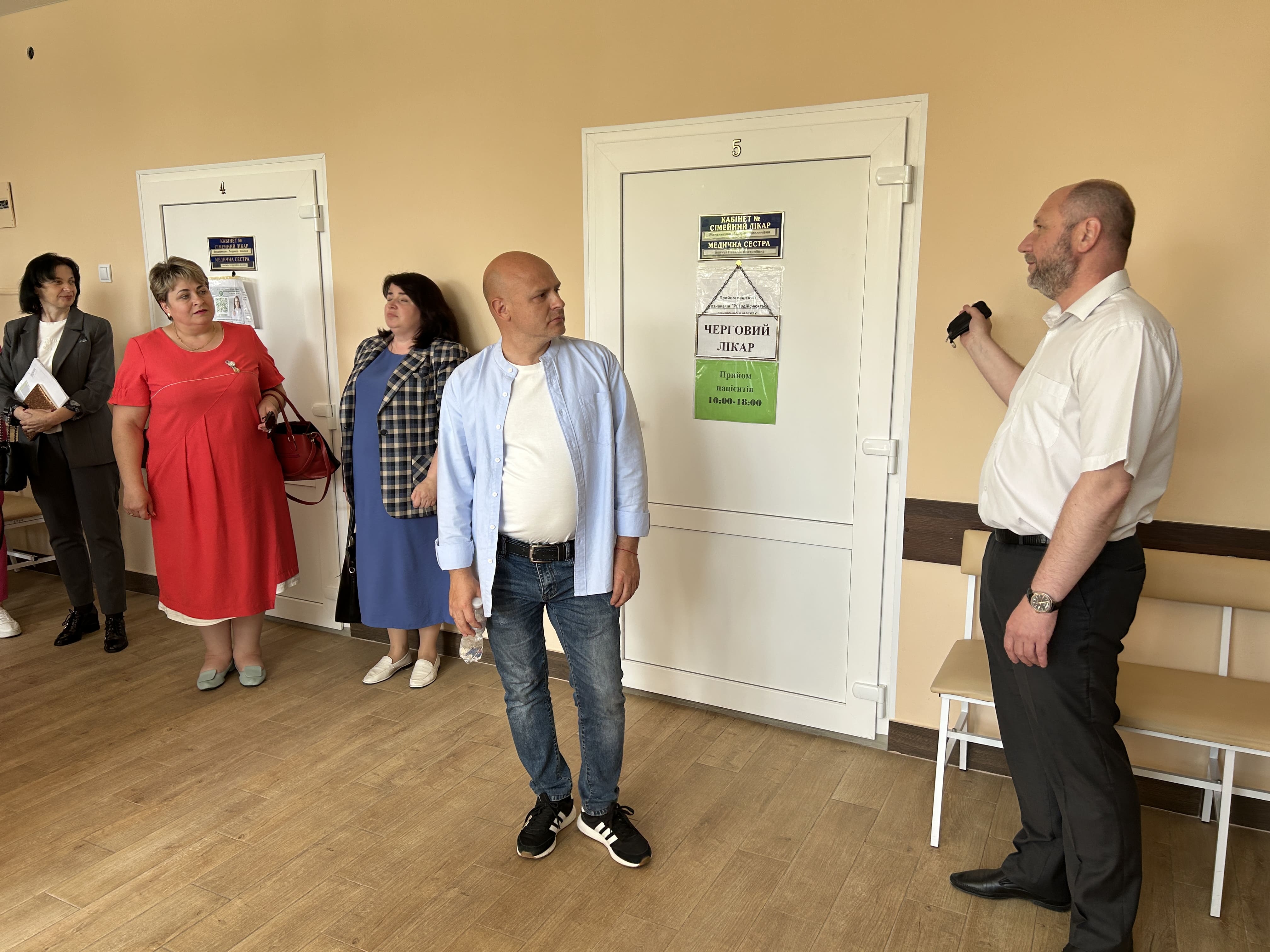
How Nemyriv municipality fulfils crisis management of healthcare institutions and broadens the range of medical services provided. How Illintsi municipality develops the network and broadens the range of medical services provided — and why it is important in crisis circumstances.
-
How to involve funds for international technical assistance — on the example of the regional children’s hospital in Vinnytsia.
-
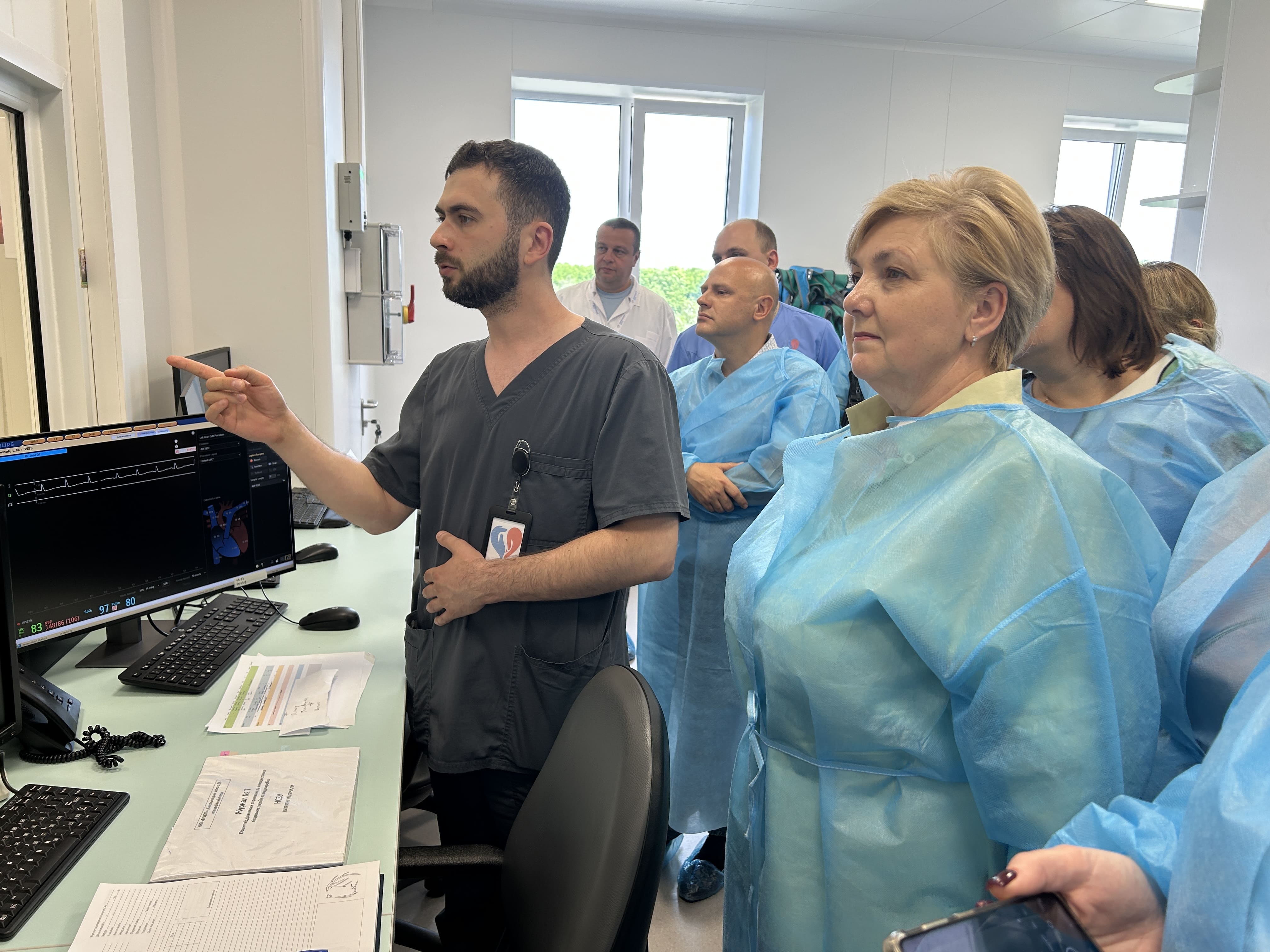
How Vinnytsia Regional Clinical Diagnostic and Treatment Centre of Cardiovascular Pathology functions, saving human lives every day, with a possibility to watch directly how the doctors work.
-
How to analyse financial indicators and prepare realistic financial plans for healthcare facilities — at a training with U-LEAD with Europe experts.
Practical outcome of the study-tour
According to Tetiana Kuzniak, Director of the Primary Healthсare Centre of Kamianets-Podilskyi City Council, the curriculum of the programme in general was remarkably useful: ‘Blocks of theory were formulated in a comprehensive way and in digestible volume — not too overloading, keeping the focus on the essence. The practical component was especially valuable: we have been missing such activities a lot because of the pandemic and the war.
As for the study-tour itself, I was impressed by the level of organization of the secondary healthcare system in Nemyriv, Kalynivka and Illintsi. I saw the leaders thinking strategically, preparing for new packages, and interacting with businesses and donors to make the most effective use of even limited budgets. Also, I noticed how motivated are the colleagues from municipalities bearing much more challenges than us. It gives inspiration to act and search for the new solutions.’
Andrii Solomiienko, the Head of the Health Department of Bilhorod-Dnistrovskyi City Council, says that his expectations from the visit were substantiated and even exceeded: ‘I will implement at least 70% of what I have seen in the municipalities of Kalynivka, Nemyriv and Illintsi. We have exchanged contacts with our colleagues and will keep in touch to improve the quality of medical services together. I was particularly impressed by the story of Nemyriv hospital: the team managed to stabilize the situation and bring the facility to a new level in a year. This is a powerful example of a management approach that is worth adopting.’
For Viktoriia Riezanova, the Head of the Health Department of Chuhuiv City Council, visiting Illintsi municipality was particularly interesting: ‘We are cooperating with Illintsi municipality within the framework of the Shoulder to Shoulder: Cohesive Communities national project. Thanks to this initiative, our municipality received assistance to restore Kononenko Central Hospital in Chuhuiv. This is an example of true mutual support between municipalities. In general, participation in the training programme and the offline visit were very valuable for us. We didn't just learn from the experience of other municipalities - we got to know each other, saw each other in person, and now we can ask for advice and support. Such meetings are not only about professional development, but also about mental reboot. We all came back with inspiration and new ideas. We are very grateful to the organizers and the municipalities that welcomed us with openness and care.’
Why such study-tours are important
Every municipality today seeks its own pathway in healthcare management. These pathways, however, should not be lonesome. Such study tours grant access to seeing successful examples in action and understand how it works, Valerii Mikulich, the Head of the Social Wellbeing Working Group explains:
“Our key goal was not only to show the participants successful practices in the healthcare management but also create an environment for experience exchange among the participants. And we succeeded. It is especially valuable that both representatives of healthcare institutions and local government officials took part in the programme. Once again we became convinced that it’s vital to establish a stable communication between these two parts.
Thanks to such cross-sectoral interaction, the participants began not only to exchange ideas, but also to formulate ideas for partnerships. And this is perhaps the most valuable thing, because it is trust and a shared vision that starts to change.’