

A municipality can operate without a charter for years. In theory, this is possible. Yet, the greater the powers and responsibilities, the more apparent the lack of clear rules governing participation, cooperation and decision-making becomes.
For the municipality of Krynychky, this issue remained unresolved for quite some time. Until 2025, they did not have their own charter. The situation changed following the municipal officials’ participation in the training programme “Steps for Specialists. Development of the Charter of a Municipality” organised by U-LEAD with Europe.
“The charter establishes common rules that help the municipality to function, whilst also giving every resident the opportunity to influence local life and take part in decision-making. This is an important step towards ensuring that the municipality is truly a shared endeavour for every resident,” says Yurii Baliuk, the Head of the Settlement Council.
From training to taking actionable steps
The municipality makes no secret that it was the training that set the process in motion.
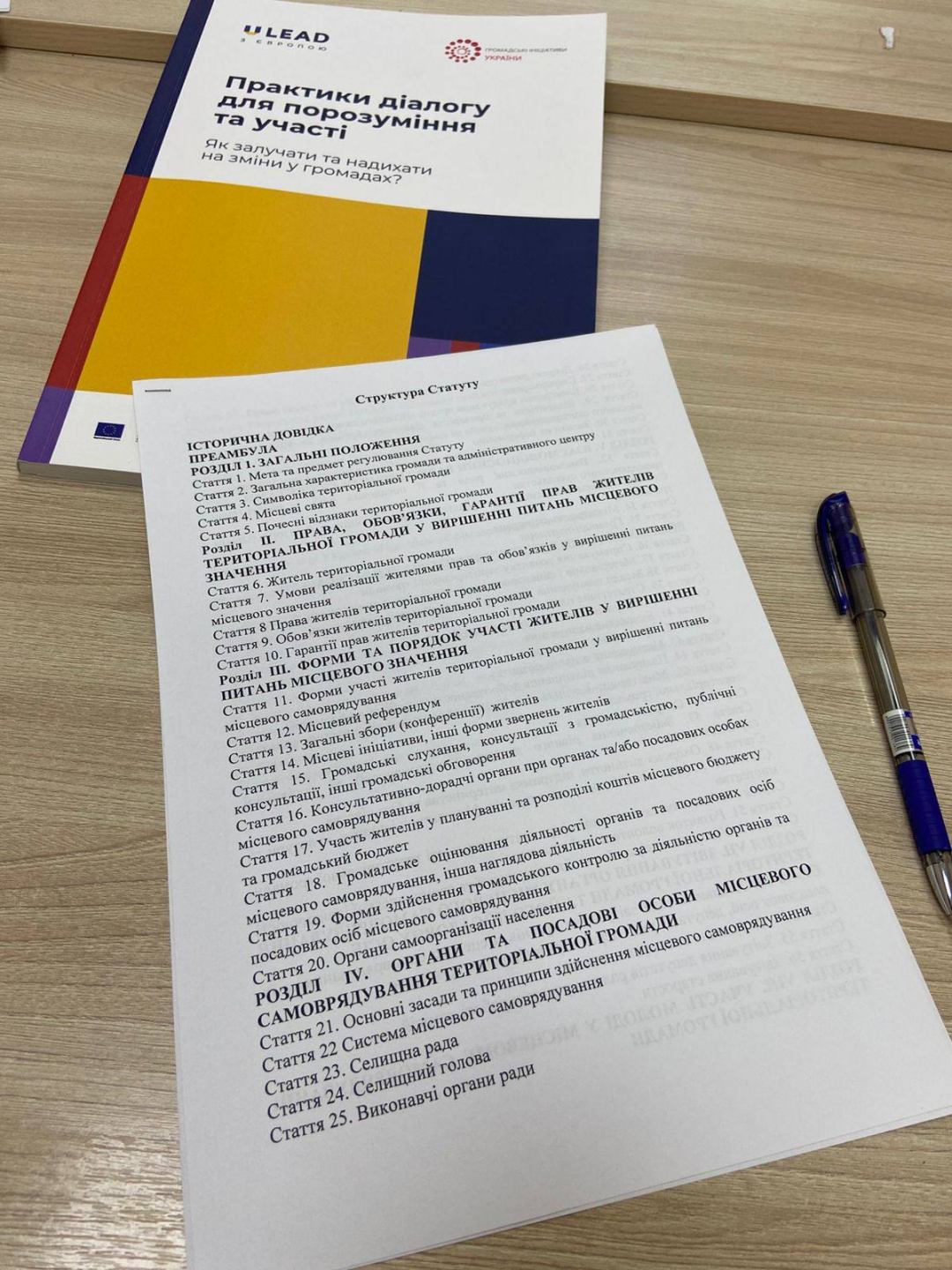
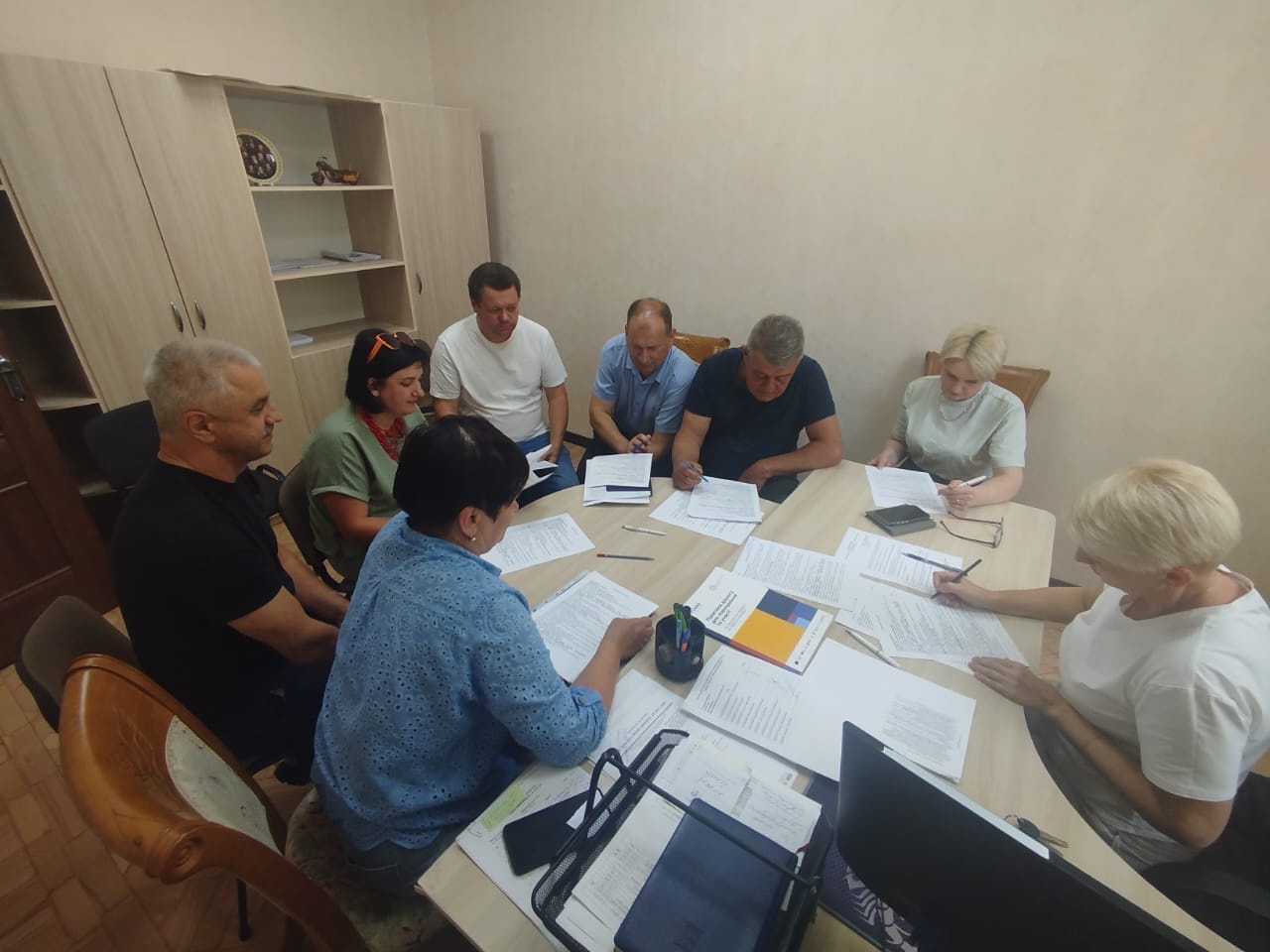
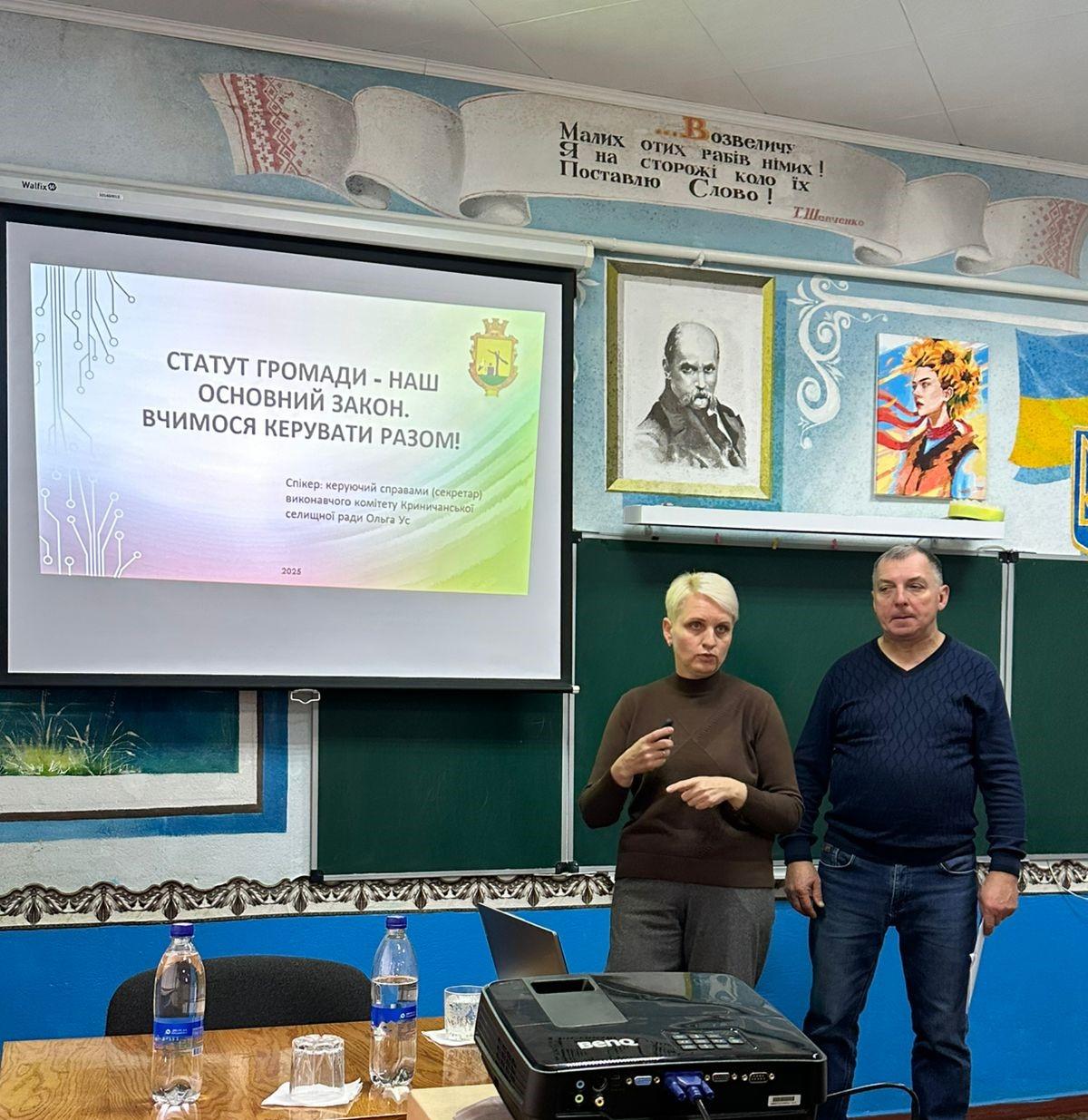
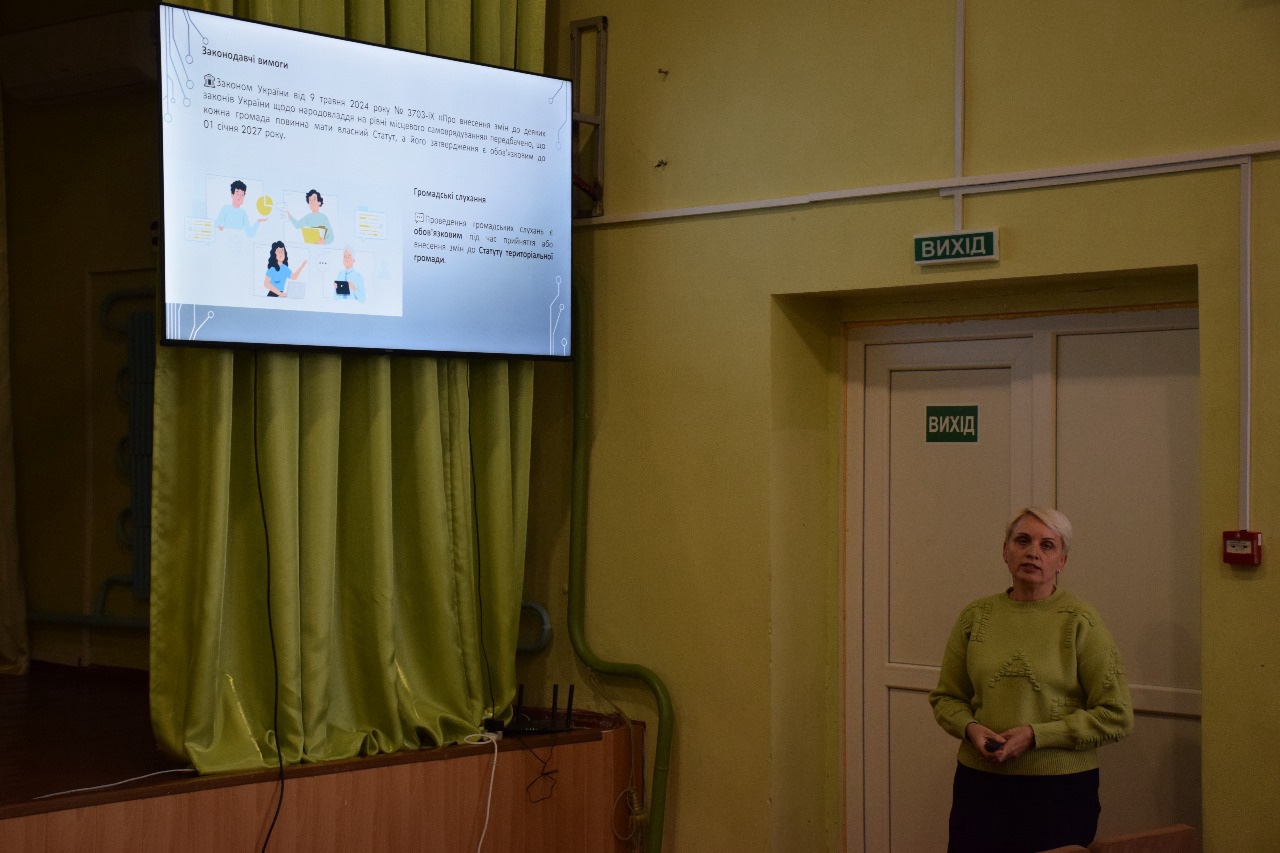
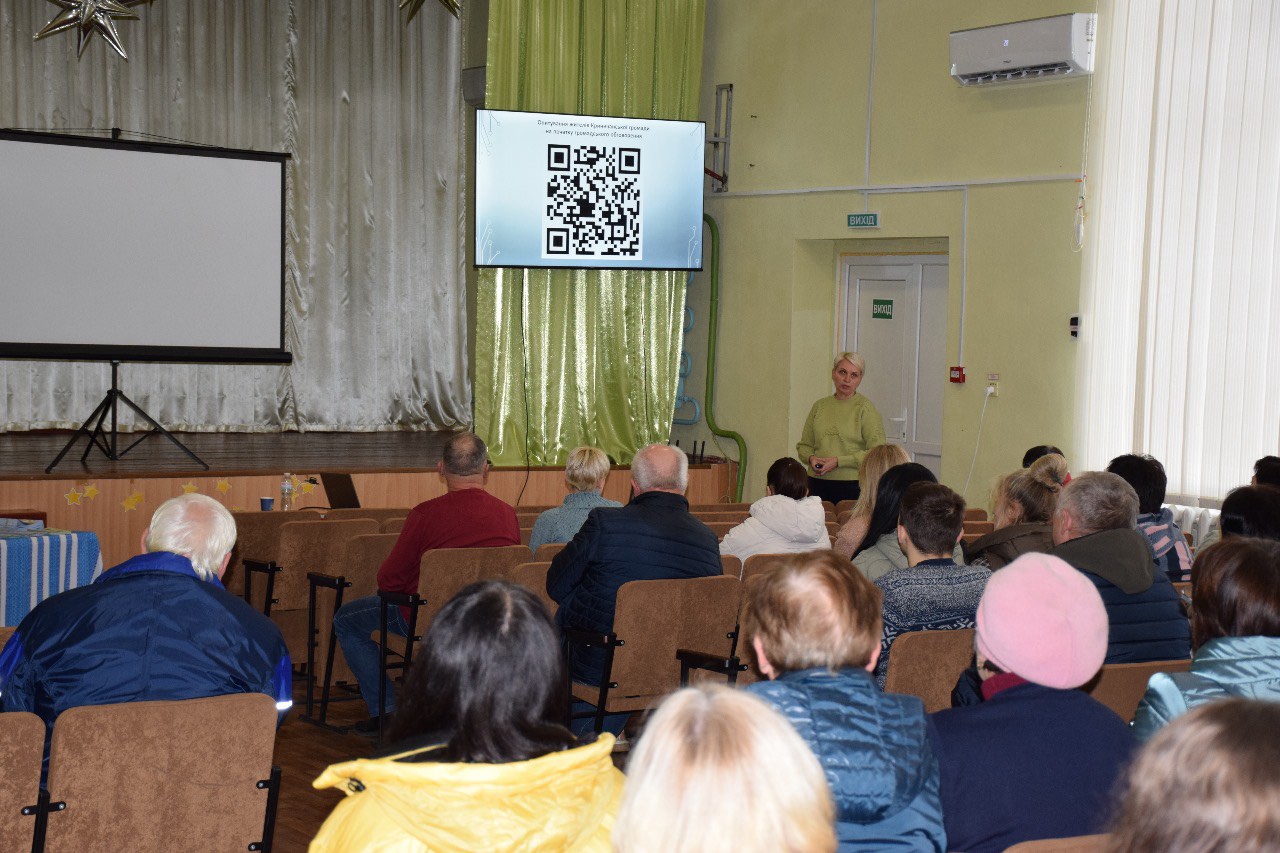
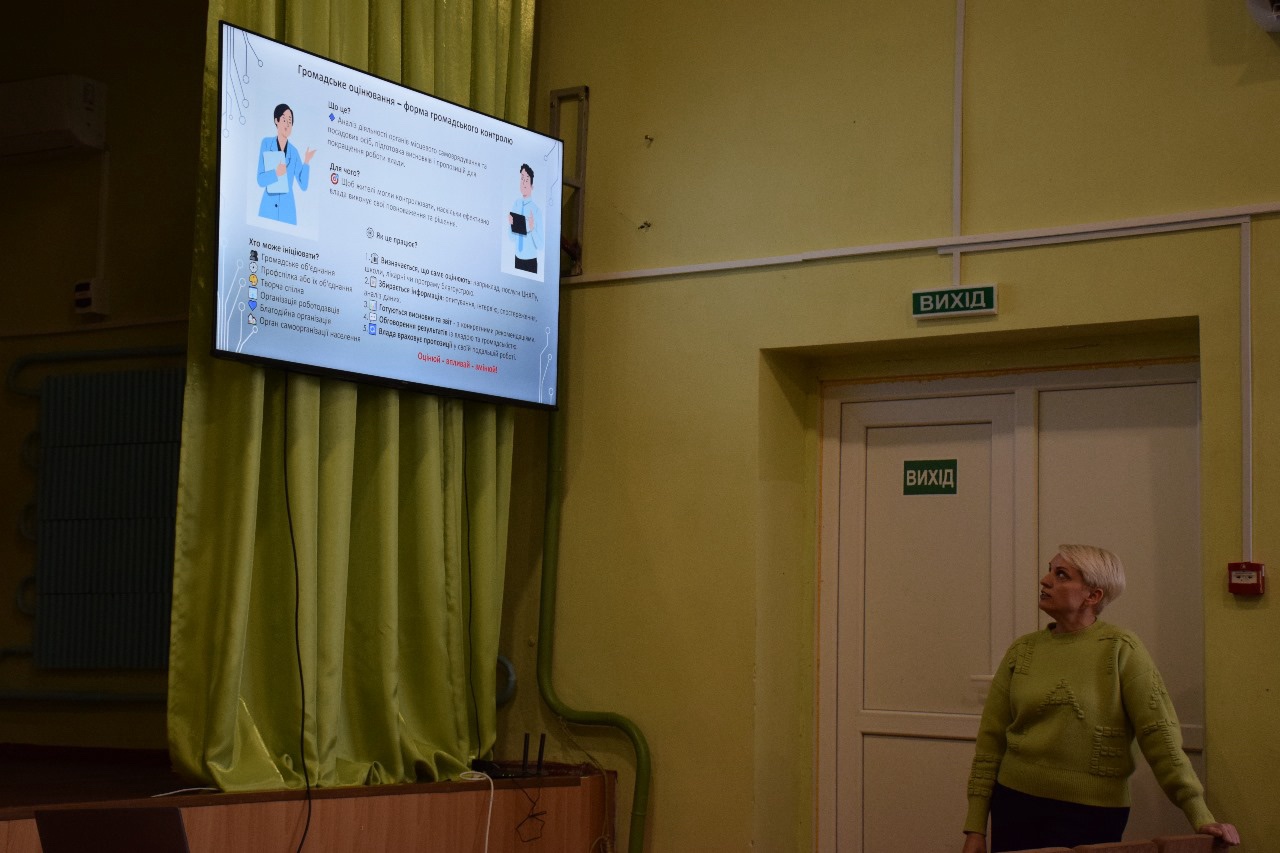
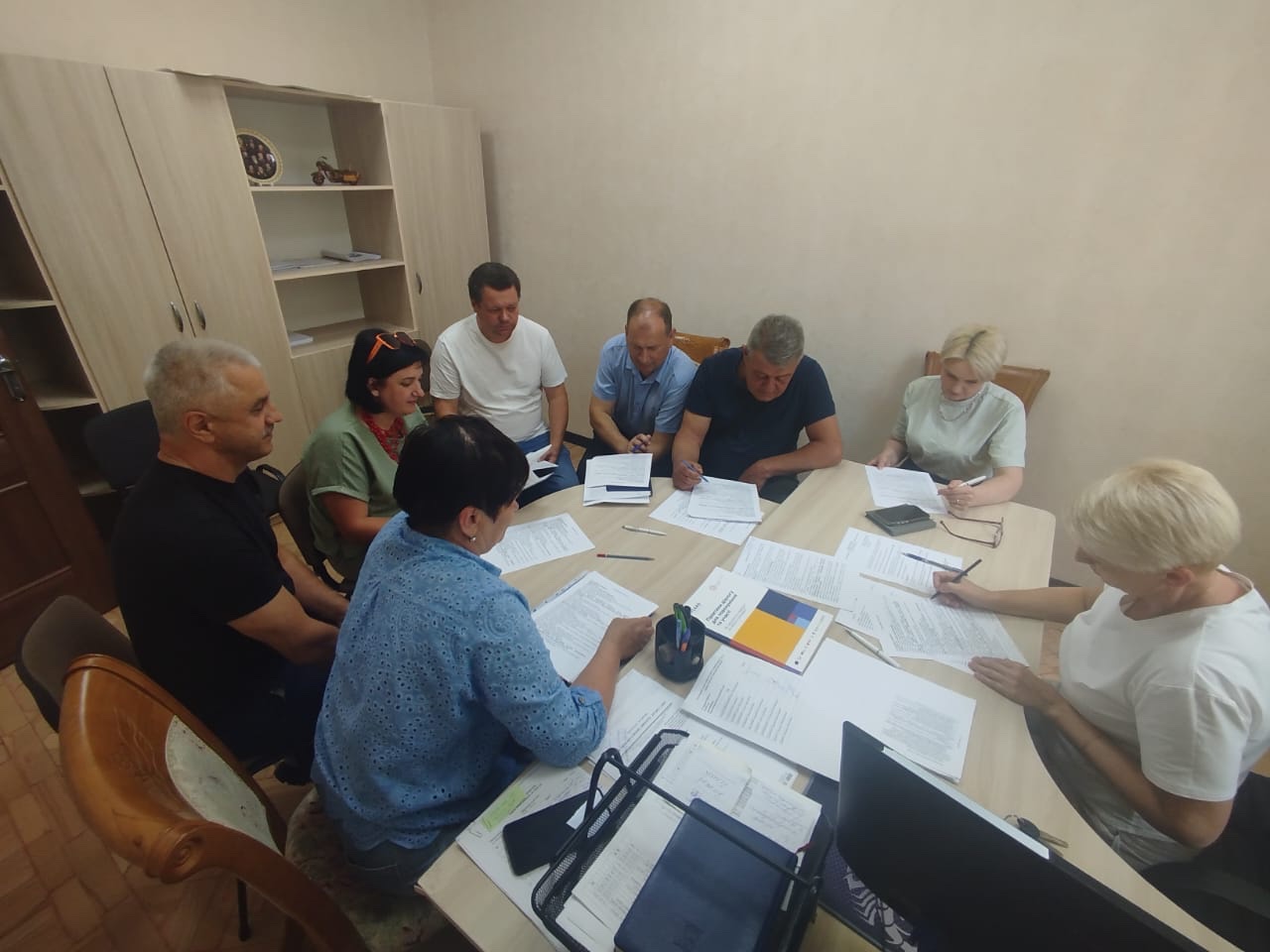
After completing the programme, the team did not stop at theory alone; they set up a working group, drafted a document, and held meetings and public consultations. Alongside this, the municipality launched an information campaign to explain to residents what the adoption of the charter means in practice.
The U-LEAD with Europe Programme helped the municipality to take a broader view of the charter — seeing it as a tool for engaging with residents, rather than merely a regulatory document. At the same time, the municipality successfully passed the selection process and received additional expert support under the Swedish-Ukrainian Polaris Programme “Supporting Multi-level Governance in Ukraine” provided by the Ukrainian Centre for Independent Political Research. This helped to strengthen the document drafting process and ensure that communications were given proper attention.
Olha Us, the Chief Administrator of the Executive Committee of the Krynychky Settlement Council, explains:
“We wanted people to be aware that these participatory tools exist. To this end, we produced and distributed videos — including ones on the school participatory budget and online petitions — and prepared leaflets and brochures on each tool for public participation. Hopefully, these mechanisms will be put into full effect.”
Findings of the public opinion survey
The awareness campaign included an initial and a final online survey:
- 60.4% of respondents had never heard of the a charter before; following the presentations, 100% stated that they understood the nature of the document.
- Respondents cited the following as the main functions of the charter: establishing the rules governing life in the municipality, outlining mechanisms for participation, and improving communication between the authorities and residents.
- Awareness of digital participation tools, such as online petitions and online platforms, has increased.
- Following the explanations, there was a greater willingness to engage with e-petitions and the Open City (Vidkryte Misto) service.
“The survey indicates that people are beginning to understand why the charter is needed. And understanding is the first step towards participation. That is why, as part of the ‘Steps for Specialists. Development of the Charter of a Municipality’ initiative from U-LEAD with Europe, we help municipalities figure out not only how to draft a charter, but also how to properly organise the process of discussion and communication with residents and with the partners the municipality involves in drafting this document,” says Olena Tertyshna, the Head of the Regional Office of U-LEAD in Dnipropetrovsk Oblast.
Training that leads to institutional change
In December 2025, the working group approved the draft charter, which was then presented to the Council for consideration. In accordance with the approved decision, the document came into force on 1 January 2026.
For Krynychky municipality, this is its first charter. The next steps involve the practical implementation of participatory tools and ongoing communication with residents. The most important step, however, has already been taken: the municipality has established rules for cooperation at the local level.
“For us, it was important not just to draft a document, but to show people how they can make a difference to the life of the municipality. The charter sets out the rules governing our lives and the practical mechanisms for participation,” says Olha Us.