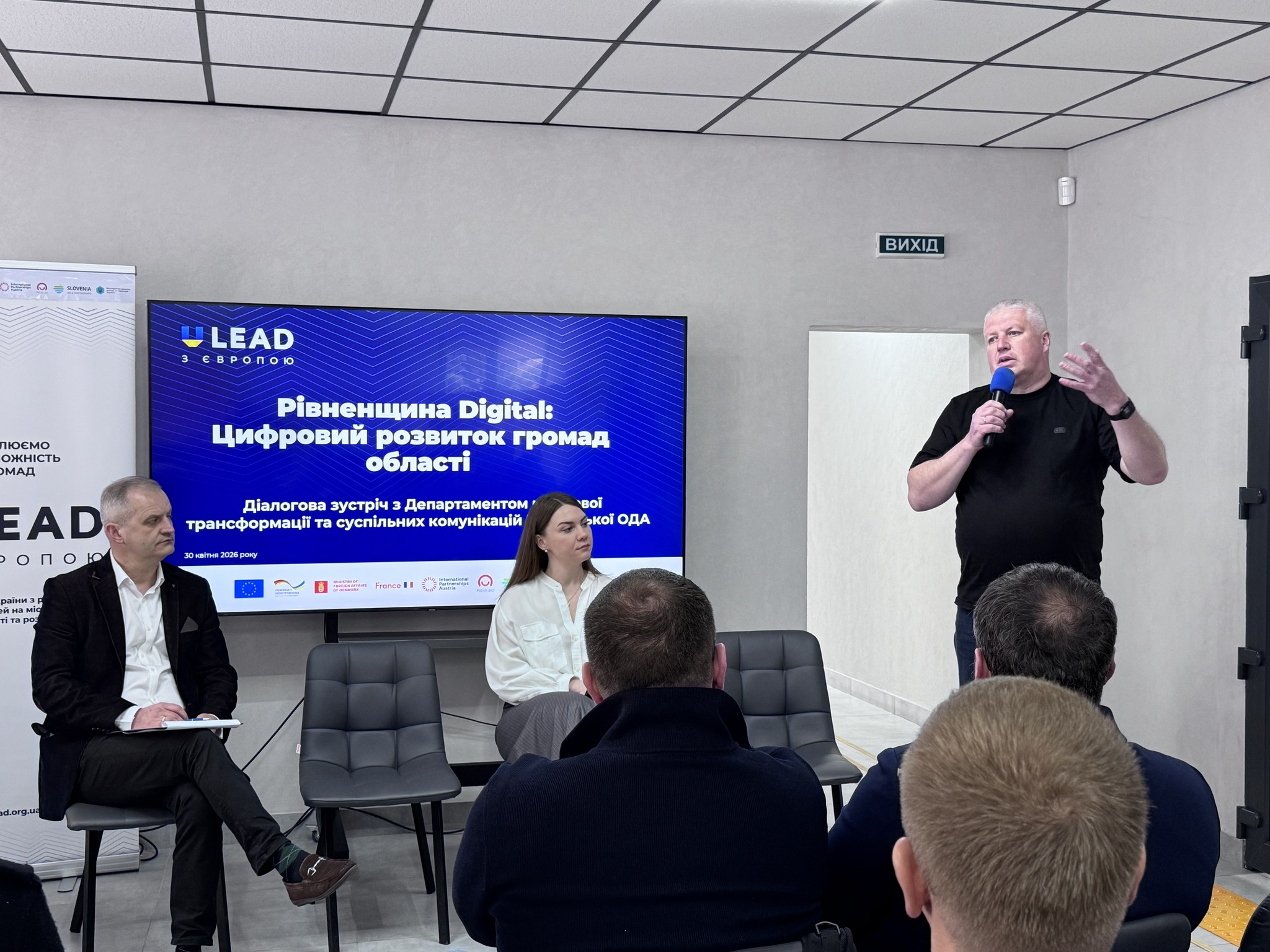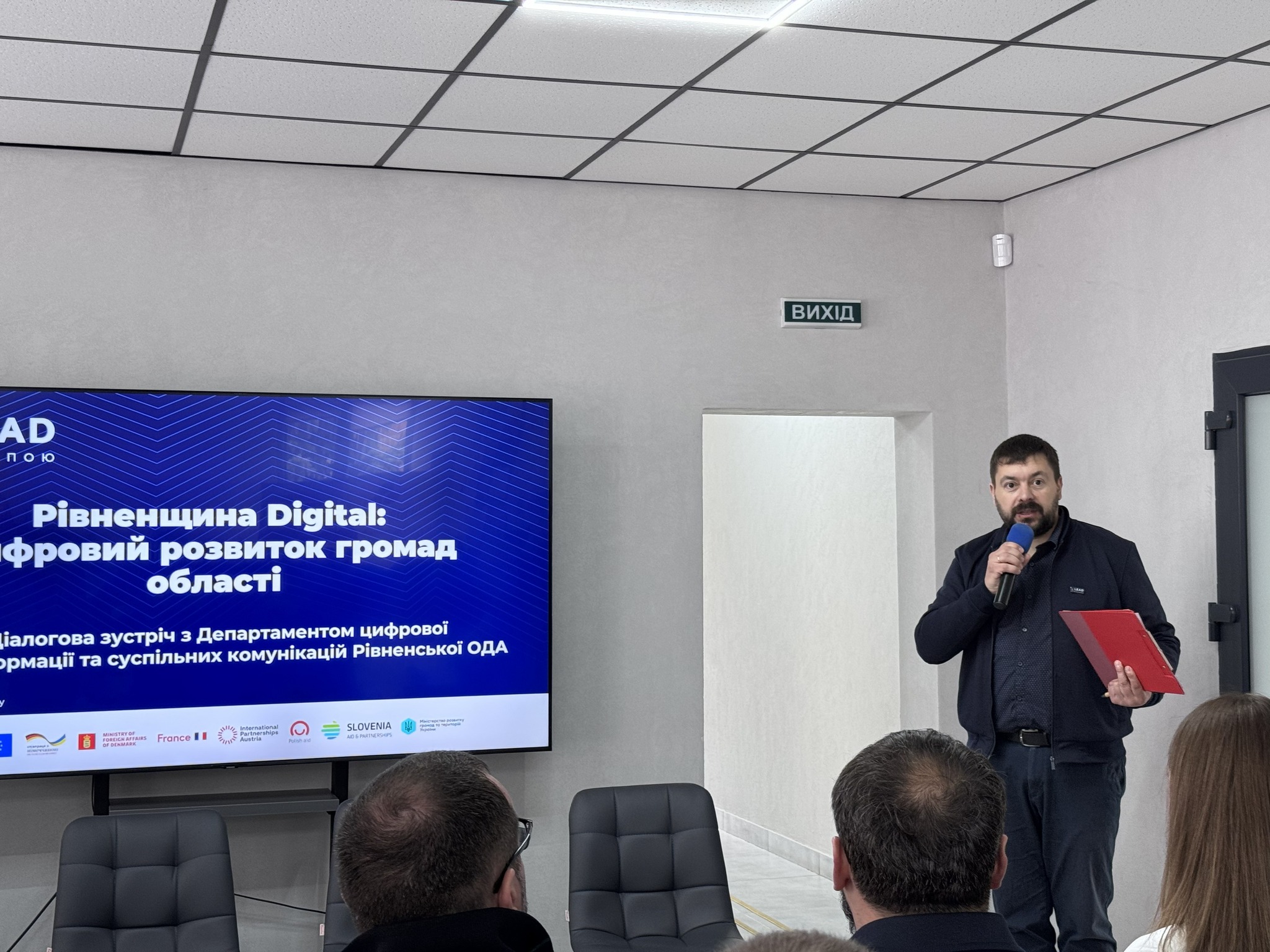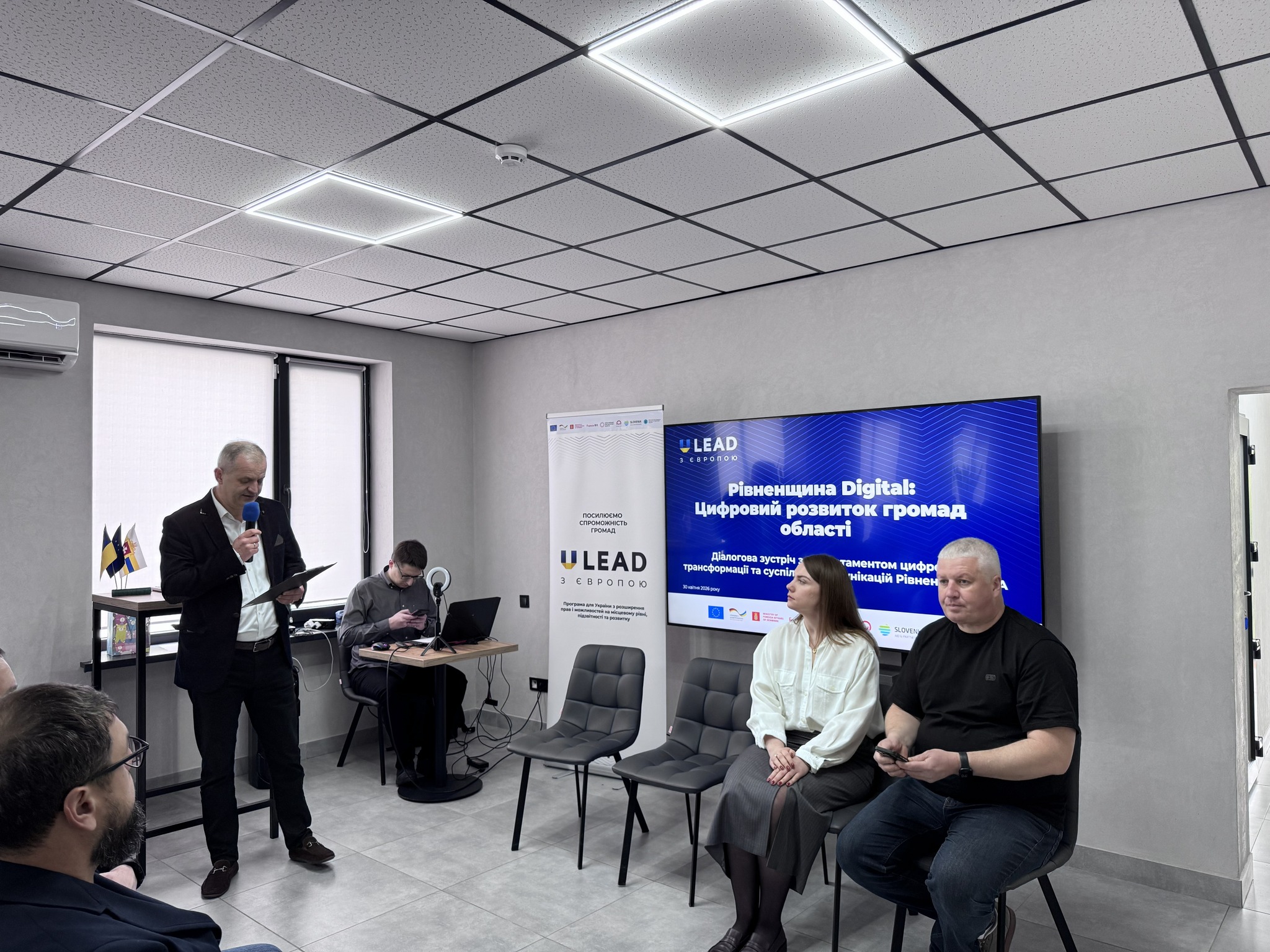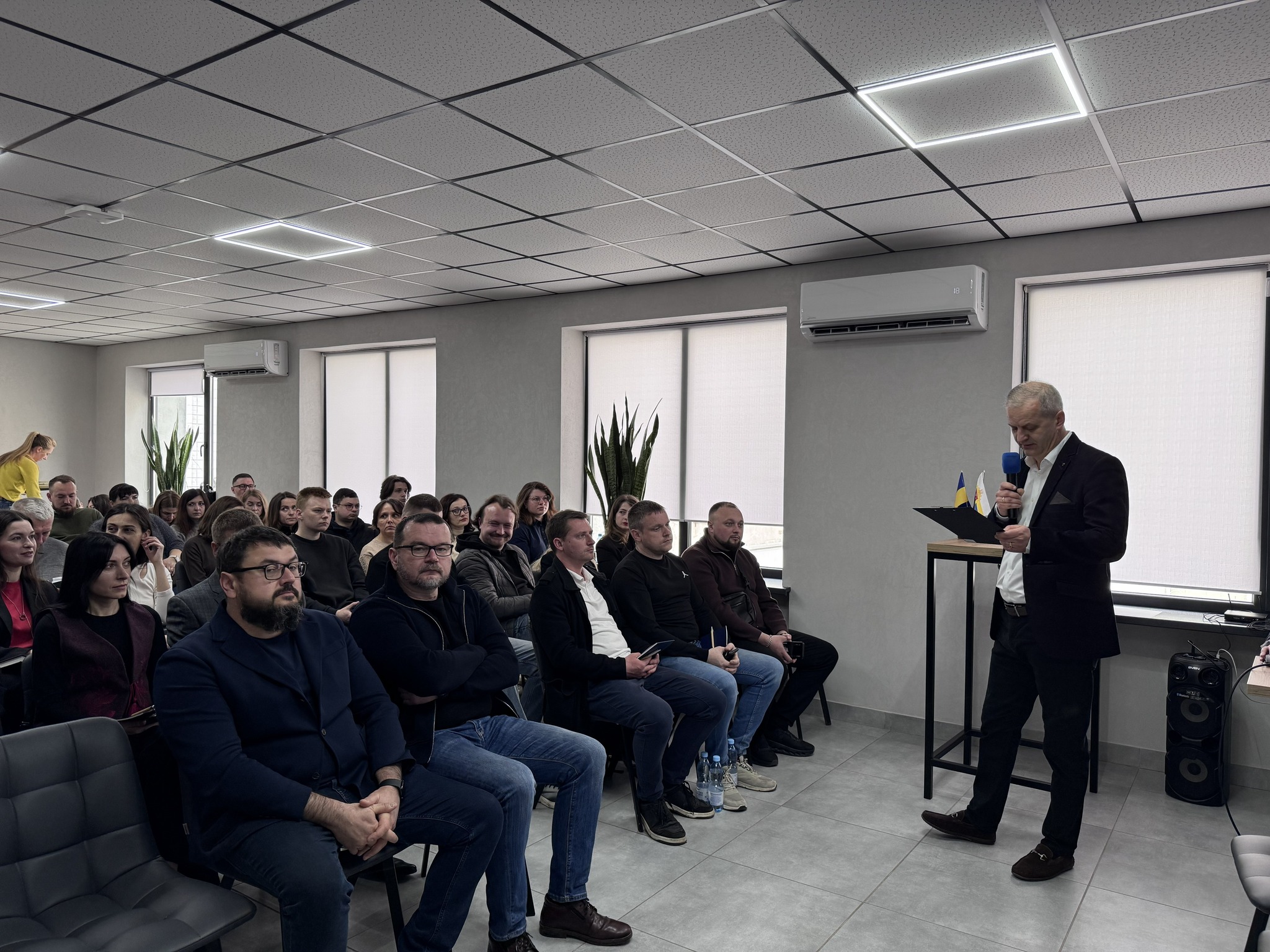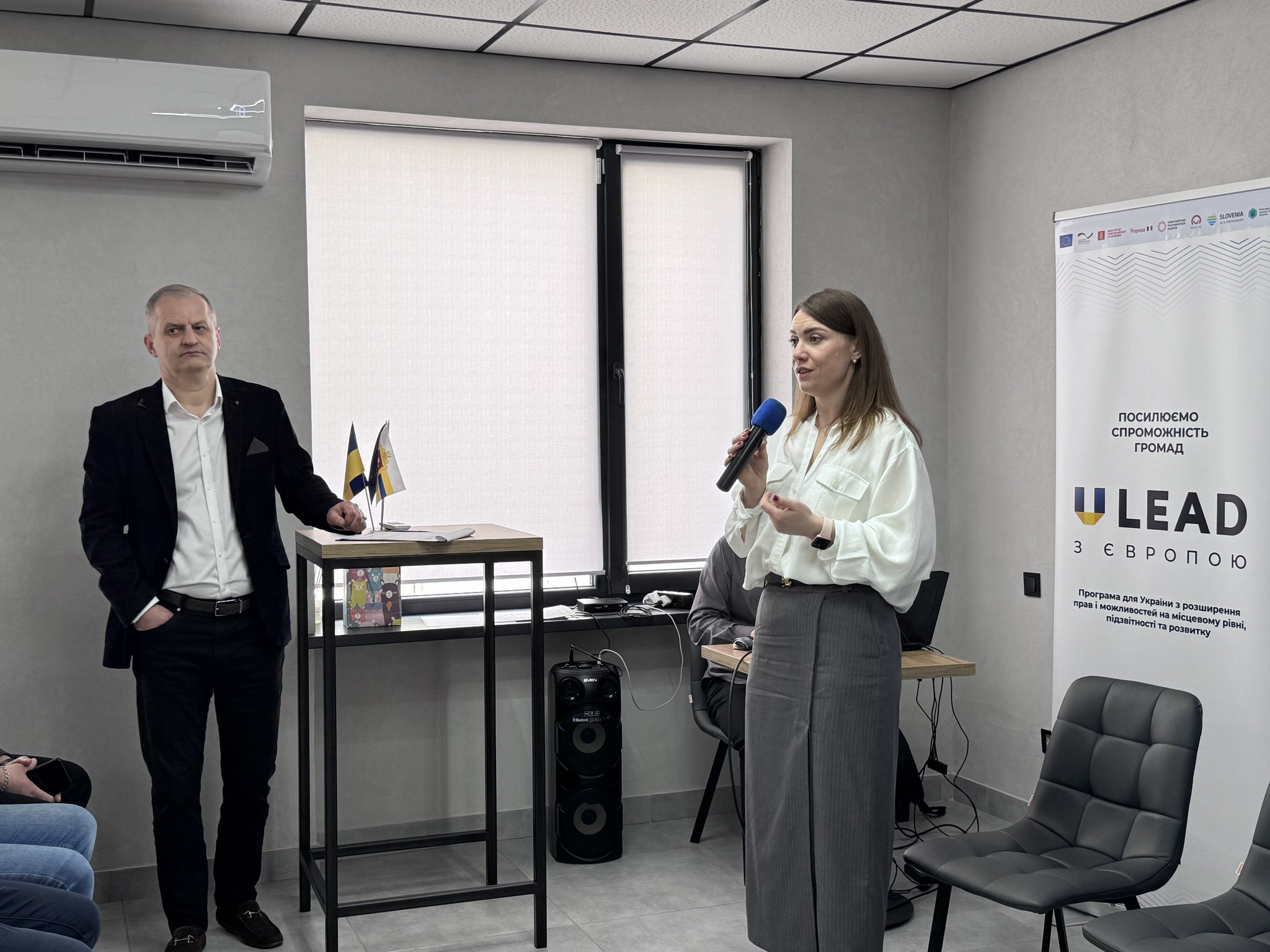







The event brought together “digital leaders” — experts in charge of digital transformation, cybersecurity and information security. The primary goal was to go beyond simply discussing theory and to identify practical solutions that can be implemented in municipalities right away.
Rivne Oblast ranks among Ukraine’s top four
The oblast’s digital success has now been officially recognised at the national level. At the end of 2025, Rivne Oblast ranked fourth in Ukraine according to the Digital Transformation Index. This ranking was published by the Ministry of Digital Transformation of Ukraine, reflecting the oblast’s rapid development.
According to Ruslan Syvyi, the Head of the Regional Office of U-LEAD with Europe in Rivne Oblast, this success is the result of active work on the ground:
“Rivne Oblast is now working hard to introduce modern technologies into the way municipalities operate. Importantly, the oblast administration supports this initiative, since the exchange of experience and the showcasing of successful examples are what help us to see real, tangible improvements”.
Before anything else, digitalisation is a service for residents
Oleksandr Tereshchenko, the Chief Digital Transformation Officer (CDTO) at Rivne Regional State Administration, underlined that technology is merely a tool for achieving the core objective of making life easier for people:
“These days, digitalisation is about more than just installing software or automating processes. Before anything else, it is a service for people. As digital leaders in your municipalities, you are the architects who are bridging the gap between technology and local residents. It is down to your initiative and expertise to ensure that services across every corner of Rivne Oblast are convenient, transparent and secure”.
Scaling up the experience: from passion to systematic action
Kateryna Shuvarska, the Head of the Regional Digitalisation Team at the Ministry of Digital Transformation of Ukraine, also joined the event. She highlighted the scale of the changes taking place in the country:
“As of today, there are already 17 CDTOs in Ukraine, and we aim to ensure that every oblast has its own digital leader. We’re very close to achieving this. Over the past six years, more than 320 projects have been implemented, covering virtually all areas of life, including sports, social services, infrastructure, the economy and tourism. Our network of digital leaders now has over 1,500 members.
Just a few years ago, digital transformation in Ukraine was driven by the passion of a few individuals. Today, this is now a systematic effort at the national level. That said, I truly believe that this field cannot thrive without passion, so I would like to thank each and every one of you for your commitment”.
Case studies of municipalities: when the Index ranking is the outcome of hard work
At the event, officials from the municipalities shared their own insights on how to overcome the barriers to digitalisation. For example, the municipality of Rokytne received the Digitalisation Leader Award.
Volodymyr Minich, the Chief Digital Transformation Officer at Rokytne Settlement Council, emphasised the importance of a strategic approach to the digitalisation process:
“Best practice is when the ranking is a by-product of the hard work, not the end goal. We’re handling it in a healthy way: rather than ‘chasing the index ranking’, we’re sticking to our own programme and strategy. Municipalities often fall short in the rankings due to the intricacies of the assessment process: it is not enough simply to introduce electronic document management systems or registers; these must be up to date, integrated and actually used by residents. For example, e-democracy tools are not just a matter of being launched, but require ongoing administration and promotion among residents”.
Zdolbuniv municipality is also among those to have been named a Digitalisation Leader. Vadym Tkachuk, the Chief Digital Transformation Officer at Zdolbuniv City Council, spoke about the work being done in this area:
“The Digital Transformation Index covers around 200 indicators across all areas of municipal life, from record-keeping to public warning systems. Everything we do is based on existing programmes and strategies: we simply carry out the tasks we have set ourselves in a systematic manner to ensure they actually work and don’t just remain on paper”.
Conclusions
The participants worked together to find solutions to overcome technical and administrative obstacles. According to Ruslan Syvyi, the main takeaway from the event was that the digital transformation of Rivne Oblast is a team effort, in which every municipality must become more open and accessible to its residents through the implementation of modern digital platforms.
“U-LEAD with Europe Programme is committed to supporting municipalities in their drive for modernisation by providing the necessary expert guidance and fostering effective communication among specialists,” emphasised the head of the Regional Office.