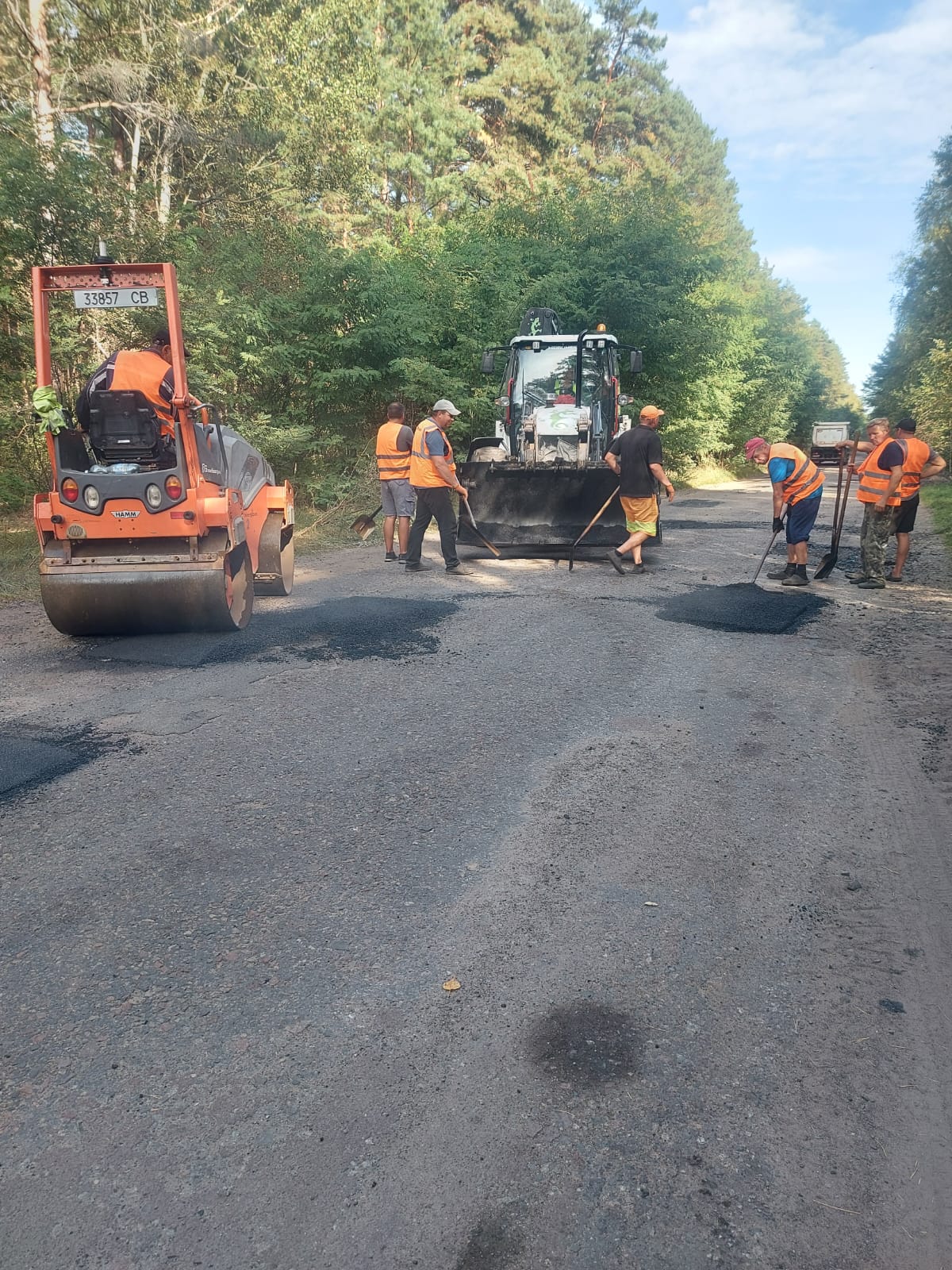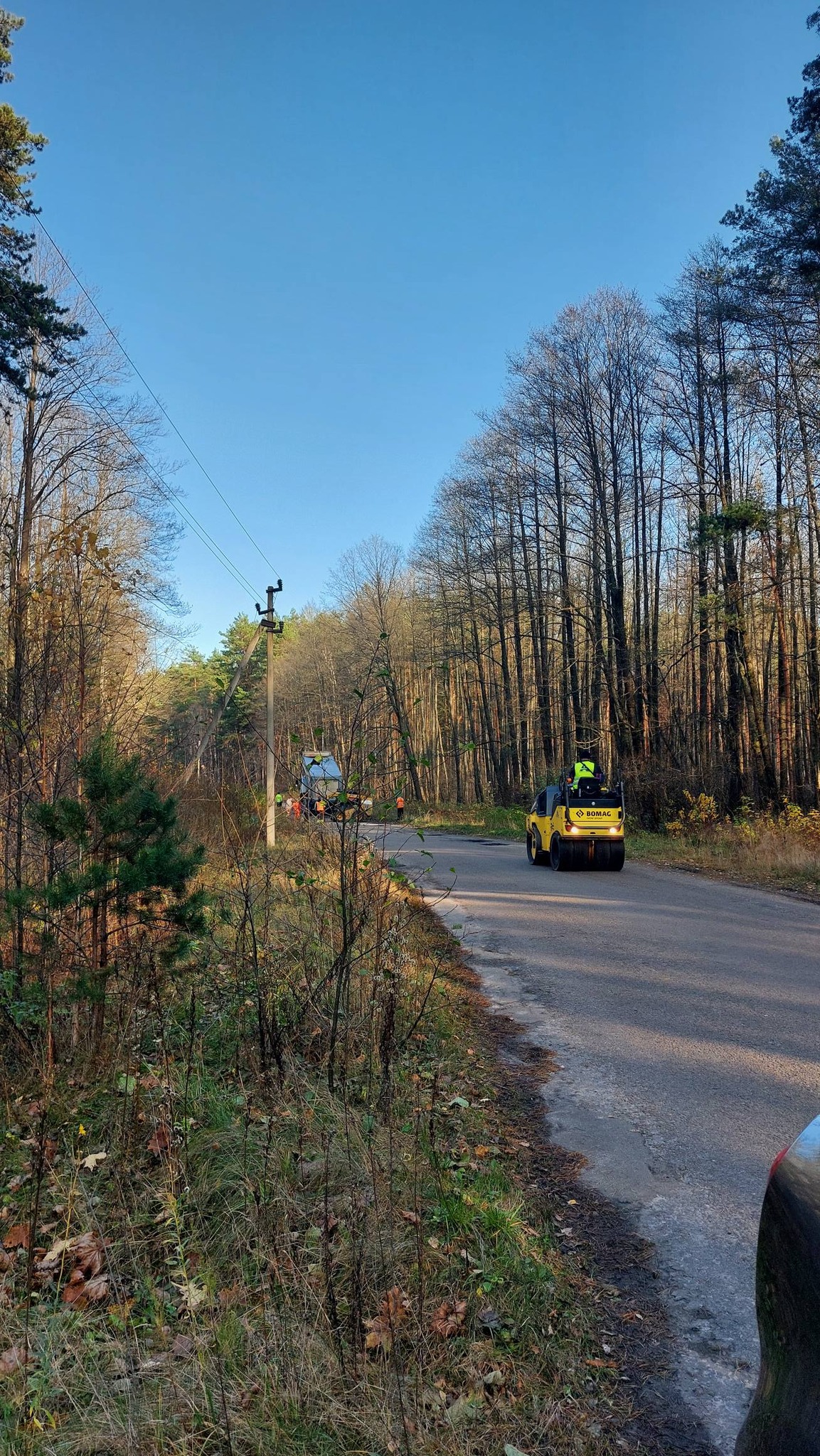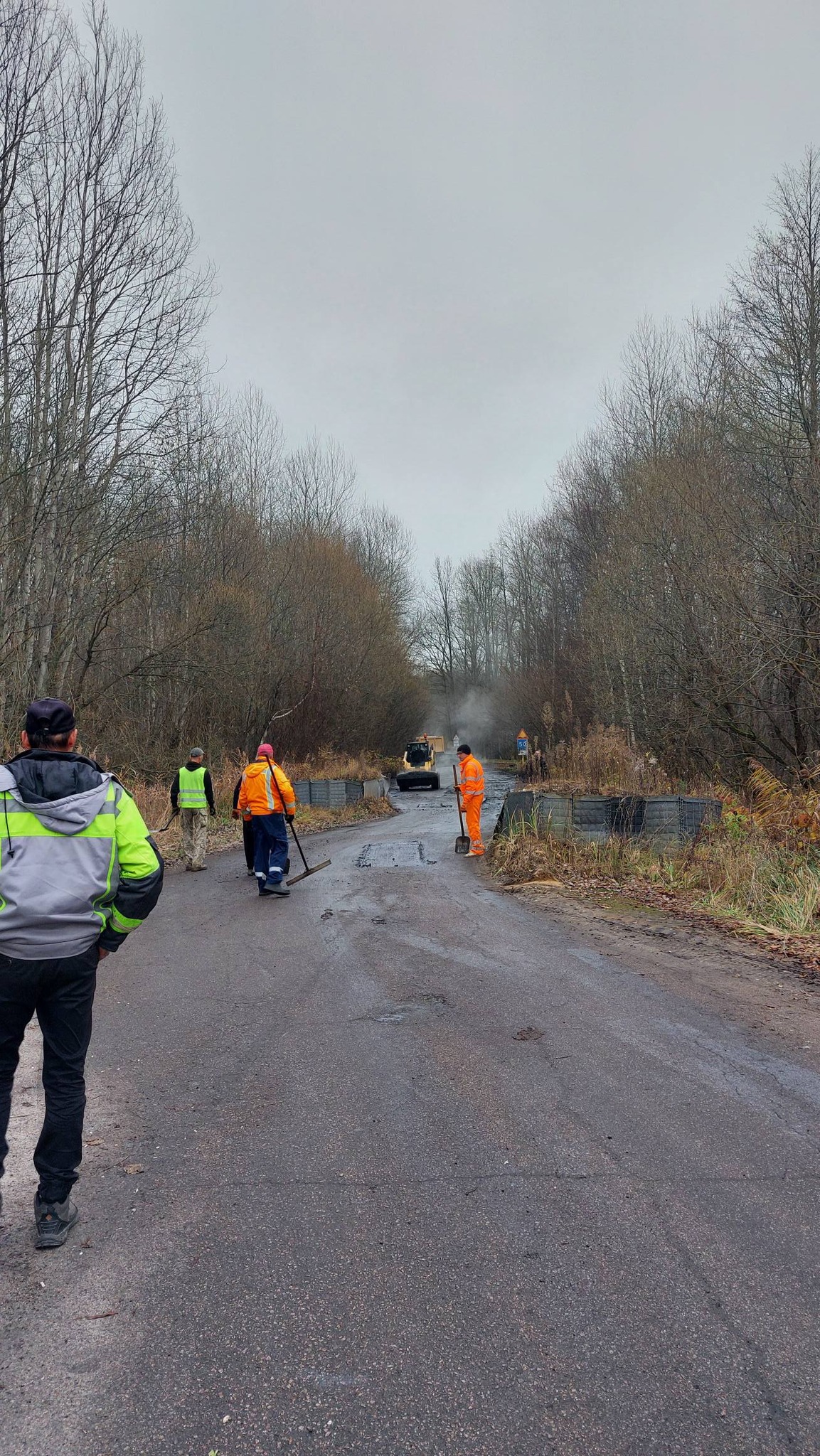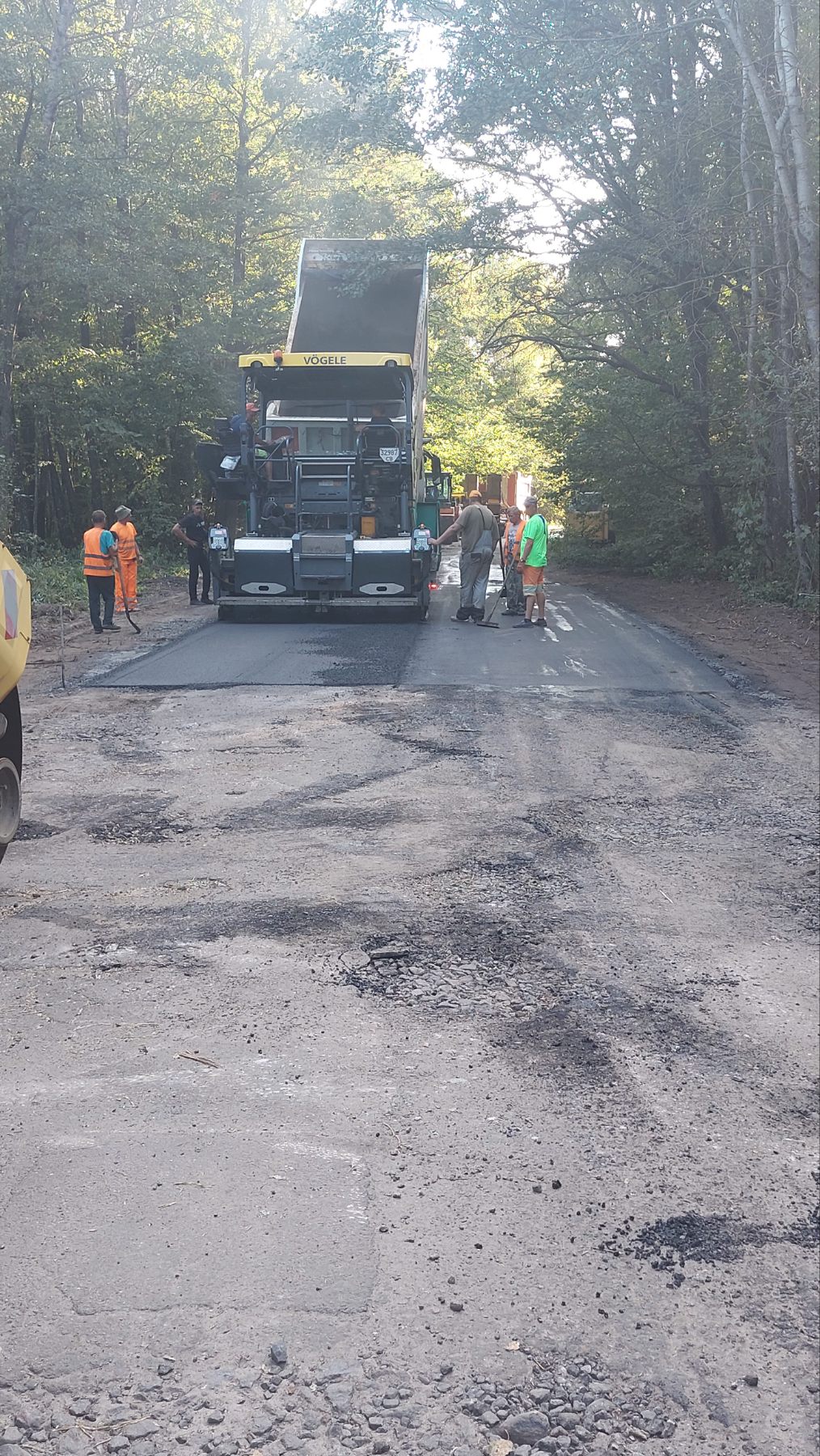




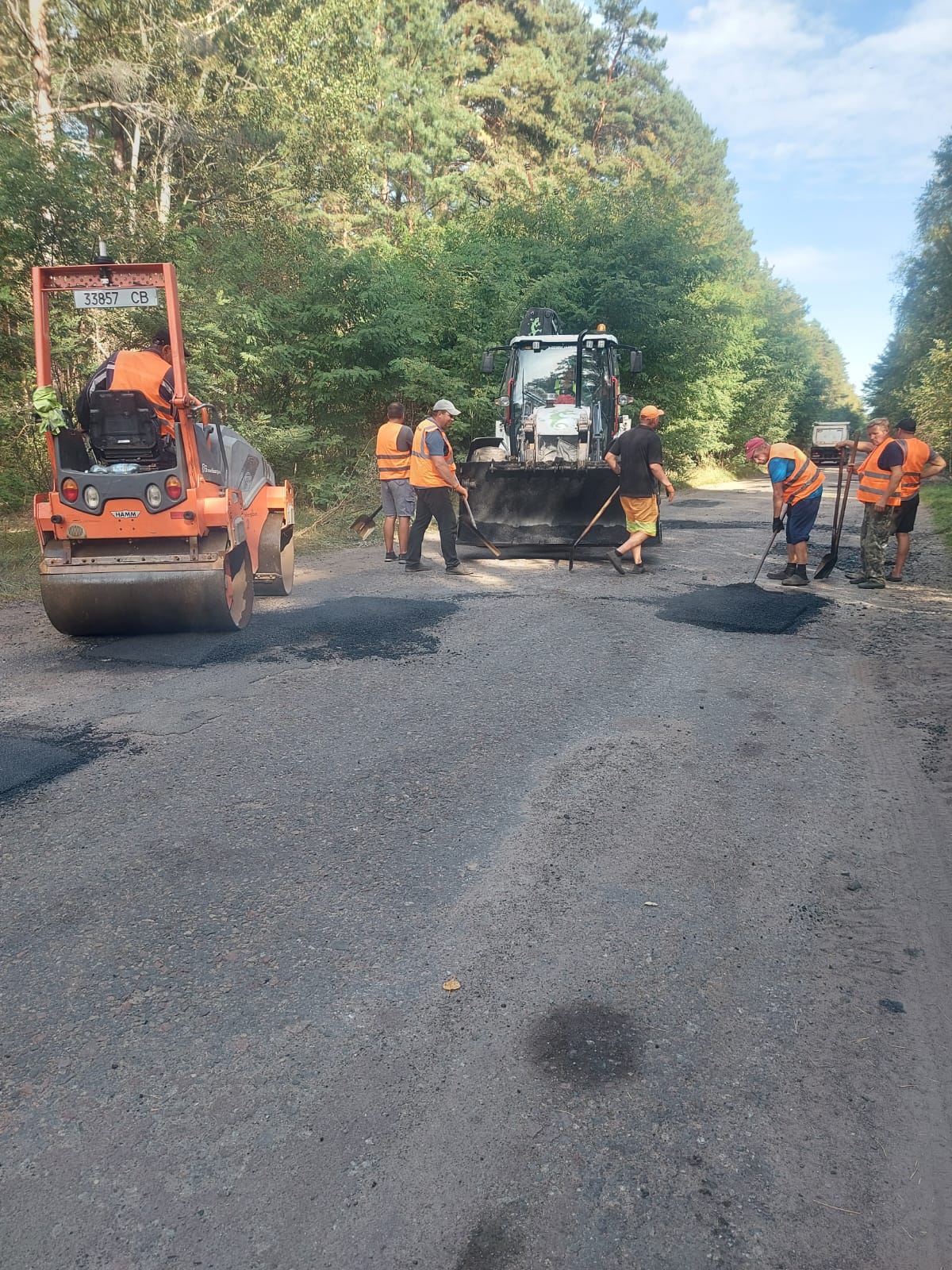
It all began in the summer of 2025 with two roads used daily by residents, businesses, emergency services and tourists. They connect the municipality to the international highway and lead to the picturesque blue lakes in Oleshnia, a popular tourist destination known for its pine forests, pottery and the estate of Sofia Rusova. However, the roads had long been in need of renovation: more than 30 years without major repairs had taken their toll, with only patchwork fixes to potholes.
After the full-scale invasion, border municipalities such as Dobrianka found themselves at the bottom of the priority list for repair funding. The local authorities decided to act independently, looking for mechanisms to engage both businesses and the public in co-financing. Then the mayor of the municipality, Svitlana Bytsko, turned to Iryna Kudryk, Head of the Regional Office of U-LEAD with Europe in Chernihiv Oblast, to discuss her idea and find support for its implementation. After consulting with U-LEAD experts, the municipality gained a clear understanding that the local budget can accept targeted donations. This marked the launch of a new tool, co-financing.
“The idea of the Head of Dobrianka municipality to attract external sources of financing, such as targeted donations from local entrepreneurs and residents to the settlement budget, required careful consideration and preparation. That is why we invited fellow financiers to provide professional advice to the municipality. Inna Sviatna, National Expert on Local Finances at U-LEAD, went over the whole process of setting up a targeted local budget fund, attracting resources to it, and using the money from it with the municipality. We also worked out a mechanism for reporting to the municipality, as well as communication tools for reaching out to residents,” says Iryna Kudryk, Head of the Regional Office of U-LEAD with Europe.
The municipality launched a project to raise funds for road repairs and distributed announcements with details, but after ten days, only a few council employees responded, and the fundraising effort made little progress. Then Svitlana Bytsko decided to personally address the public so that the people would hear her. The head of the municipality filmed a short video directly on the road in question. She explained how the process works, that all funds go to the budget account, and the reports will be available for public viewing. This was the turning point, and residents began to actively donate.
“I wanted to do my best to get results. For me, this was my first experience recording a video and addressing people, asking for help — I usually rely only on myself. However, we discussed with U-LEAD experts how to comply with the law and ensure transparency, and then I decided to visit the problematic road to demonstrate that this is our common issue. When people responded to my appeal, started sharing it and donating, I saw that this approach worked,” recalls Svitlana Bytsko.
Entrepreneurs, residents and those who have long lived outside the municipality joined the fundraiser. Even pensioners came with small donations because they wanted to be part of this process. The municipality published lists of donors every day, which strengthened trust and a sense of community.
In total, the Dobrianka municipality collected UAH 922,000 in targeted donations. To these, UAH 1,500,000 were added from the local budget and another million — from the Infrastructure Restoration and Development Service in the Chernihiv Oblast. This enabled the repair of two roads, in Dobrianka and Oleshnia. The works were conducted openly, and locals not only observed but also oversaw the process.
“We kept people informed about the progress of the work, because inquiries came in every day. Donors could monitor the process: drive around, check things out and point out anything that was not to their liking. This is a joint project, and oversight should be done openly rather than unilaterally,” explains Svitlana Bytsko.
For the municipality of Dobrianka, this fundraiser served not only as a way to improve infrastructure but also as an exercise in citizen-led action. The municipality has seen for itself that by working together, they can achieve what once seemed impossible.
The case of Dobrianka shows how, through knowledge, support and advice from U-LEAD with Europe, local authorities can find legitimate mechanisms that unite the municipality around a common goal.