






Among the key challenges faced by municipalities in providing social services are a shortage of social service workers, lack of funding, inadequate assessment of population needs, failure to address social service provision in municipal economic and social development plans and programmes, as well as poor accessibility for residents of remote settlements. Although the classifier provides for 45 social services, including 18 basic ones, currently no municipality in Chernihiv Oblast covers the entire basic list. There is a particular lack of supported living services, early intervention, day care for children with disabilities, social support during inclusive education and shelters, such as those for victims of domestic violence.
The info session highlighted experimental projects that involve funding social services from the state budget, namely:
- Comprehensive social services for building resilience;
- Inpatient care and supported living for internally displaced elderly people and people with disabilities on a "money follows the person" basis;
- Accommodation for internally displaced persons with reduced mobility;
- Comprehensive care for children with disabilities;
- Social component of early intervention services;
- Providing care and upbringing for orphans and children deprived of parental care in family-like environments ("Family Home").
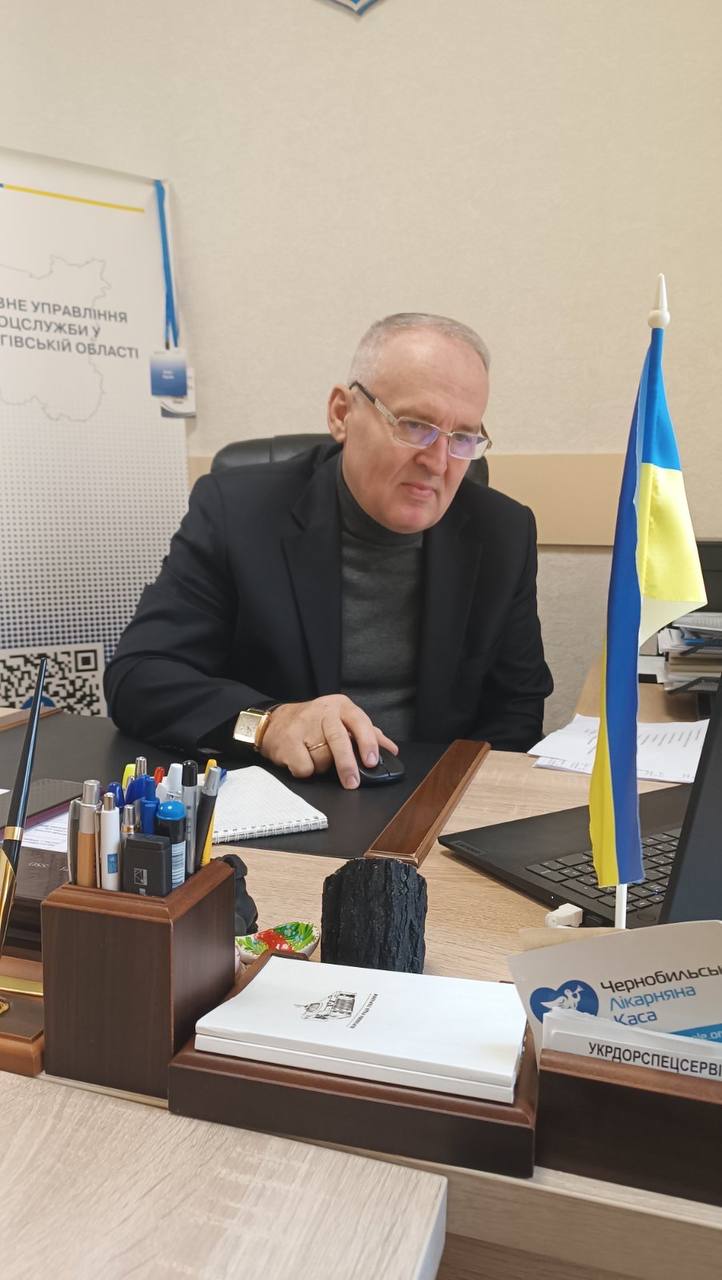
"The resilience service is particularly relevant for Chernihiv Oblast, which suffers from enemy attacks on a daily basis. Its quality provision also helps to support military personnel after they return home from service, as well as their loved ones, teaching society to communicate correctly and not to cross "red lines". This also involves creating a platform for dialogue between senior officials and residents of the municipality, providing an opportunity to hear feedback and better understand people’s needs," said Oleh Rusin, the Head of the Main Department of the National Social Service in Chernihiv Oblast.
The system of social services in municipalities is based on several important principles that help to effectively meet the needs of residents. One service, such as "home care" or "social support for families in adverse circumstances", cannot cover all the needs of the municipality, so it is important to offer a wide range of different services provided by law. Services should be accessible to everyone, regardless of physical ability or the remoteness of the settlement. Moreover, the system should provide continuous service, addressing the needs of people of all ages, from newborns to senior citizens. Finally, service provision involves a gradual transition from simple to more complex models of support, depending on the specific situation, age and changes in a person’s social status.
The Deputy Head of the Main Department of the National Social Service in Chernihiv Oblast, Yuliia Olyfirenko, underlined the importance of assessing the needs of the population:
"If the municipality is unaware of the actual needs of its residents, it will be unable to develop the necessary services. We often ask, "How many cases of domestic violence have you had? What are the day care needs for children with disabilities?" Only to hear, "We don’t know." No services will appear without studying the real picture. That is why needs assessment is a basic tool that every municipality should use."
Inesa Shapovalova, the Director of the Territorial Centre for Social Services of Nizhyn City Council, shared her own experience:
"We established a working group to identify needs, developed regulations and procedures for assessing the people’s needs for social services in accordance with the effective regulatory framework and conducted focus groups. This gave us an understanding of what services residents really need."
These examples show that even in difficult contexts, municipalities can develop a systematic approach and build a modern model of social services.
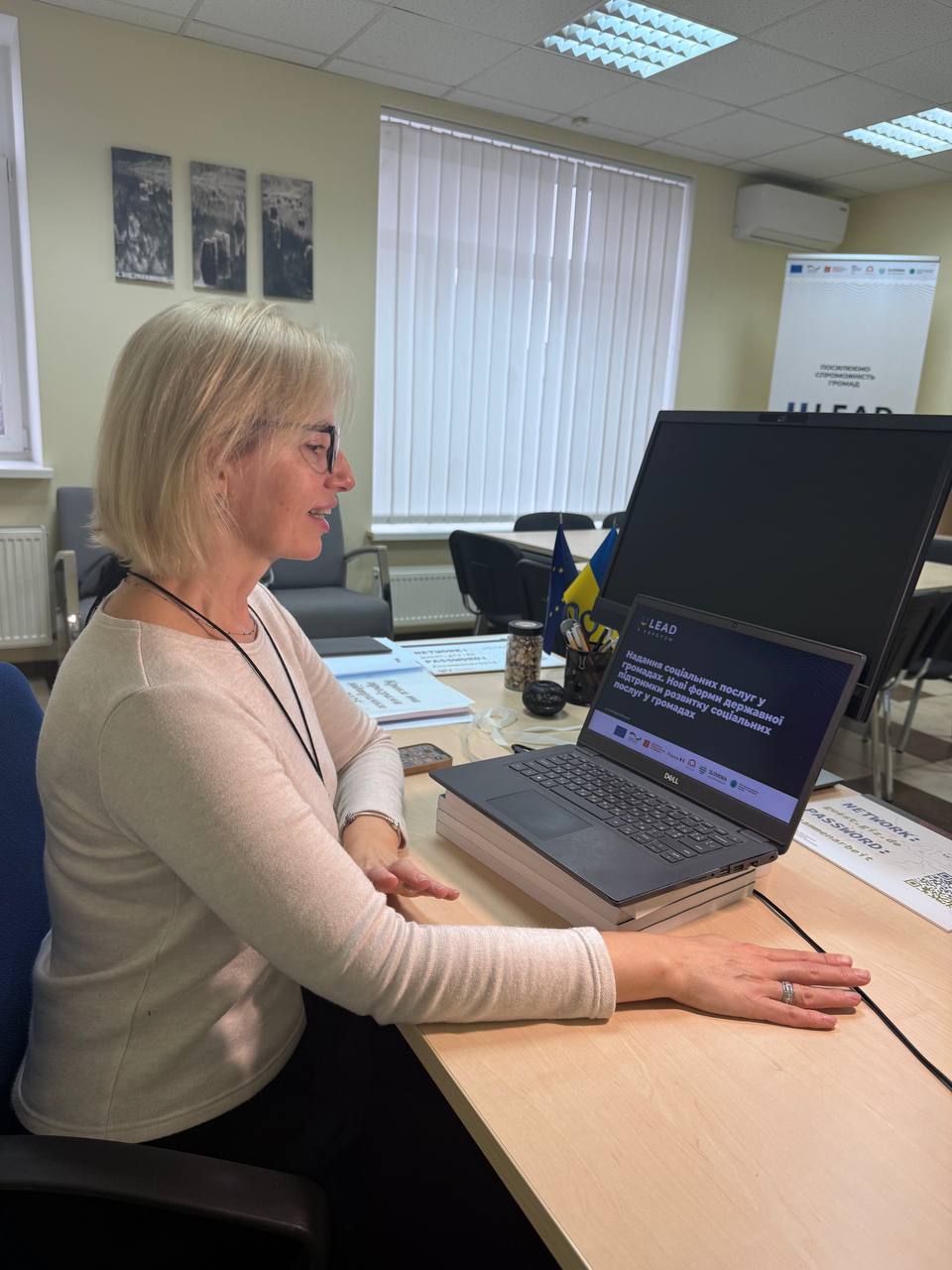
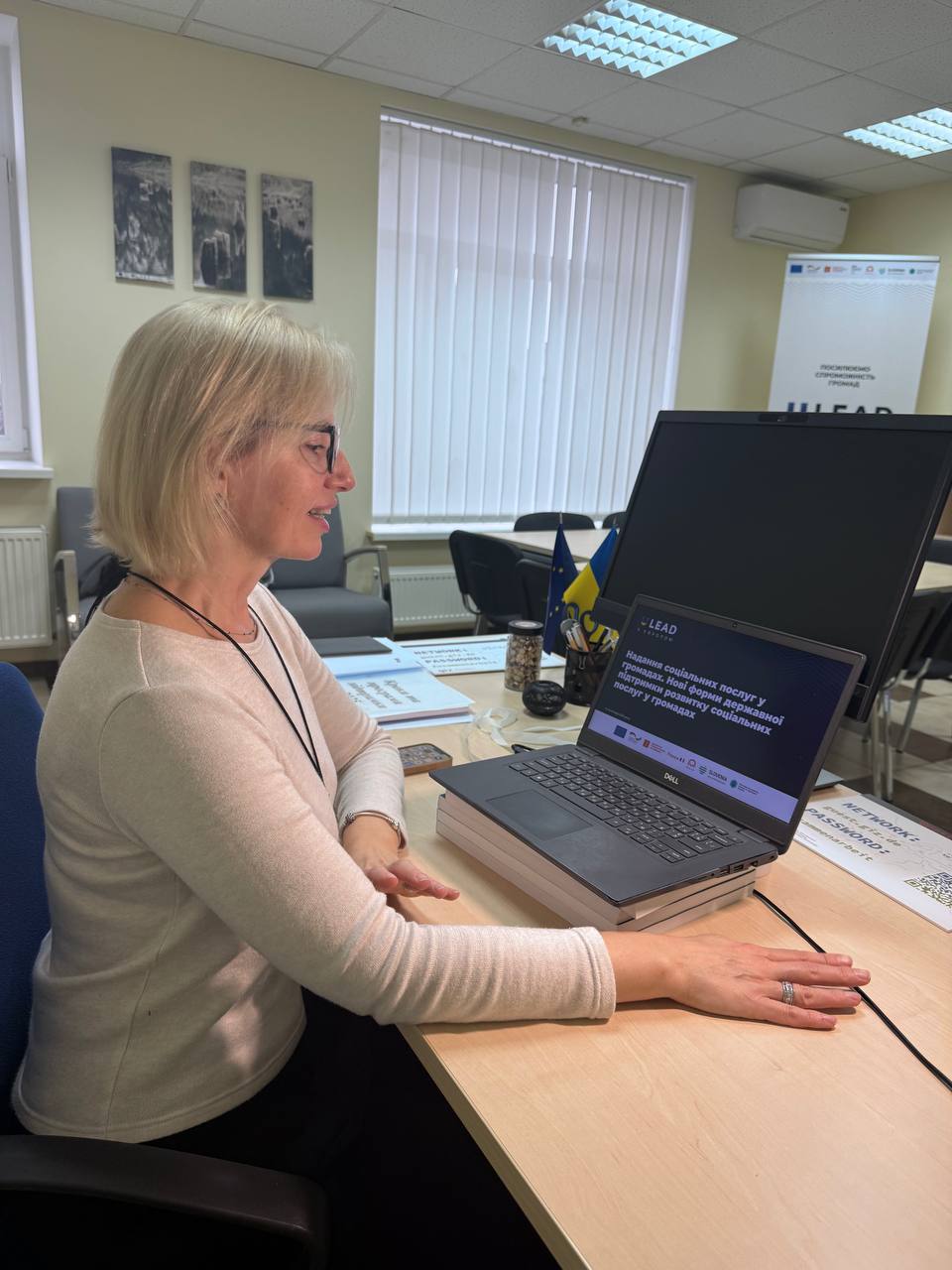
"This year, our Regional Office is focusing on the development of social services in municipalities. U-LEAD is conducting a number of events and training programmes aimed at improving these services. We are grateful to our colleagues at the National Social Service for their partnership in implementing both established projects and new approaches in this area," concluded Iryna Kudryk, the Head of the Regional Office of U-LEAD with Europe in Chernihiv Oblast.