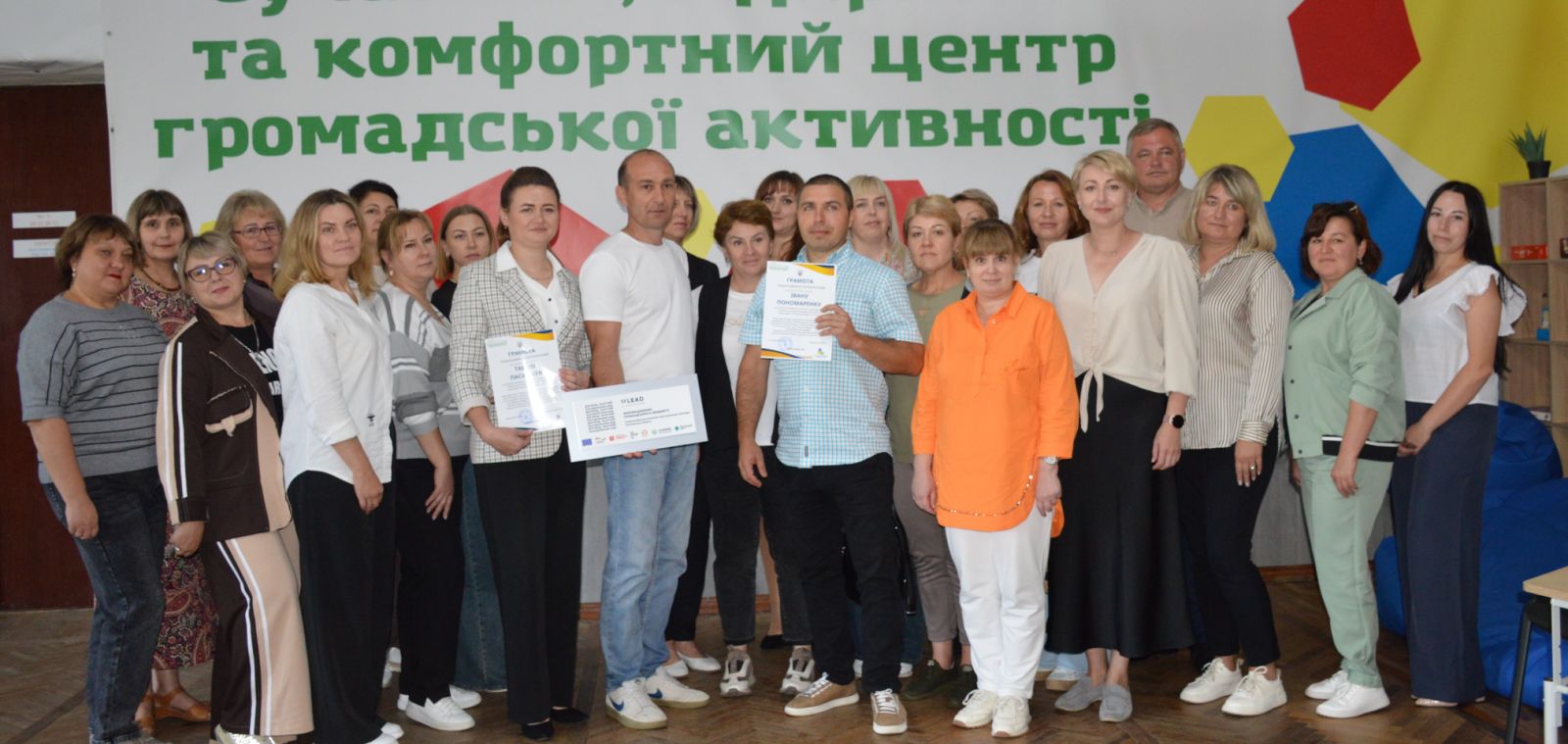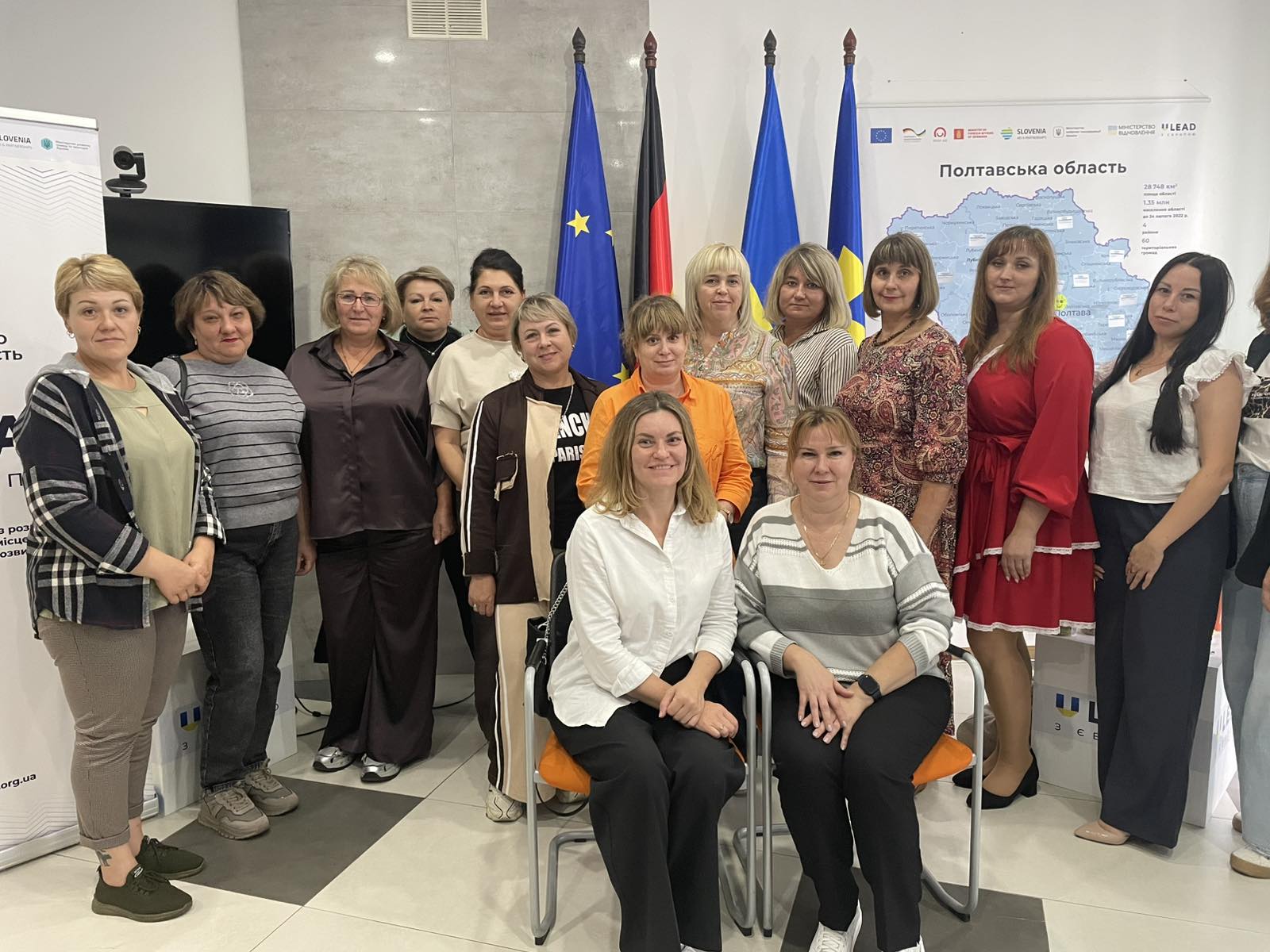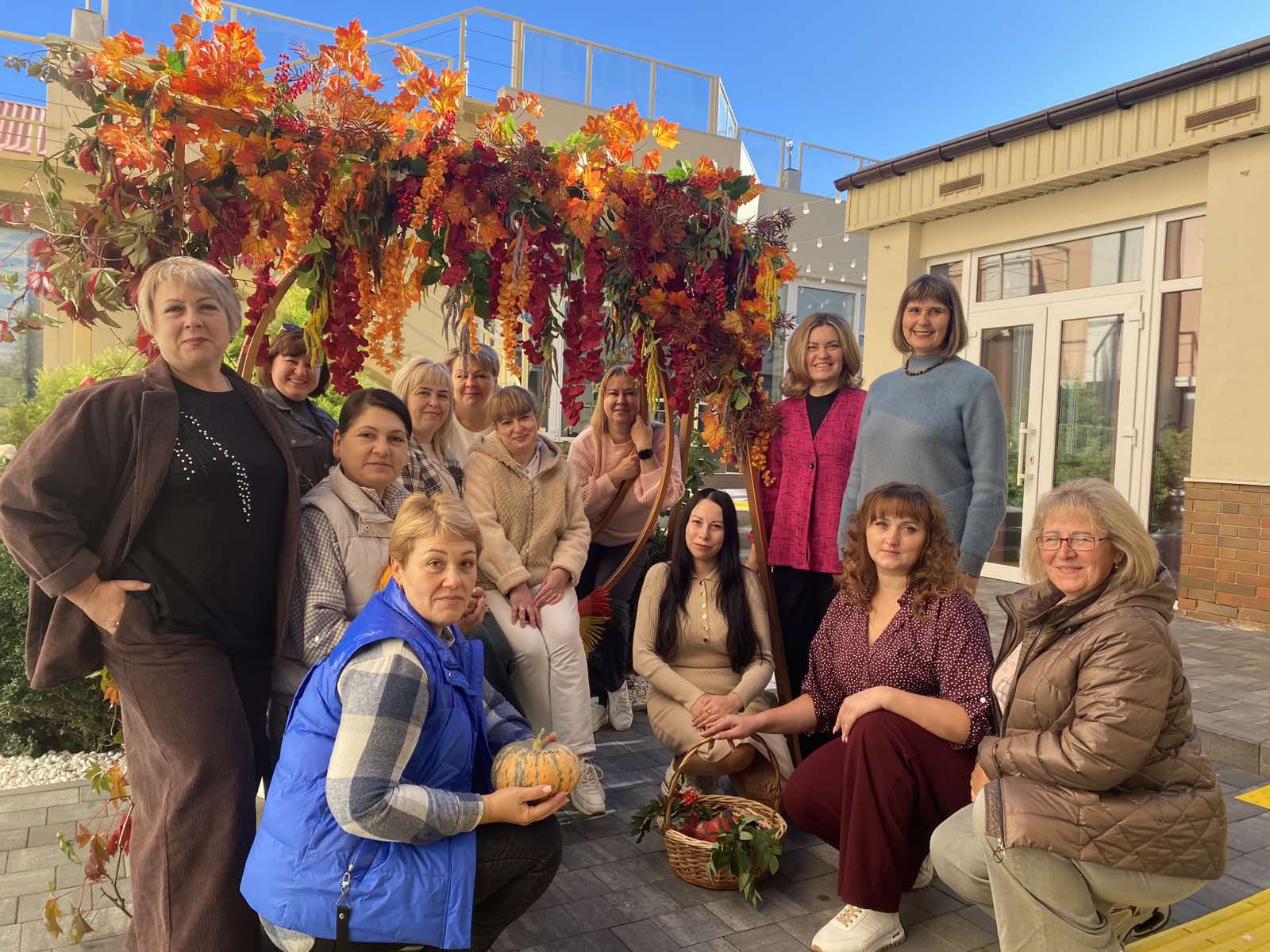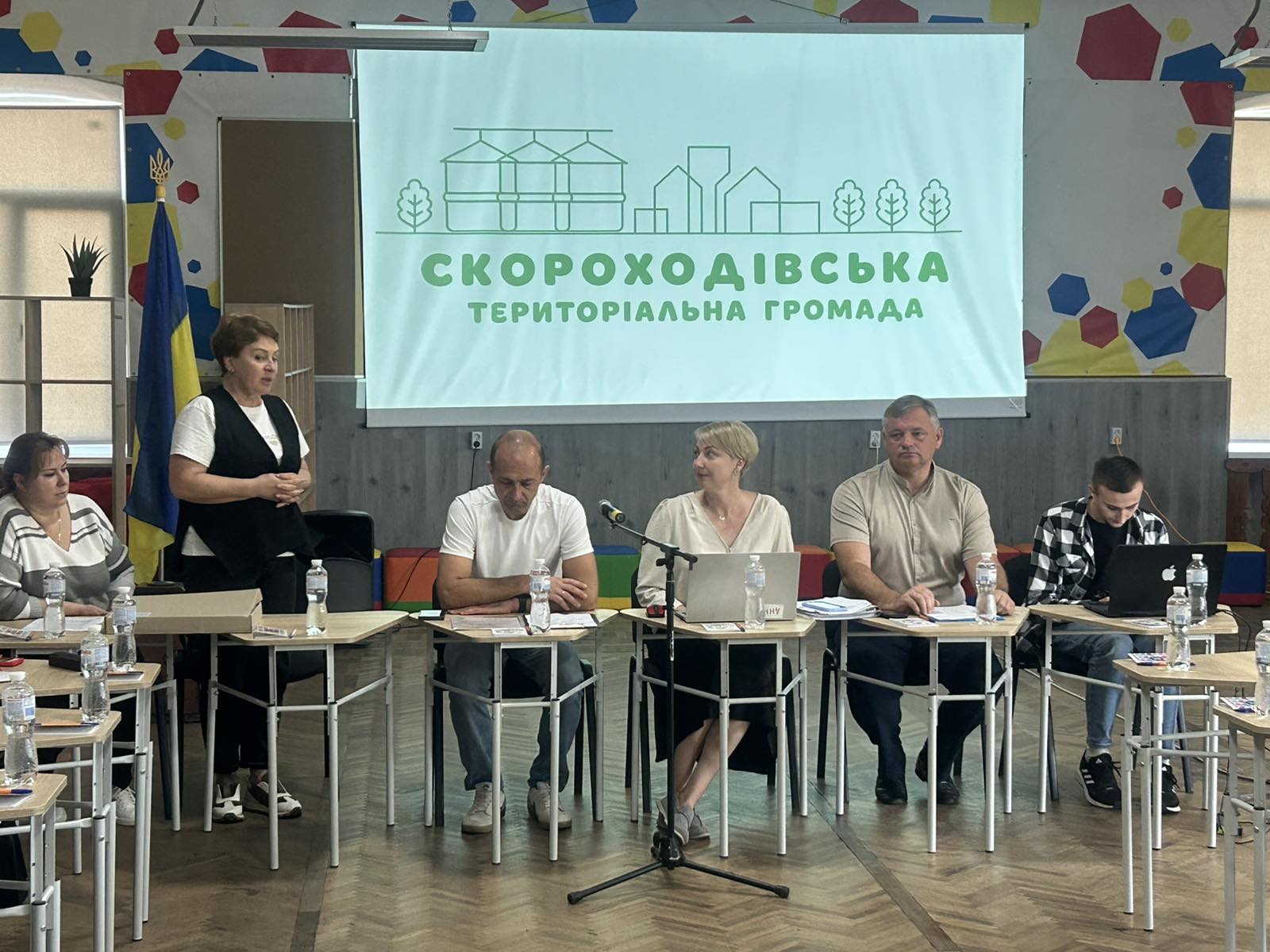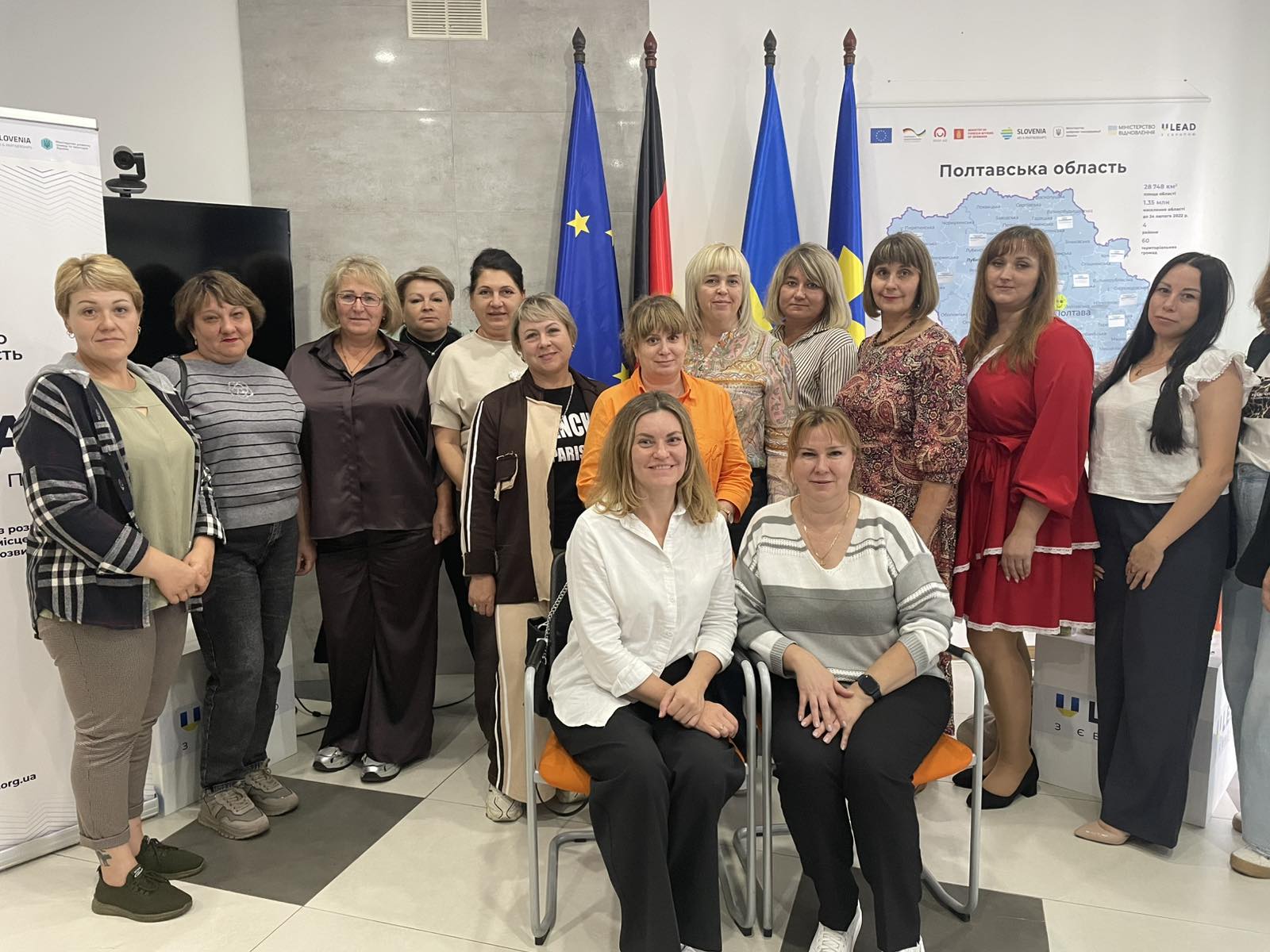



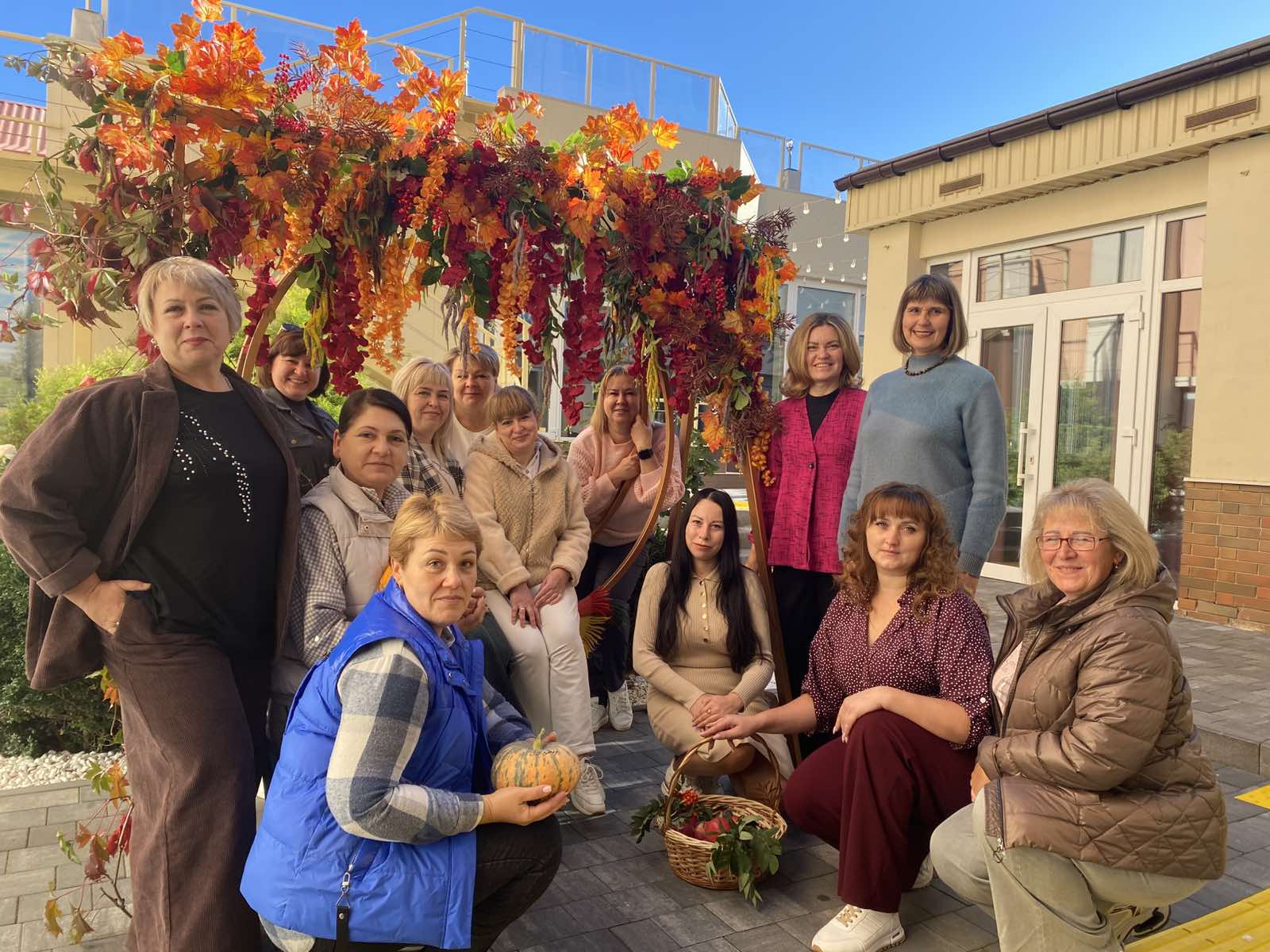
This was discussed during a study visit that took place on 23–26 September 2025 in Poltava Oblast as part of U-LEAD’s support programme “Development and Implementation of Participatory Budgeting.” The event brought together 15 delegates from nine oblasts: Kirovohrad, Cherkasy, Zhytomyr, Mykolaiv, Kharkiv, Odesa, Sumy, Zaporizhzhia and Vinnytsia. They learned about the practices of their Poltava colleagues and looked for answers to the questions such as how to effectively organise the participatory budgeting process, what challenges await municipalities, and how to ensure that winning projects make a real difference to people’s lives.
For most of those present, this is the first year of participatory budgeting, and the practical experience of Poltava Oblast has been invaluable for them.
“This visit showed that the key is not to be afraid. Many small municipalities have concerns about having sufficient resources and personnel. But practice has taught us that if you take action, you’ll get results. And joint training helped us realise that we all face similar challenges, and that it is easier to overcome them together,” said Olena Savchenko, a Policy Advisor for Municipal Finance and Management at the Regional Office of U-LEAD with Europe in Kirovohrad Oblast.
The visit included a trip to Skorokhodove. In 2024, this municipality participated in U-LEAD with Europe training and launched participatory budgeting. Two projects won in the first competition: building a bomb shelter at Fylenkove Lyceum and setting up a creative hub in the village of Petrivka. The first of them has already been completed, and the other is underway.
Yurii Petrenko, the Deputy Head of the Settlement Council for Executive Bodies, explained why this tool is important for Skorokhodove municipality:
“Communication with the public is the key. It allows us to learn about people’s thoughts and needs and to understand each other better. Last year, only 15% of residents took part in the vote, whereas this year the figure is already 24%. People see the results, trust the process and are getting more actively involved. This is proof that participatory budgeting is working and gradually bringing together more and more residents of the municipality.”
Another example is the municipality of Chornukhy, where participatory budgeting facilitates the implementation of young people’s ideas. The first three winning projects are aimed at improving local schools. The municipality has already modernised the computer classroom at Hiltsi Lyceum, renovated the educational space for beginner students in Voronkiv and is completing the construction of a bicycle parking facility at Skovoroda Lyceum in Chornukhy. All these initiatives were proposed by the alumni.
Olena Pentsko, the Head of Economic Development and Investment Department of the Executive Committee of Chornukhy Settlement Council, shared her experience:
“Introducing participatory budgeting in our municipality was quite straightforward, as locals had already participated in public initiative competitions in Poltava Oblast. Since 2018, with the support of the regional budget, we have implemented several projects, such as introducing separate waste collection in the village of Chornukhy and creating a lounge area in the local lyceum. Our participation in the U-LEAD with Europe support programme enabled us to quickly prepare the necessary regulatory framework, provide information support and boost public engagement. Once again, we see that young people are the driving force behind progress, and that fulfilling commitments is the key to building mutual trust within the community.”
Chornukhy municipality has introduced only an electronic form of public participatory budgeting, which completely eliminates the potential for influencing the outcome of the vote. Whereas in the first year of the competition, people voted cautiously, this year the level of support increased more than fourfold.
“Sharing experience is not just a useful practice but a powerful force for the development of each municipality. I’m truly proud of the municipalities of the Poltava Oblast — they have a lot to share and teach their colleagues from all over Ukraine. During this visit, U-LEAD with Europe praised the municipalities of Skorokhodove and Chornukhy for their exemplary practices and presented them with corresponding awards,” said Iryna Balybina, the Head of the Regional Office of U-LEAD with Europe in Poltava Oblast.
The experience of Poltava Oblast teaches municipalities to work together, listen to each other and steadily transform the living environments of their residents. And the more people join this process, the stronger the municipality becomes, because its growth is shaped by the people themselves.