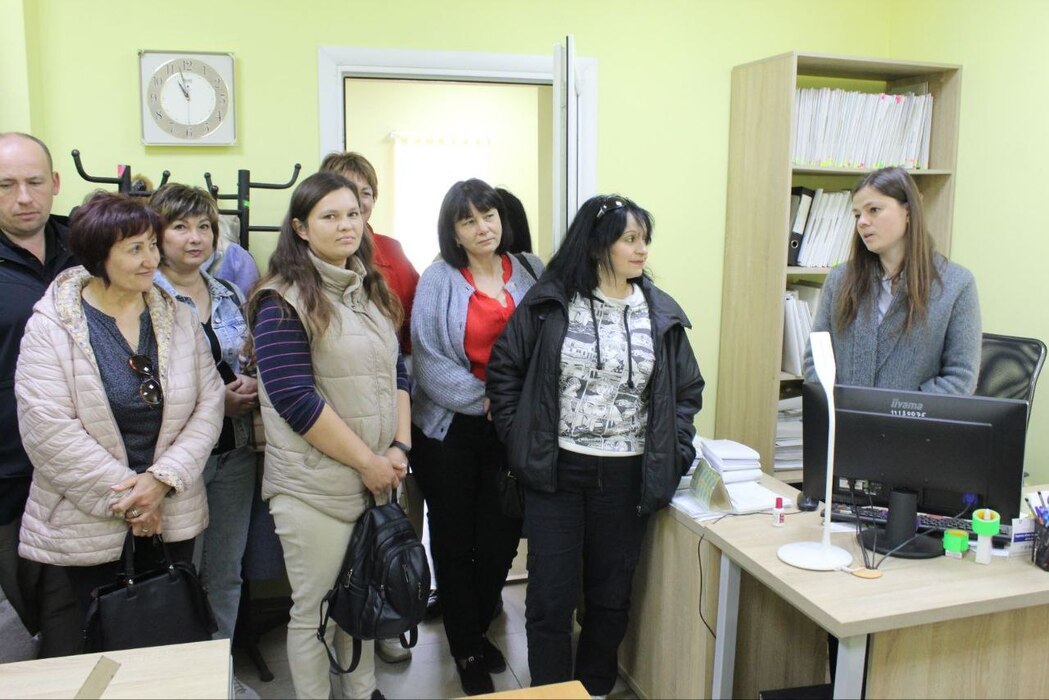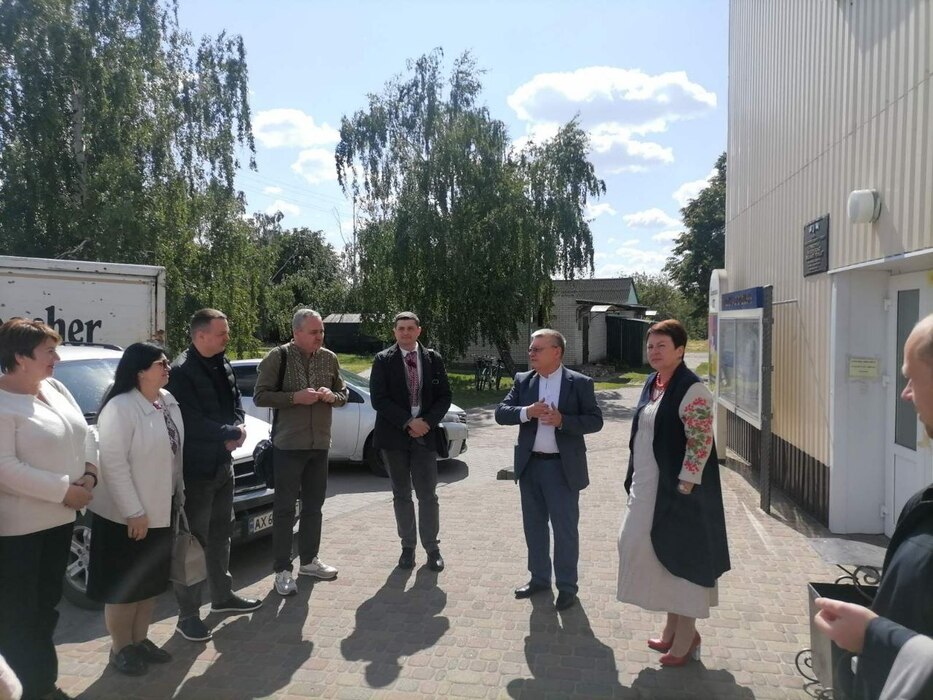





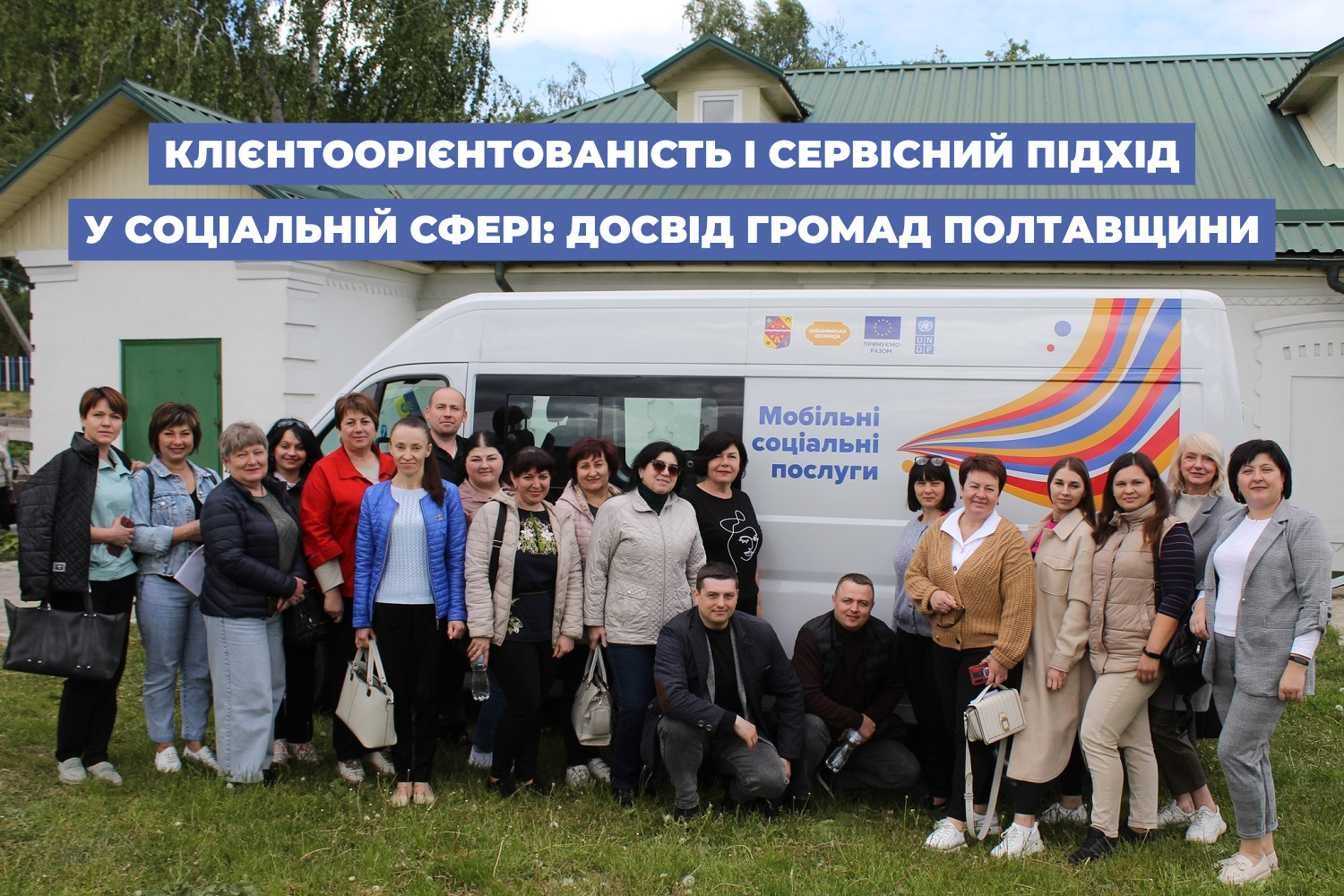
Municipal officials from the Odesa, Kirovohrad, Dnipropetrovsk, Kharkiv and Poltava Oblasts of Ukraine joined the study visit “Organisation and Provision of Social Services by Municipalities of Poltava Oblast in Wartime”. Its goal was to present the social service practices in municipalities that implement a client-oriented approach and service management, which are a common theme of the Steps for Specialists, U-LEAD’s specialised training programme.
“Our goal was to look at social services from the perspective of what the residents need rather than what we can do. To see them not only as state-guaranteed benefits, compensations and assistance but as a specific approach to human needs, assessing such needs and mitigating the effects of certain crisis situations that make people appeal to social services,” said Valerii Mikulich, Chair of the Working Group and Adviser on Decentralisation and Local Self-Government at the Regional Office of U-LEAD in the Zhytomyr Oblast.
In these three days, the guests visited the municipalities of Poltava, Shcherbani, Opishnia, Shyshaky and Bila Tserkva.
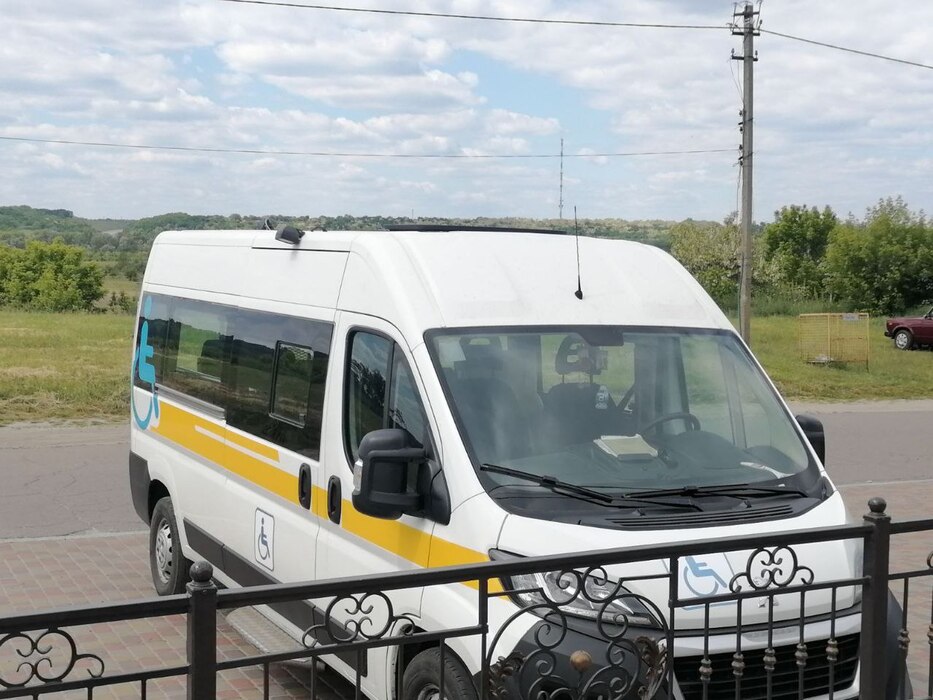
Best practices they observed included a mobile social service; social and inclusive taxi; inter-sector teams involving educators and healthcare providers; inter-municipal cooperation in the provision of social services; promotion and marketing elements for facilities providing social services.
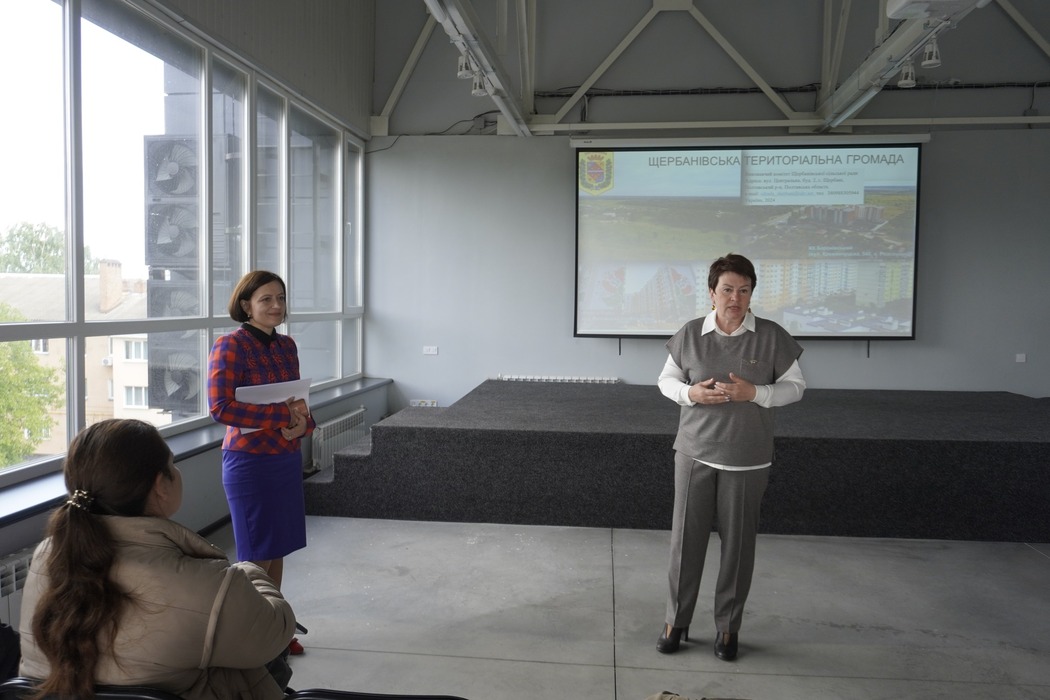
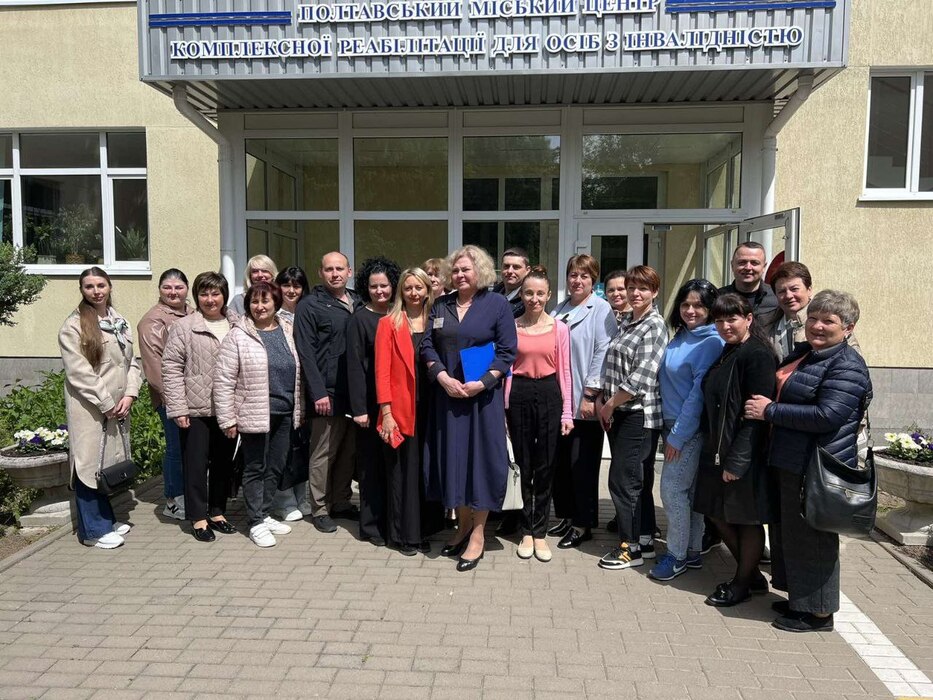
On the first day of the visit, municipal officials visited the Poltava City Centre for Comprehensive Rehabilitation of Persons with Disabilities which also treats children with disabilities. They established cooperation and have been offering services to the population of the oblast under separate agreements with municipalities. Also on this day, they visited the Shcherbani municipality to see the Outpatient Department of the Social Service Centre, which also actively cooperates with neighbouring municipalities. The Centre even advertises and promotes its services; they have created information materials. This helps them reach more people.
The second day of the visit was focused on a non-standard solution in the provision of social services. The Opishnia municipality has a mobile social service that provides a wide range of services — from hairdressing and household services, such as housekeeping, to economic services. In addition, the Social Service Centre of the Opishnia municipality employs a project manager to seek opportunities to improve the services.
“The visit showed us the useful experience of their institutions. For example, the branches of our Social Service Centre are quite lacking. We might think about opening new branches, as well as introducing a service for the transportation of people with disabilities. We realised that we need to be more proactive with social projects as it involves both attracting funds and training personnel, which is also important,” said Kateryna Shliakhova, a representative of the Pereshchepyne urban municipality, who participated in the visit.
As for the Shyshaky municipality, Poltava Oblast, the Social Service Centre there, addressing the demand and wartime challenges, actively works with local residents as well as IDPs. They introduced a service for IDPs: a daycare available to internally displaced mothers. The Centre also operates a social taxi, which helped save more than one life of people in need of care in the first months of the war.
“A study visit introduced us to new and diverse practices. We saw the institutions up close and talked with specialists. Our municipality needs services to ensure resilience and organise leisure options for families with children with disabilities. I would like to implement these practices at home. It was also curious to see different approaches to the organisation,” said Roman Lukianenko, a participant in the study visit representing the Derhachi City Council.
On the last day of the visit, the participants got to witness the work of inter-sector teams and the coordination of various services that ensure high-quality social services in the Bila Tserkva municipality. In addition to being enshrined in the relevant documents — inter-sector teams, with the involvement of social workers, educators and healthcare professionals, work with families in adverse life circumstances — this enables prompt detection of cases in time and provision of assistance.
The experience exchange visit was one of the final events of the training programme “Steps for Specialists. Arranging Social Services in Municipalities” aimed at presenting various models of the provision of such services in practice.
“As part of this training programme and visit, we emphasised the introduction of a client-oriented approach to social services in municipalities. This approach involves anticipating crises. This is European practice: the social sector strives to prevent negative social phenomena first and mitigate their effects second,” said Valerii Mikulich.