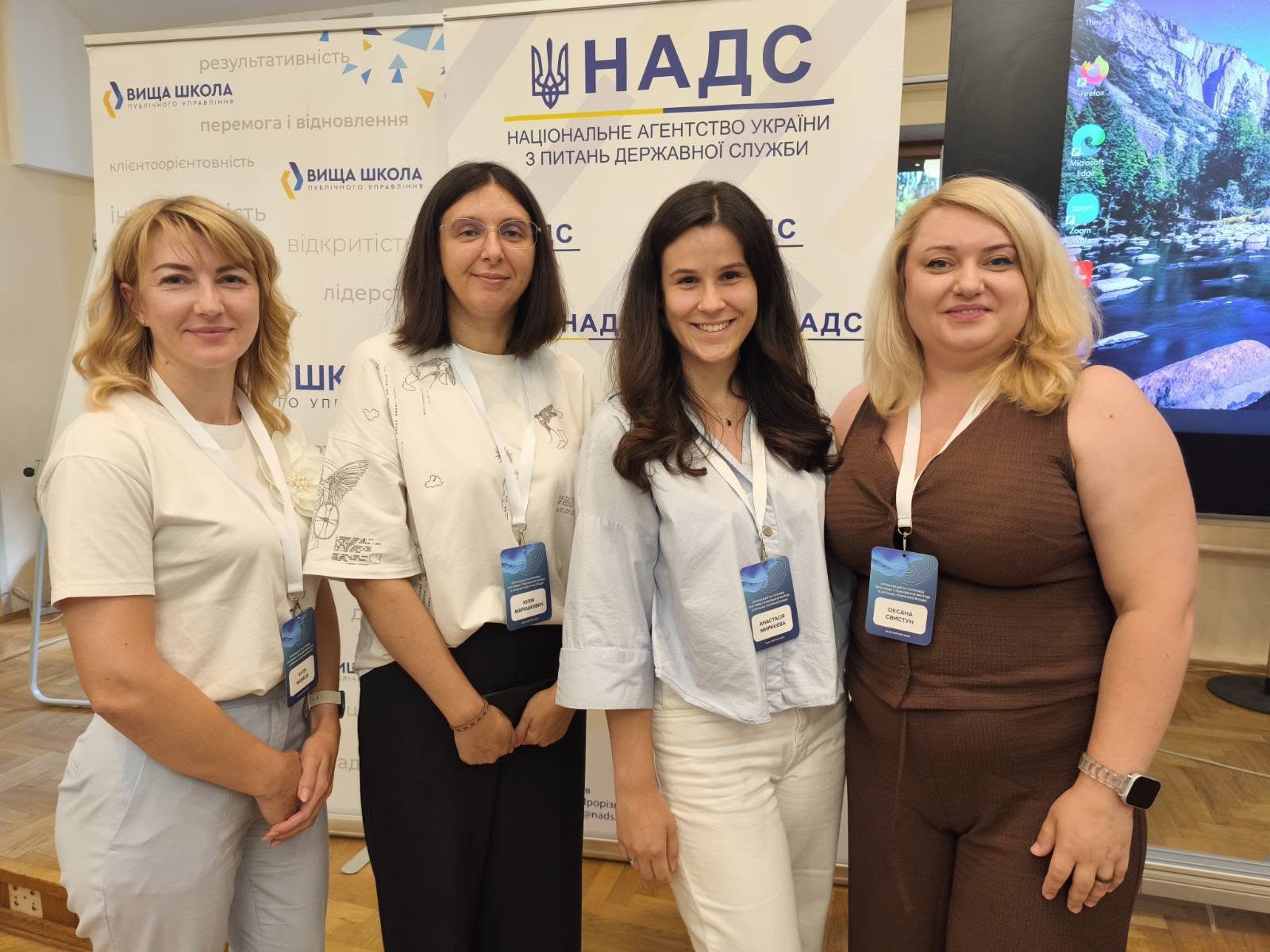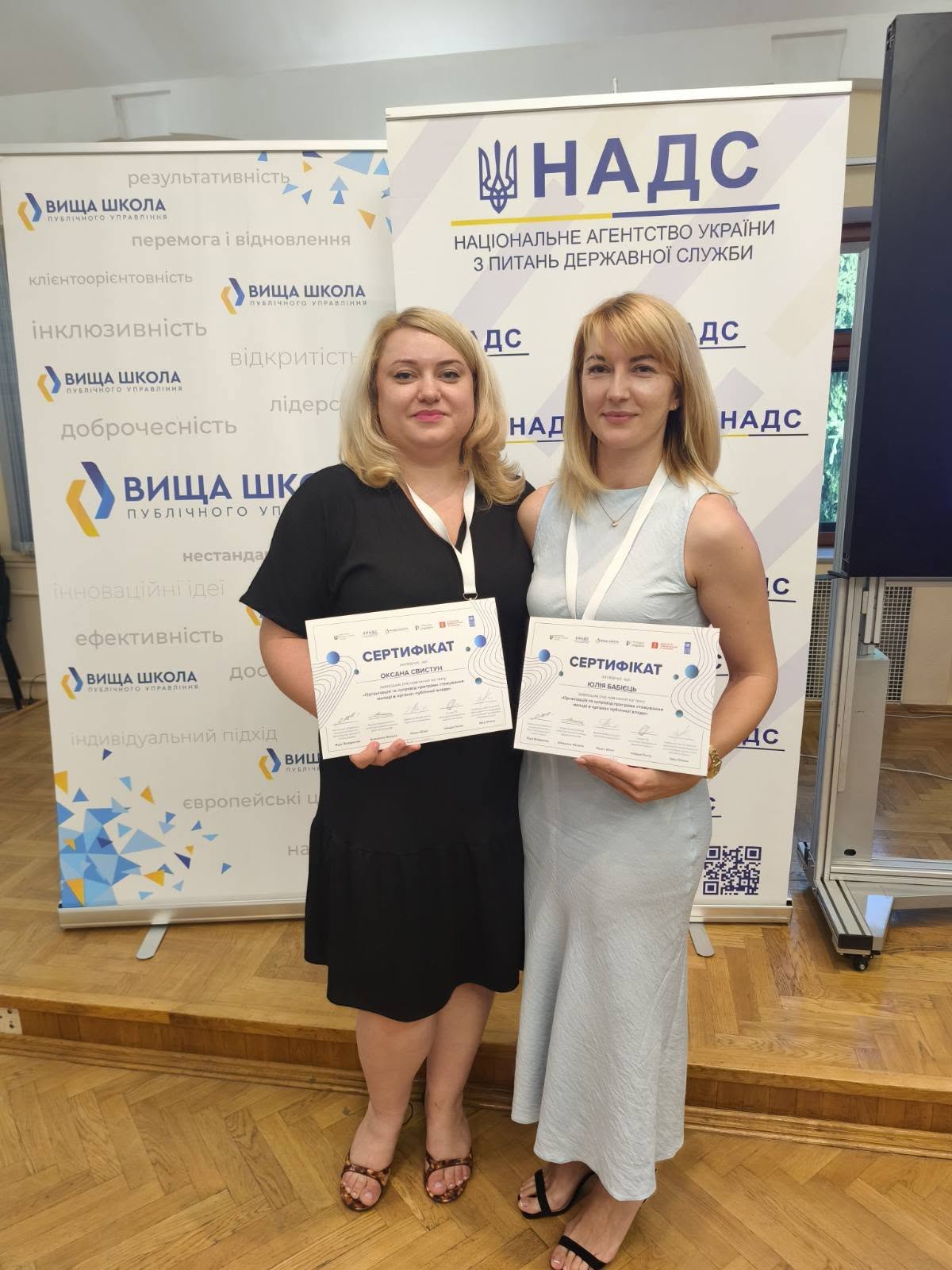







Oksana Svystun, the Head of the Executive Committee of Zhmerynka City Council, says that the training gave them the push they needed to make changes. They understood that there was no point in waiting for the new employment legislation to come into force – they had to act immediately. This is why, as soon as the training was completed, they set about developing regulations for the HR management service, job descriptions, procedures for forming a candidate pool, individual development programmes and, last but not least, internships for employees. The municipality’s most notable initiative is an internship programme for young people who wish to gain experience in local self-government.
“Interns turned out to be a valuable resource”
"The city council had a pressing issue: even though they advertised job openings, there were hardly any applicants. A large municipality with a population of over 40,000, yet they could not find a single person to fill certain positions. This personnel shortage was one of the reasons why they decided to give internships a chance. To do this, however, they had to not only draft documents but also change the approach within the system itself", said Oksana Svystun.
The heads of departments and divisions were told straight away that interns should see how things really work instead of just sifting through old files. Young people should be involved in everything, from processing documents to attending joint meetings and events. For fifteen days, they underwent training and experienced the daily routine of executive bodies, and this changed the perspectives of both the young people and the employees themselves.
Oksana Svystun admits that at first, there were some concerns: Would the senior officials be willing to work with young people? Wouldn’t it all end up being a mere formality? Instead, it turned out that everyone was interested. Young people asked direct questions, voiced criticism and offered ideas. This helped the team to look at their work from the outsider’s perspective.
This internship was inspired by the experience of searching for an IT and SMM specialist:
“We reached out to the head of an educational institution and were referred to a student. First, we took her on a trial basis, and then offered her full-time employment. That’s when we realised that we should focus on young people, since they learn quickly, are open to new approaches and readily adapt to new tasks,” says Oksana Svystun.
“… There was a stereotype that you could not get into the City Council without connections”
Yuliia Babiiets, the Head of Human Resources Department, explains that the internship programme has not only enabled them to find new talent, but also to restore trust in local authorities. For many years, there was a stereotype in the municipalities that you could not get into the City Council without connections. Yet the young people who took part in the internship programme found the opposite to be true: they were welcomed openly, honestly and without prejudice.
The internship was set up so that each participant could feel like part of the team. There was a lot of talking, explaining and showing how the processes work. All documents, from the internship procedure to individual plans, were developed by the municipality itself, using templates prepared together with U-LEAD experts during training.
“Young people chose the area in which they wanted to do an internship. Then, based on this, we suggested placements. Some chose youth policy; at that time, there were options to work in the Youth and Sports Department or in the Youth Centre. Someone wanted to try their hand at housing and utilities. All in all, we can see that the internship was not just a perfunctory exercise. Quite the opposite: it’s really taken off since both the senior officials and the young people themselves showed interest. This reassured us that we were moving in the right direction,” says Yuliia Babiiets.
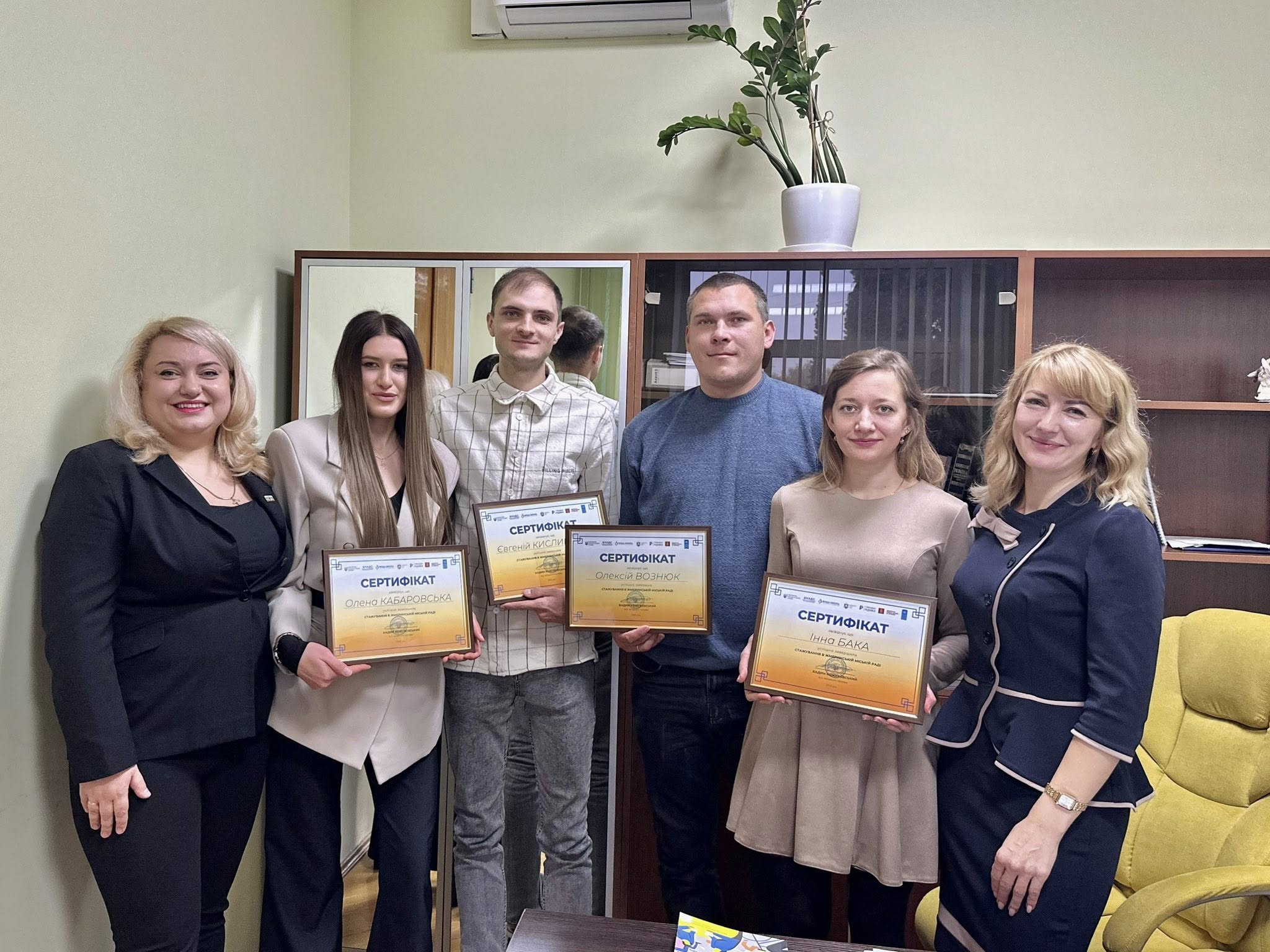
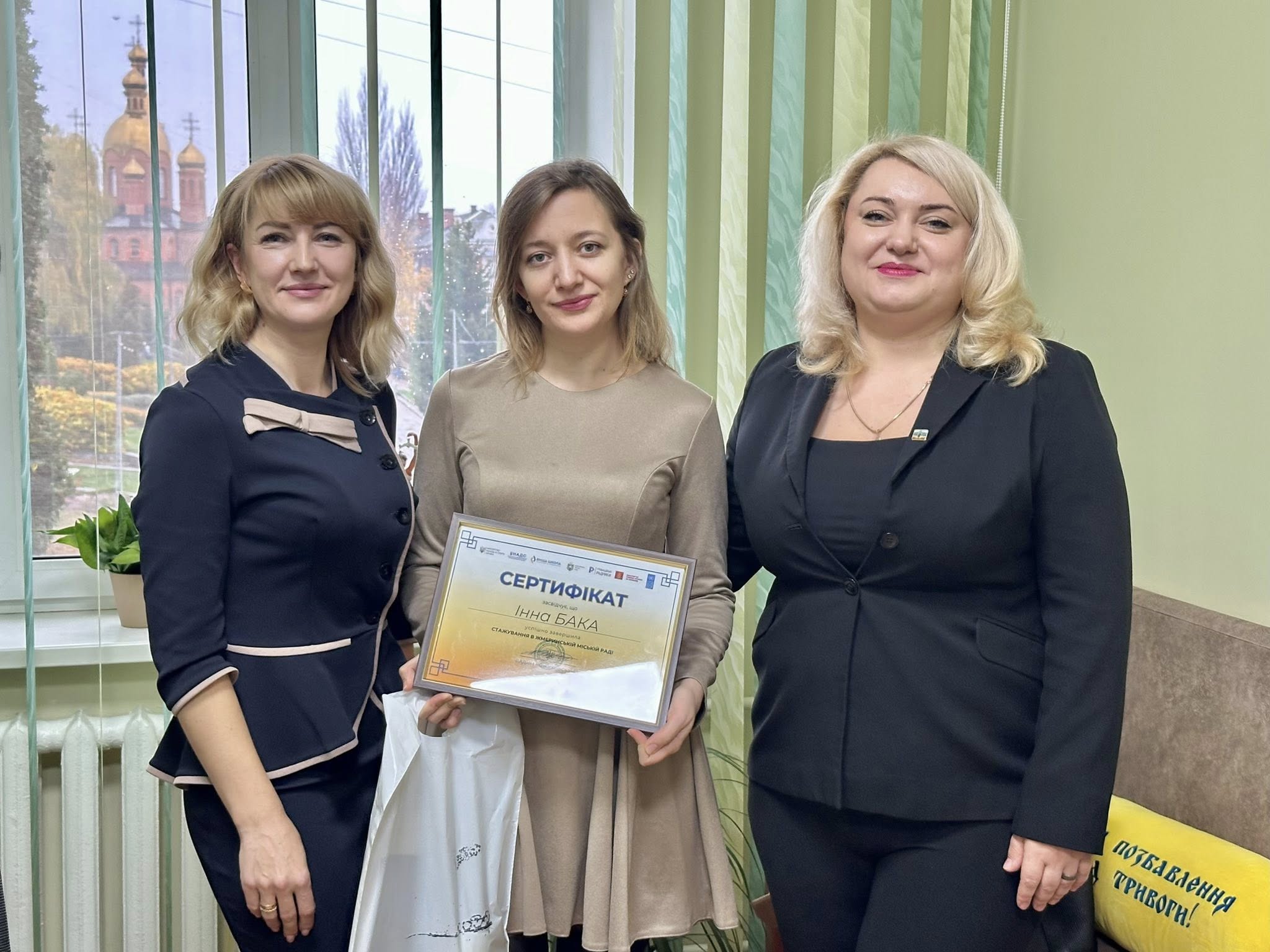
She adds that after completing their internships, not only did the young people express their gratitude, but they also asked if they could come back for more. This was the biggest testament to success. In total, seven out of nine candidates were selected for the internship, five successfully completed it and are now part of the municipality’s talent pool.
“I took the job on the condition that I would be allowed to run a TikTok account”
Khrystyna Kolomiets is the chief communications specialist, and she is the very person who motivated Zhmerynka City Council to organise internships for young people. She shares that as a student, she dreamed of working in government, but had reservations about the system’s bias and lack of transparency:
“I took the job on the condition that I would be allowed to develop the City Council’s TikTok account,” Khrystyna says with a laugh. “I thought they wouldn’t take me seriously. But the very first week cleared up all the misconceptions. They are open to ideas, to new formats, and I saw that this is a place where you can really work and make a difference.”
Now Khrystyna is a valued member of the team. She is in charge of outreach for the municipality’s communications, promoting new formats. Now she is the one encouraging young people not to be afraid to try new things.
What do experts think about transformations in the municipality
Peers from other municipalities are already reaching out to Zhmerynka for best practices. The internship programme has evolved from an experiment into a real tool for municipal development, which the City Council intends to continue using in the future. Young people learned that local self-government is about more than just bureaucracy; it’s a chance to have a real impact every day, while employees saw that young people are capable of revitalising even long-established processes.
Experts also give a positive assessment of the municipality’s efforts. Liudmyla Hurba, an Adviser on Decentralisation and Local Self-Government at the Regional Office of U-LEAD with Europe in Vinnytsia Oblast, states:
“The experience of the Zhmerynka City Council is a great example of the successful transformation of staffing activities into HR management. This goes to show how U-LEAD training programmes can be effectively integrated into actual municipal governance processes.