



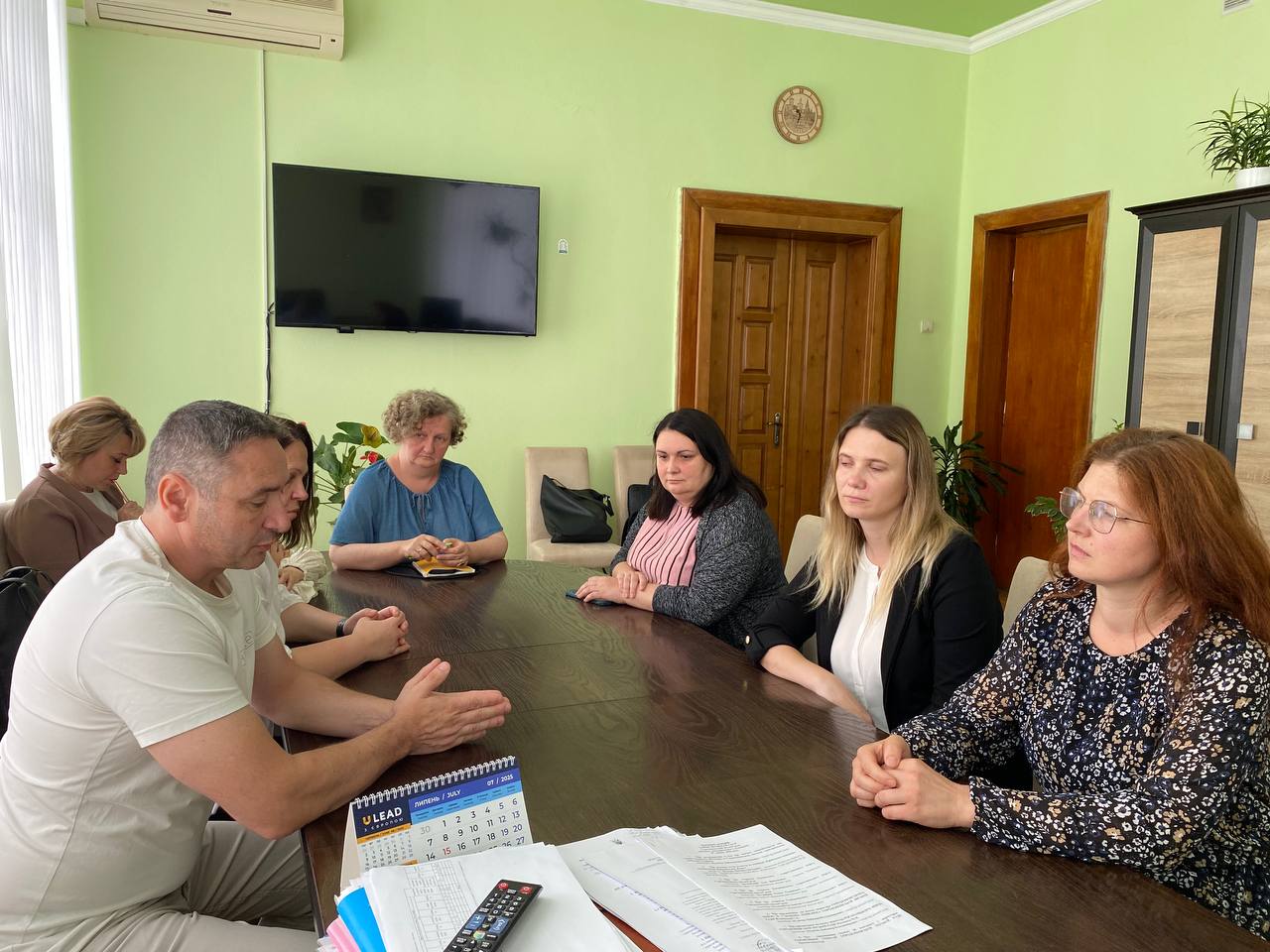
Horodenka municipality team engaged with the Project Quality Index improvement programme with a specific objective: to analyse mistakes in preparing project applications for cross-border programmes and to revise one of the previously submitted projects.
Tetiana Hamula, a Project Manager of Horodenka City Council, commented:
“Our team has experience in implementing projects of varying complexity. We implemented initiatives with the support of the Ukrainian Cultural Foundation, the Fire Fighters project, the project to create an integration space called “United Municipality: Reintegration through STEM” in collaboration with VIRNI, an NGO, as well as projects supported by MHP and other donor organisations. We have also worked on projects with Pokuttia Office for Territorial Development, including international ones. However, we recognise the need to move towards projects involving cross-border cooperation.”
Tetiana shared that she and her colleague, Nadiia Nemish, had applied to the improvement programme with a project proposal focused on environmental protection and biodiversity. This was their first experience with this type of project, and the donor did not accept the application. The project aimed to revitalise the landscape around the Dniester River, train volunteers, engage with local residents, collaborate with the Dniester Regional Landscape Park, learn from the experience of a Polish organisation and study the impact on both oblasts. Horodenka municipality component included cleaning up the areas along the Dniester River, removing waste and purchasing equipment.
The team, together with U-LEAD experts Yevhen Luksha and Kseniia Okhotnyk, analysed the application and identified shortcomings that often undermine the competitiveness of cross-border applications: lack of measurable indicators, unclear explanation of the linkages between measures and results, and unclear logic of activities and measures.
“We ended up putting together a roadmap for improving the application, but decided to put this project on hold for now and come back to it later, maybe with a different focus,” said Tetiana.
The municipal team decided to focus on another project instead: collaborating with the municipality of Kańczuga (Poland) on music education. Here, the municipality saw an opportunity to build sustainable horizontal ties between institutions, going beyond mere exchange visits.
Working with U-LEAD experts led to important adjustments to the project application, as the focus should not be narrowly on “music education” but rather on cultural exchange between municipalities, as required by the INTEREG NEXT Poland – Ukraine programme priority.
“We listened to the experts’ advice, and in the project, the music school became a ’pilot’ for intercultural cooperation, through which the municipality plans to develop a roadmap for at least five years, one that can be extended to other cultural institutions, sports schools, organisations and NGOs,” said Tetiana Hamula.
In October, Horodenka municipality, in partnership with the municipality of Kańczuga, submitted the MAESTRO (Municipal Alliance for Education in Sound and Transborder Regional Opportunities) project to the INTERREG NEXT Poland – Ukraine cross-border cooperation programme competition, developed with insights from the Project Quality Index course and consultations with U-LEAD experts.
Tetiana Hamula stressed that the greatest value of the Project Quality Index programme comes not from a “single application” but rather from a framework that can be applied to other projects. After completing the programme, the municipal team (Tetiana Hamula, Mariia Zdrila, and Nadiia Nemish) have been actively using it for other projects. For instance, they used it (and U-LEAD experts’ suggestions) to put together a project under the INTERREG NEXT cross-border cooperation programme Romania – Ukraine: STEMBRIDGE (STEM Building Resilience, Innovation & Digital Growth in Education for local communities in Ukraine and Romania) in partnership with the Intermunicipal Development Association from Satu Mare, Romania.
“For me, the whole course boiled down to a quote from the trainers: ’We’re not writing a project because we need to buy a tractor. We are writing it to address the situation, and the tractor is a piece of equipment required within the scope of the activities.’ When it comes to eliminating ’unnecessary’ activities that do not contribute to the goal, it is helpful to use a logical-structural matrix, which initially appeared to be quite complex,” summed up the project manager of the Department of Projects, International Cooperation, Youth and Tourism of Horodenka City Council.
According to the Mayor of Horodenka, Bohdan Kobylianskyi, the cooperation with U-LEAD is not a one-off training programme, but a long-term investment in building the capacity of the municipality.
“The Project Quality Index programme helped our team transition to higher-quality, more professional project management grounded in change logic, clear objectives and measurable results. This expert support allowed us to set up an effective project department in the municipality and start working with cross-border cooperation tools, such as INTERREG programmes. We see this as the basis for long-term development of the municipality and sustainable international partnerships,” said Bohdan Kobylianskyi.
Three tips from Horodenka project team to their colleagues from other municipalities:
- Invest time in training. Consider project management courses (e.g., “Steps for Specialists: Project Cycle Management” offered by U-LEAD, “Project Office”);
- Do not be afraid to ask questions, critically review your own applications before submission, and do not give up after the first rejection.
- Build your municipality’s project capacity and never be afraid to step out of your comfort zone, as this is the path to growth.