


The Draft State Budget 2026 provides for a cut in total capital expenditure, which means even stricter requirements for municipal investment projects. From now on, only those projects that meet the updated criteria will receive funding from the state budget, including:
- enhanced project evaluation criteria: strategic feasibility, financial justification, socio-economic impact;
- ensuring transparency, competition and monitoring of the project selection process;
- aligning investment initiatives with the medium-term priorities set forth in Municipal Development Strategies.
This means that without approved Development Strategies, which require a mandatory Strategic Environmental Impact Assessment (SEIA), municipalities will not be eligible for state funding for capital projects or for international loans and grants.
What is SEIA and why do municipalities need it?
Strategic Environmental Impact Assessment is a procedure that allows assessing the impact of strategic and planning documents (strategies, plans, programmes) on the environment and public health. In other words, this is an “environmental audit” of future decisions that helps prevent risks at the planning stage.
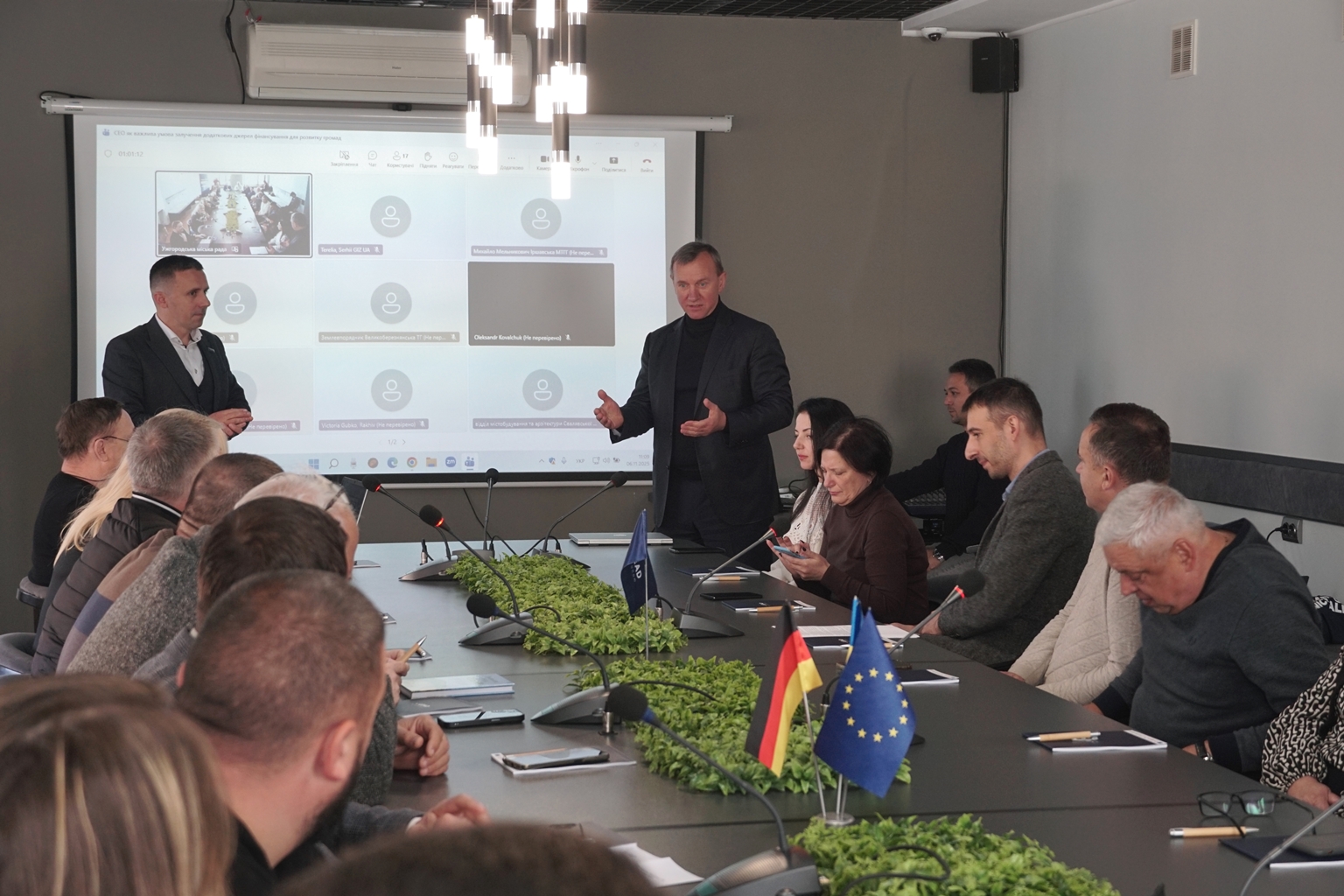
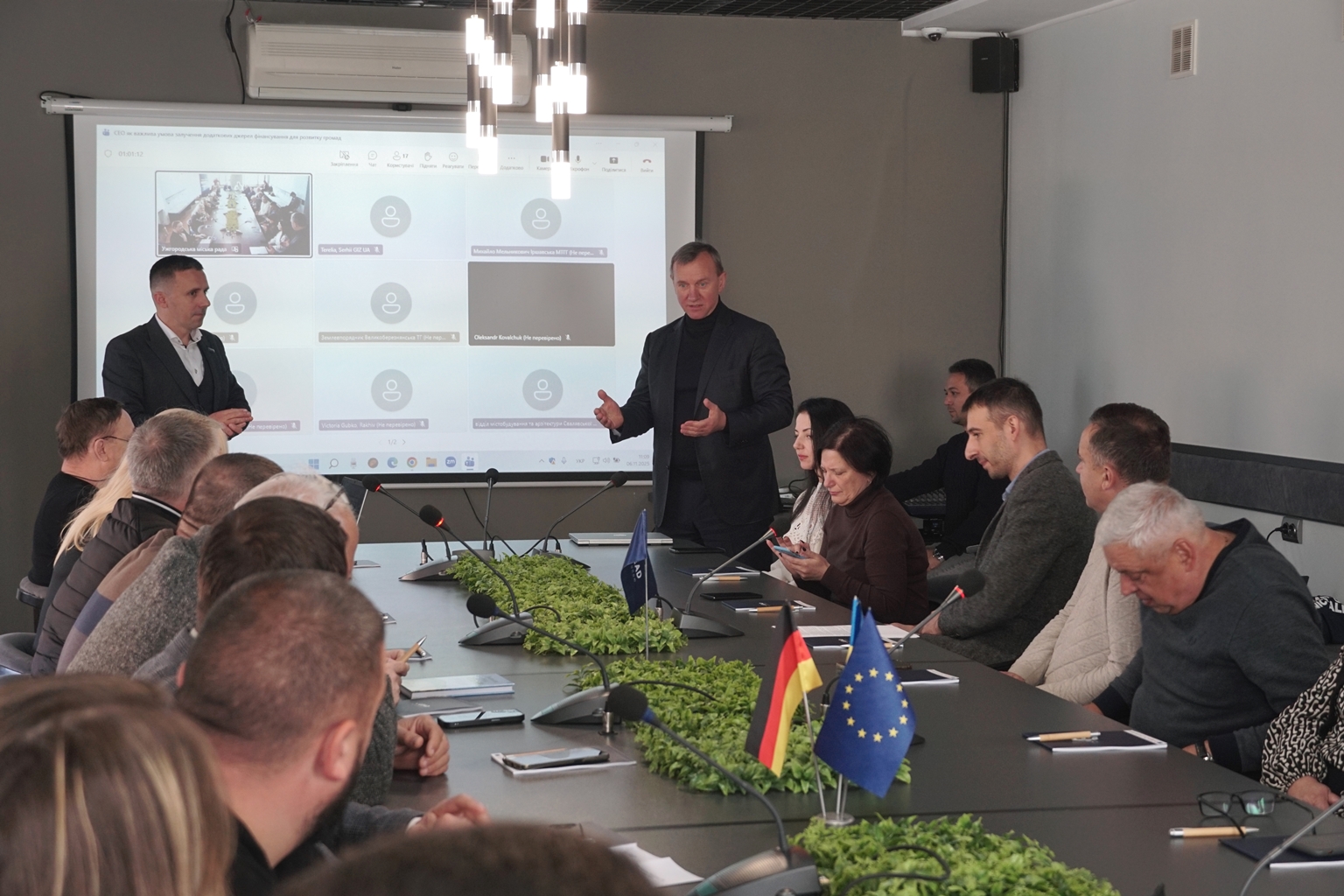
Vladyslav Peresoliak, the Head of Department of Geodesy, Land Management and Geoinformatics at Uzhhorod National University, a partner of the event, spoke about the importance of SEIA and its connection with European standards. Among other things, he advises municipalities in Zakarpattia Oblast on strategic planning and the SEIA procedure:
“Ukraine has undertaken to harmonise its legislation with the EU aquis, where strategic assessment is mandatory for all development plans. No longer a mere formality, this is now a requirement without which municipalities will not be able to obtain funding for projects — neither from the state nor from international sources,” he explained.
He also emphasised that strategic and environmental impact assessment is a prerequisite for attracting grants and loans. European development banks and donors do not finance projects unless they have an SEIA section.
How does SEIA work?
According to Yurii Shpontak, the Director of Ecology and Natural Resources Department of Zakarpattia Oblast Military Administration, the procedure takes at least 45 days and consists of two stages: submission of an application and consultation with the relevant authorities. Local self-government bodies commission the SEIA, and the process can be completed either independently or with the involvement of universities or expert institutions.
“Municipalities should create working groups and engage experts, including researchers. As the regional administration, we are willing to provide data and advisory support,” he said.
The draft strategy and report are followed by public discussions, during which residents can voice their suggestions. According to experts, this stage alleviates the majority of social tensions and ensures that municipalities make more informed decisions.
How educational institutions can help municipalities
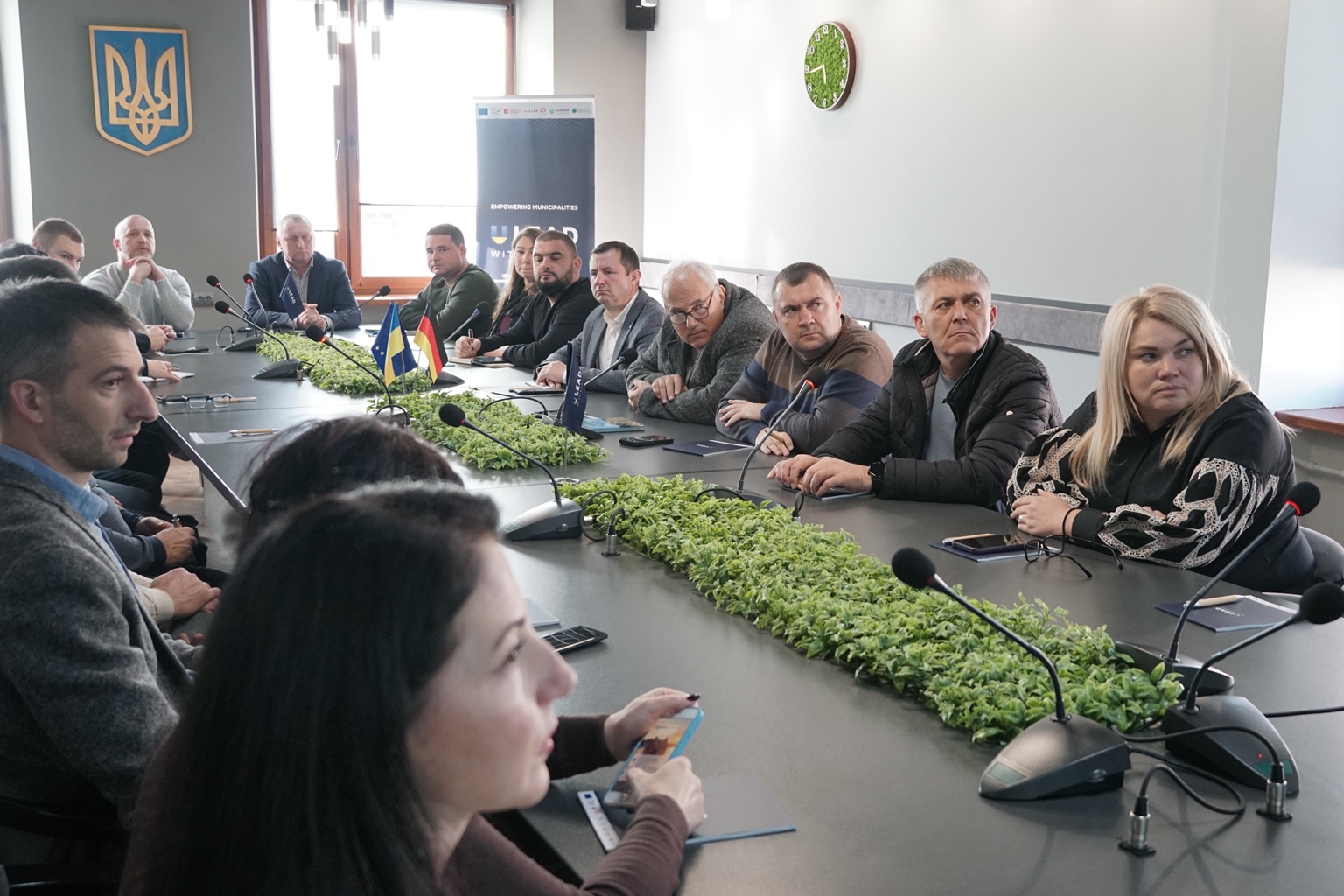
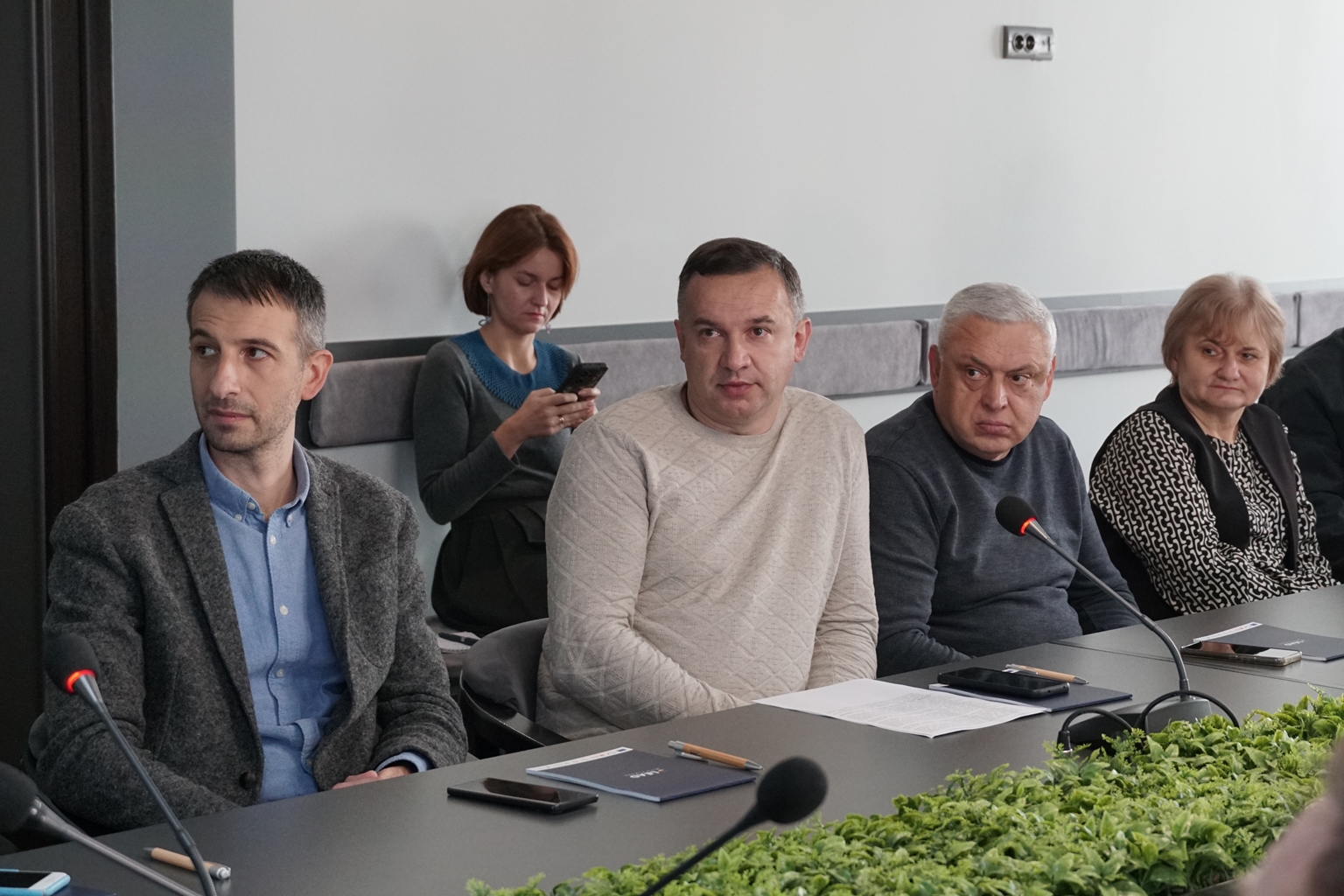
The event also focused on the issue of municipal capacity. Many participants indicated their lack of sufficient expertise or financial resources to independently prepare strategic documents and undergo the strategic environmental impact assessment procedure.
In this context, the proposal to cooperate with universities, notably Uzhhorod National University, which has competent experts and is willing to provide municipalities with research, expert and advisory support in the process of developing strategies and conducting SEIA, generated great interest.
As was pointed out by Vladyslav Peresoliak, the Head of Department of Geodesy, Land Management and Geoinformatics at Uzhhorod National University, universities have great potential to be both educational and practical partners for local self-government.
“Each department is actually a research team that can help municipalities develop quality strategic documents, conduct research and prepare the necessary assessments. Cooperation with universities allows municipalities to save money while getting expert deliverables,” he said.
The participants of the event called this cooperation an example of synergy between education, science and local development, which can serve as an effective tool for preparing municipalities for new requirements in the field of public investment management.
Why action must be taken now
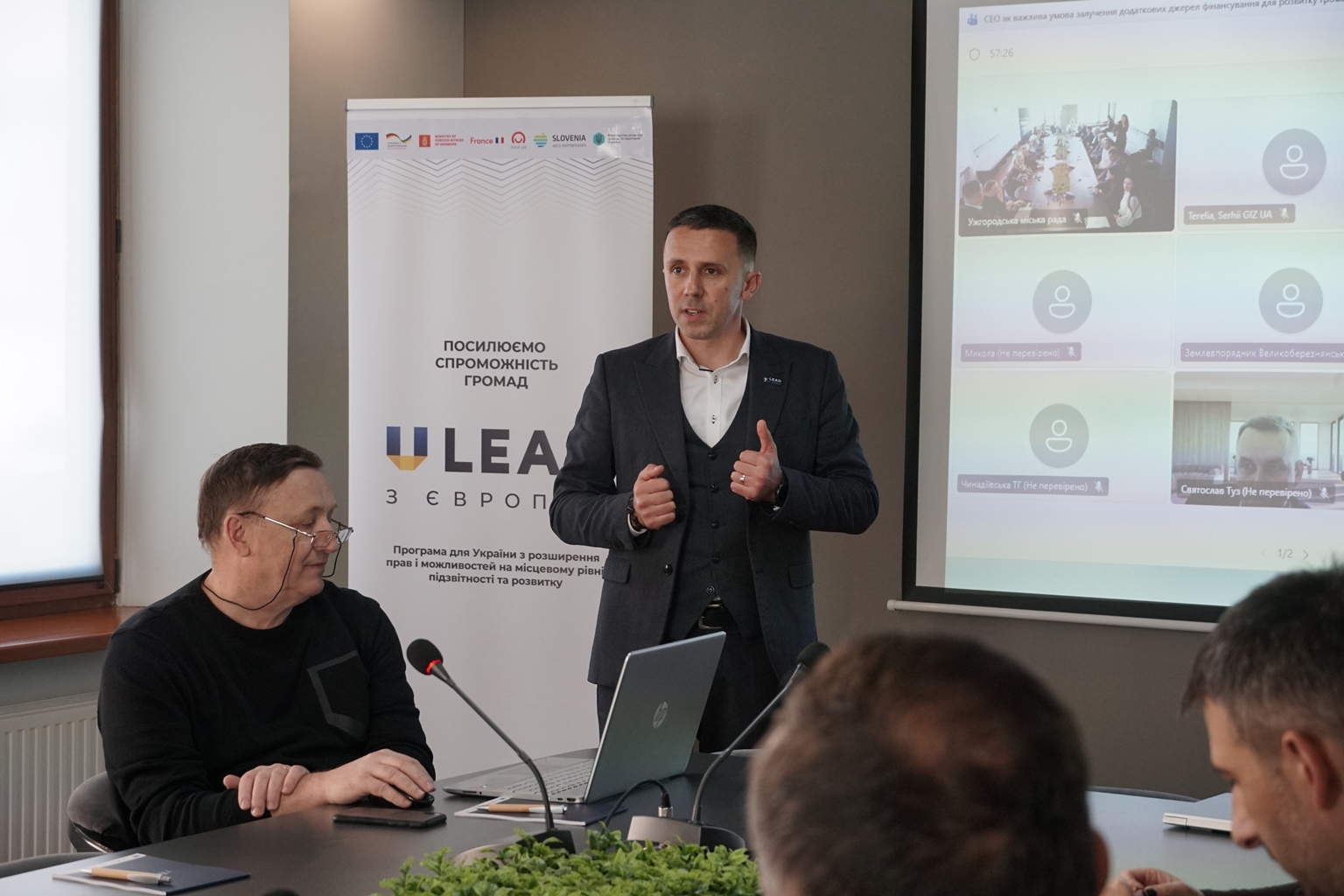
As noted by Pavlo Logvinov, the Head of the Regional Office of U-LEAD with Europe in Zakarpattia Oblast, municipalities that lack development strategies and have not conducted the SEIA may lose access to international loans and grants, as well as state funding for capital projects, starting in 2026. Therefore, the key task for the coming months is to update development strategies and conduct environmental impact assessments as prescribed by law.
“U-LEAD supports communities by explaining processes in a way that is easy to understand, helping them to navigate new requirements and providing methodological support in the process of planning territorial development,” he said.