


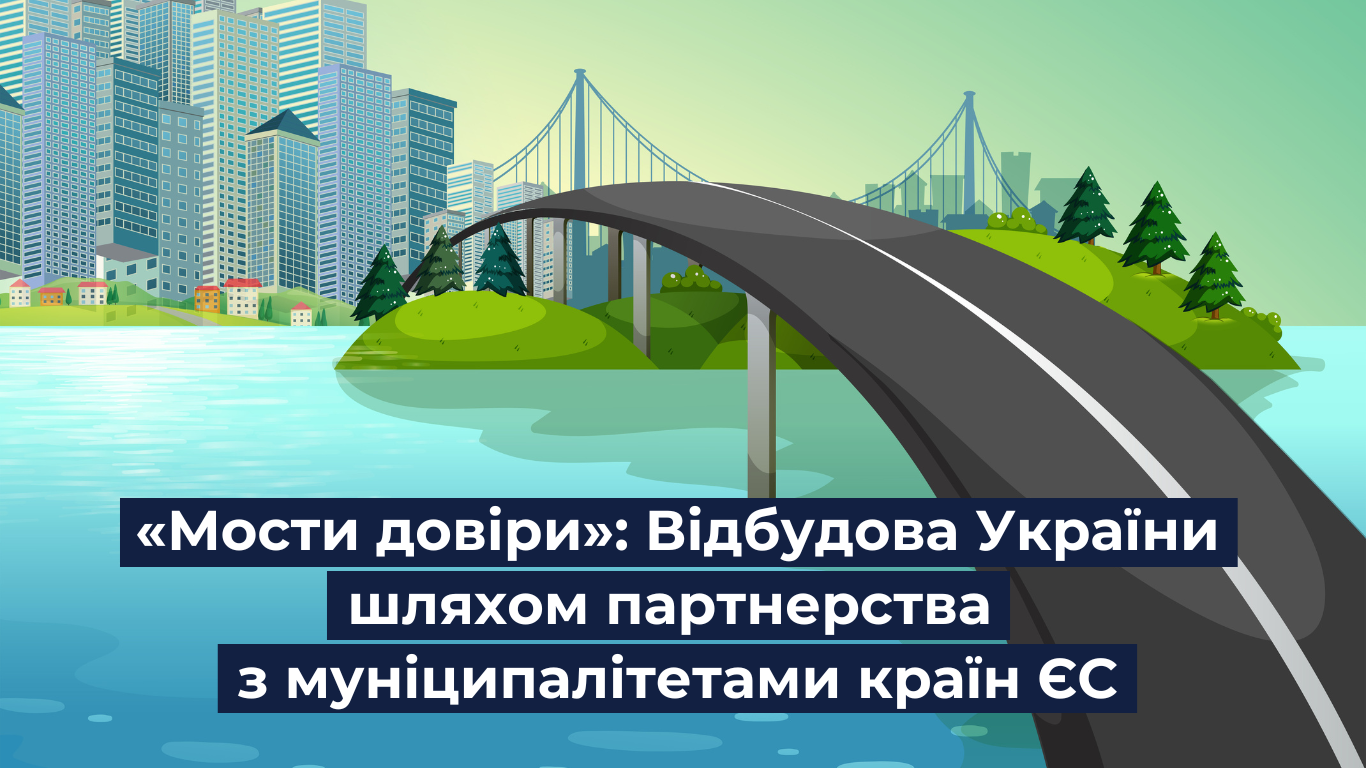
Building on the successful cooperation between U-LEAD with Europe and CEMR (Council of European Municipalities and Regions), Rebuilding Ukraine through partnerships with the EU municipalities project aimed to expand municipal partnerships between Ukraine and the EU, fostering long-term collaboration and post-war recovery efforts. The main goal of this project was to support development of 30 new partnerships between municipalities in Ukraine and the EU. The project was implemented through online forums, bilateral online meetings of partnered municipalities, study visits and internships in selected municipalities in EU member states and preparation of joint gender-sensitive project proposals aimed at reconstruction of Ukrainian municipalities.
Results
CEMR, cooperating with AUC, succeeded at establishing 30 new partnerships. After initial online meetings, the main activities were study tours/internships in EU municipalities and preparation of joint project proposals. CEMR provided support in the organisation of an exchange visit of Ukrainian municipalities to the EU member states.
Those study visits and such close cooperation were beneficial to both Ukrainian and European partners. Through the experts' and mayors' experiences exchanges from each partnership 48 project proposals were developed that are ready for funding application:
- 20 water supply and wastewater treatment facilities
- 8 reconstructions of hospitals and cultural facilities, creation of industrial parks
- 6 recycling and waste management
- 5 alternative energy sources, decentralisation of heat supply
- 3 construction and renovation of bomb shelters
- 3 integration of internally displaced persons, educational projects
- 3 provisions of various types of transport for community needs.
Moreover, over the past two years, a series of initiatives have been undertaken to strengthen collaboration between Ukrainian and European municipalities, enhance their capacity to access EU funding, and support Ukraine’s regional development in the context of its EU accession process:
-Solidarity Forums: Seven Solidarity Forums were held online to raise awareness among European municipalities about the challenges faced by local governments and citizens in Ukraine. These forums facilitated discussions on pressing issues, highlighted urgent needs, and explored ways for mutually beneficial partnerships between Ukrainian and European municipalities.
-Capacity Building and Training: Ten online training sessions and informational meetings were organized for over 500 municipal representatives from Ukraine and Europe. These sessions focused on project design, EU funding programs, and the broader implications of EU regional policies in the context of Ukraine’s accession process.
-Advocacy for Municipal Partnerships: The CEMR promoted stronger partnership-building efforts between Ukrainian and European local governments. Through the Alliance of Cities and Regions for the Reconstruction of Ukraine and collaboration with the European Commission, CEMR supports initiatives aimed at fostering municipal cooperation.
CEMR, along with national associations helped draft key policy recommendations, including those from the "Putting the Lugano Principles into Action" workshop before the Ukraine Recovery Conference (URC) 2023 in London. They also contributed to joint recommendations for URC 2024 in Berlin, strengthening proposals for Ukraine’s reconstruction and EU integration.
-Matchmaking Platform for Ukraine: A dedicated Matchmaking Platform was established, with a specific focus on Ukraine. This platform facilitates direct connections between Ukrainian and European municipalities, enabling them to identify opportunities for collaboration, exchange best practices, and engage in joint initiatives that support local governance and post-war recovery efforts.
Big Events
As part of Europe’s largest cohesion policy event, a dedicated Bridges of Trust stand was set up at the European Week of Regions and Cities in October 2024 in Brussels. This initiative was designed to raise awareness about international cooperation efforts focused on Ukraine’s reconstruction and to encourage new partnerships between Ukrainian and European municipalities.
On October 8, 2024, CEMR hosted a milestone meeting at its Brussels headquarters, bringing together key stakeholders to exchange experiences and reinforce municipal cooperation. This hybrid event marked the official launch of the BoT Community, a platform for sustaining and expanding partnerships between Ukrainian and European municipalities. Discussions focused on best practices for fostering long-term cooperation, strengthening municipal collaboration, and developing strategic initiatives to support Ukraine’s recovery.
The Bridges of Trust Annual Gathering took place as an integral part of the CEMR Leaders’ Summit in Karlsruhe, Germany, bringing together over 40 representatives from partnering municipalities. This event marked a pivotal moment, transitioning from the formation of individual bilateral partnerships to establishing a long-term, structured collaboration framework within the Bridges of Trust (BoT) Community.
The summit served as a platform to address key challenges faced by mayors and local elected officials from 41 countries, foster collaboration, and exchange best practices among CEMR members and partners. The discussions focused on:
- The role of twinning and municipal partnerships in fostering impactful local collaborations.
- The enhanced Matchmaking Platform, designed to facilitate municipal partnership-building across Europe and Ukraine.
- The Bridges of Trust Annual Gathering, highlighting the importance of city-to-city cooperation in Ukraine’s reconstruction efforts.
By bringing together municipal leaders, policymakers, and experts, the summit reinforced the critical role of local governments in shaping Europe’s future and supporting Ukraine’s recovery through international cooperation.
Impact
Stronger Municipal Partnerships
Ukrainian and EU municipalities have built lasting relationships, shifting from initial networking to concrete cooperation. These partnerships foster trust, enabling municipalities to jointly address recovery challenges and implement projects together.
Collaborative Project Development
Municipalities now work together on reconstruction efforts, co-developing initiatives in infrastructure, public services, and community resilience. Through mutual learning and joint problem-solving, local governments have enhanced their capacity to implement impactful projects.
Improved Knowledge and Capacity
Municipal representatives have gained practical skills in EU project design and funding, empowering them to independently seek financial support and drive local development. Ukrainian municipalities now actively engage in European funding programs, applying lessons learned from their EU partners.
Sustained Engagement and Long-Term Cooperation
The initiative has moved beyond initial exchanges, ensuring continued collaboration through digital tools and ongoing policy dialogue. The Matchmaking Platform enables municipalities to maintain and expand their partnerships, ensuring ongoing support for Ukraine’s reconstruction.
Stronger Role in European Policy Discussions
Ukrainian municipalities are now more visible in European networks, engaging in policy discussions and technical meetings that influence the broader reconstruction agenda. The project has facilitated their integration into the European municipal community, reinforcing long-term cooperation beyond the initiative.
The Rebuilding Ukraine through Partnerships with EU Municipalities (2022-2024) project has fostered significant municipal cooperation and capacity building, resulting in 30 new partnerships and 48 joint project proposals focused on sustainable reconstruction in key sectors. By facilitating knowledge exchange and developing funding-ready projects, the initiative has laid a strong foundation for long-term collaboration between Ukraine and the EU. These efforts will continue to support Ukraine’s recovery and integration into the EU, with local governments playing a crucial role in the process.