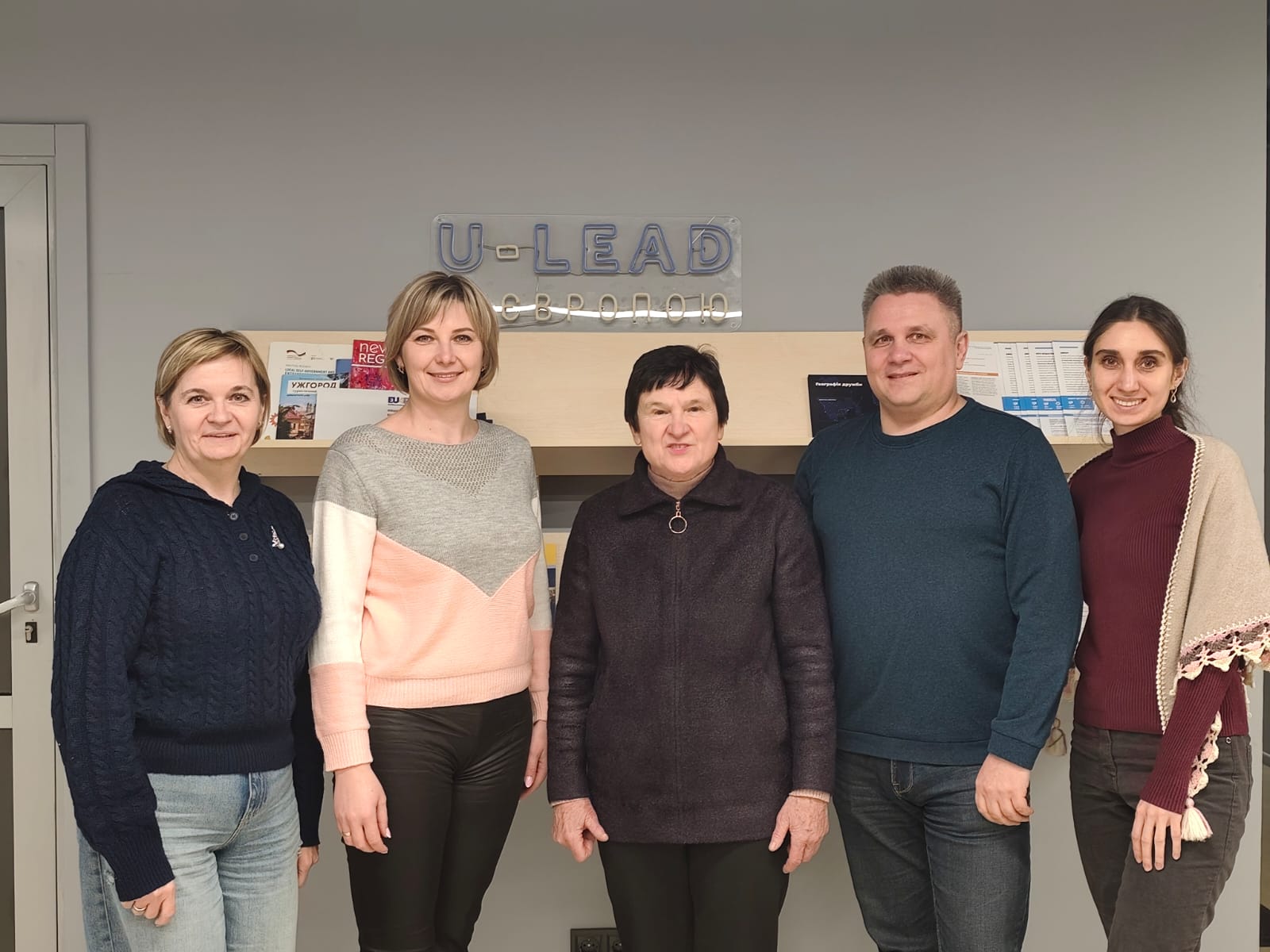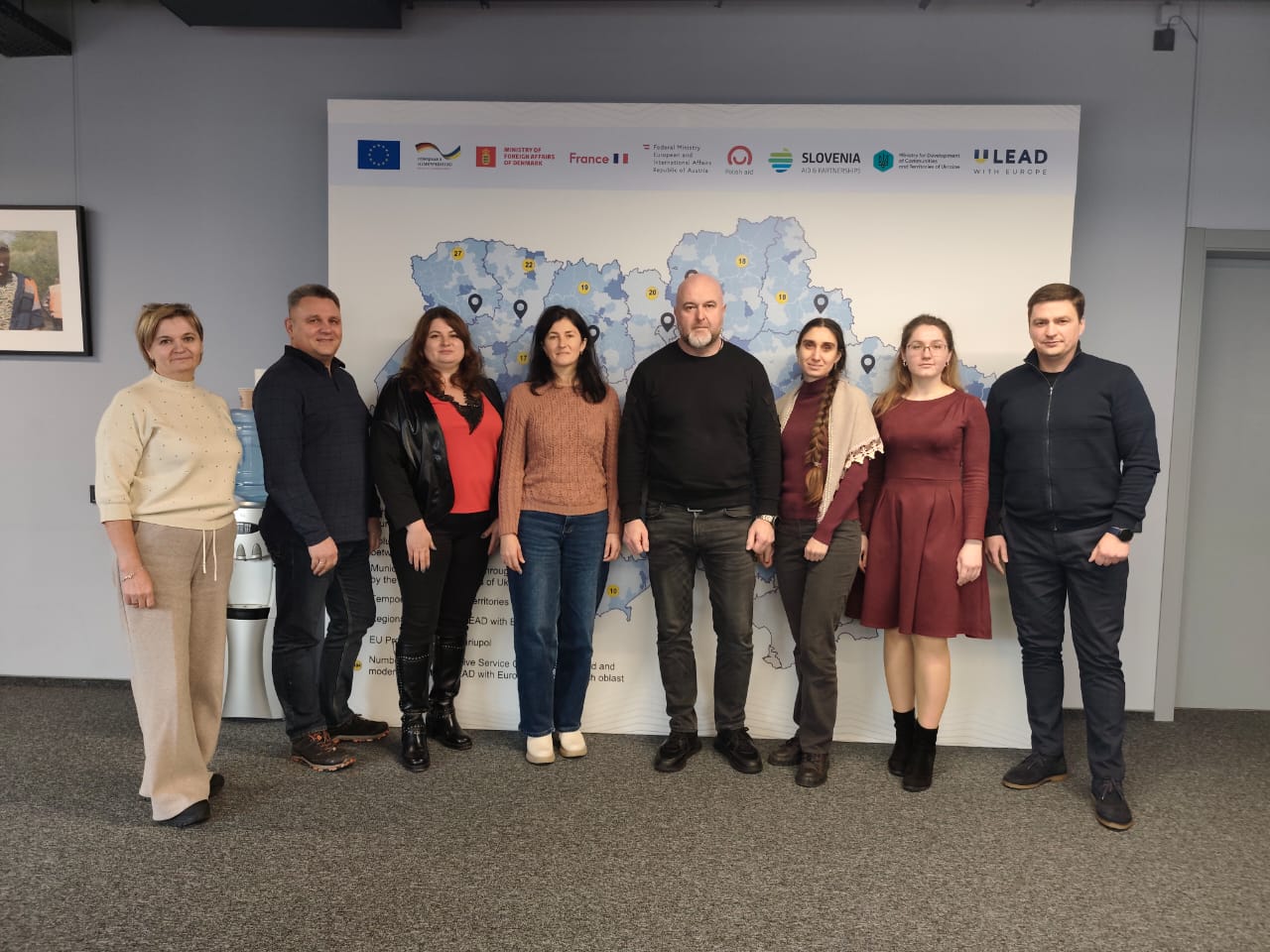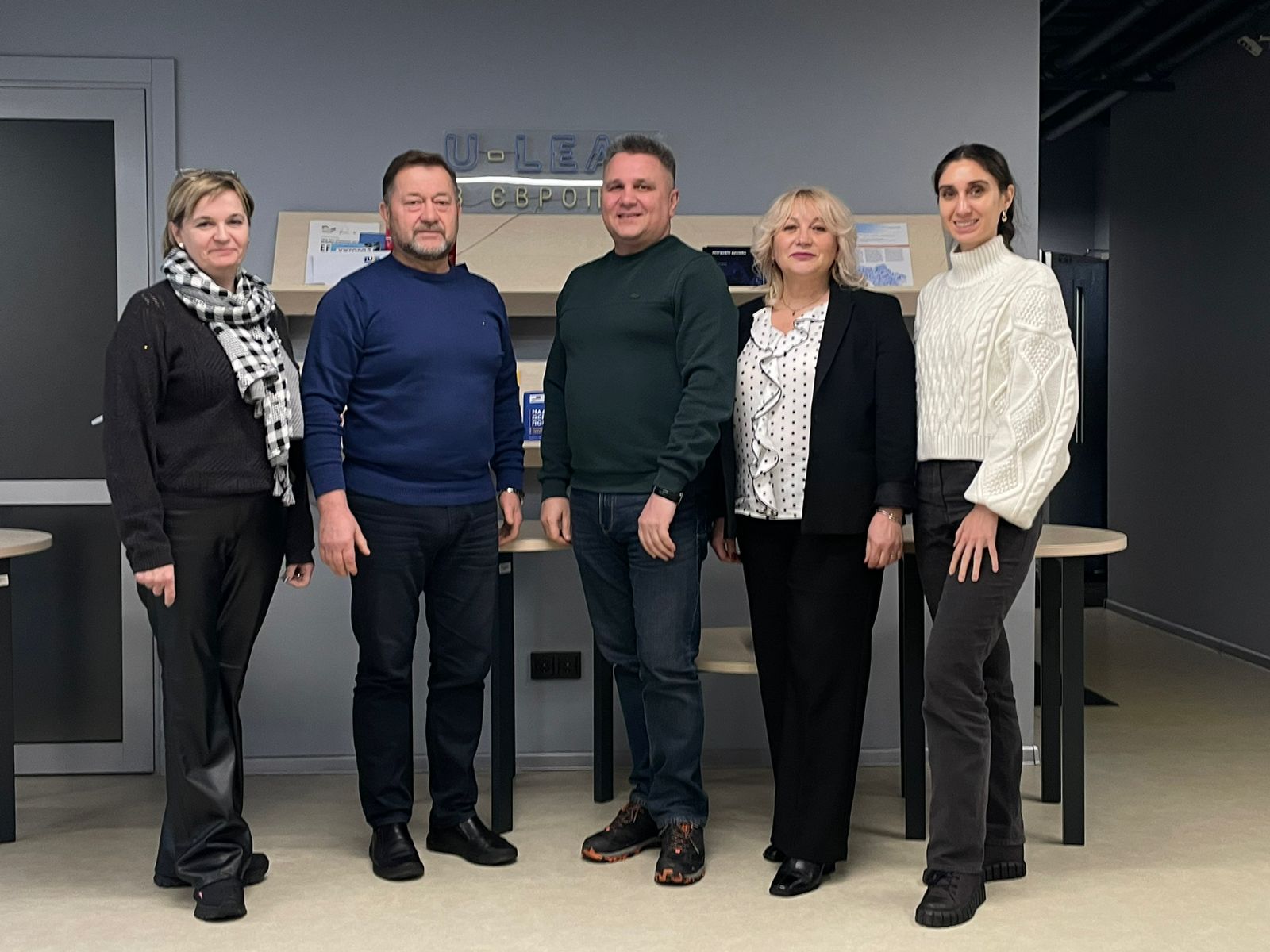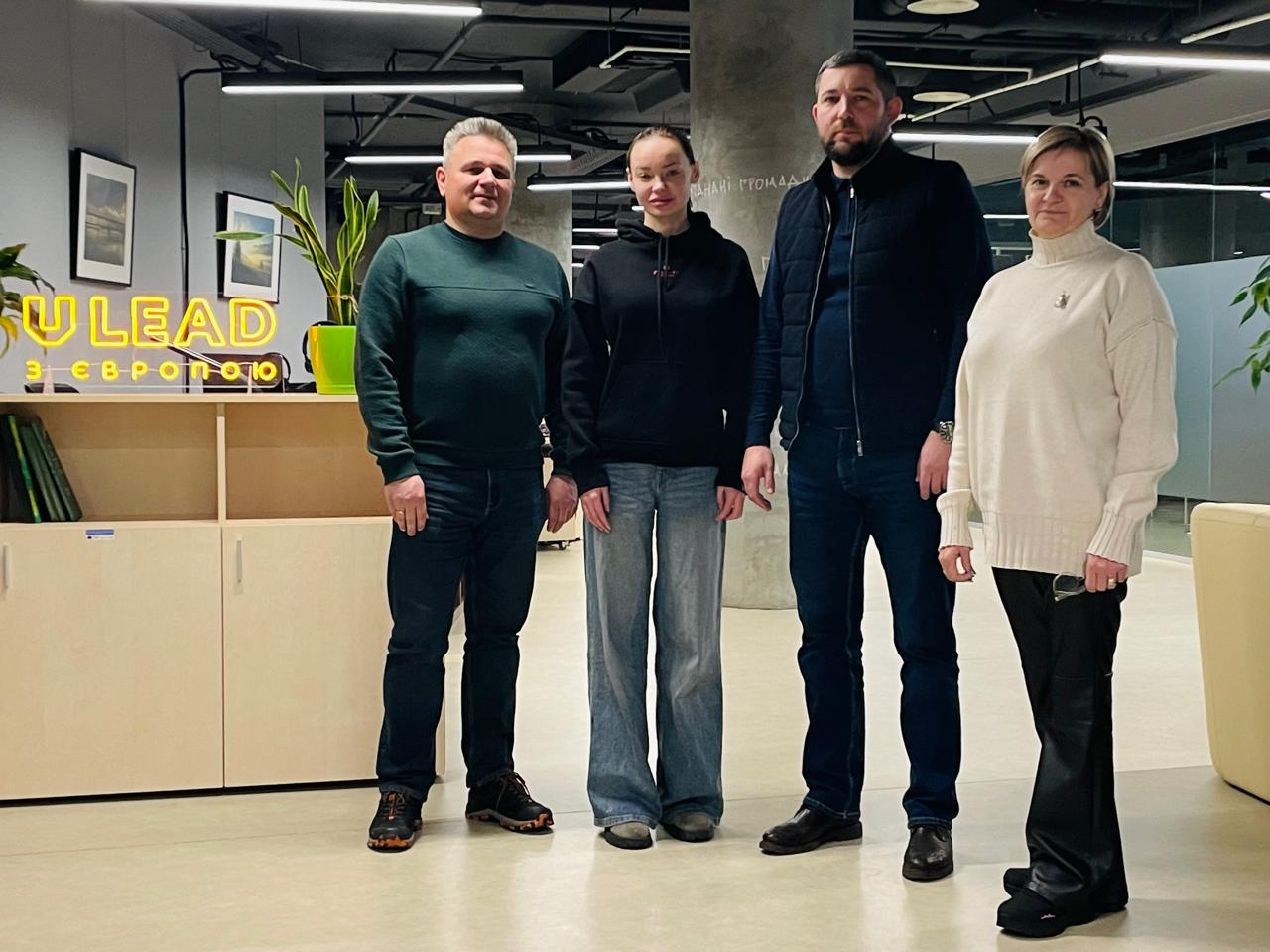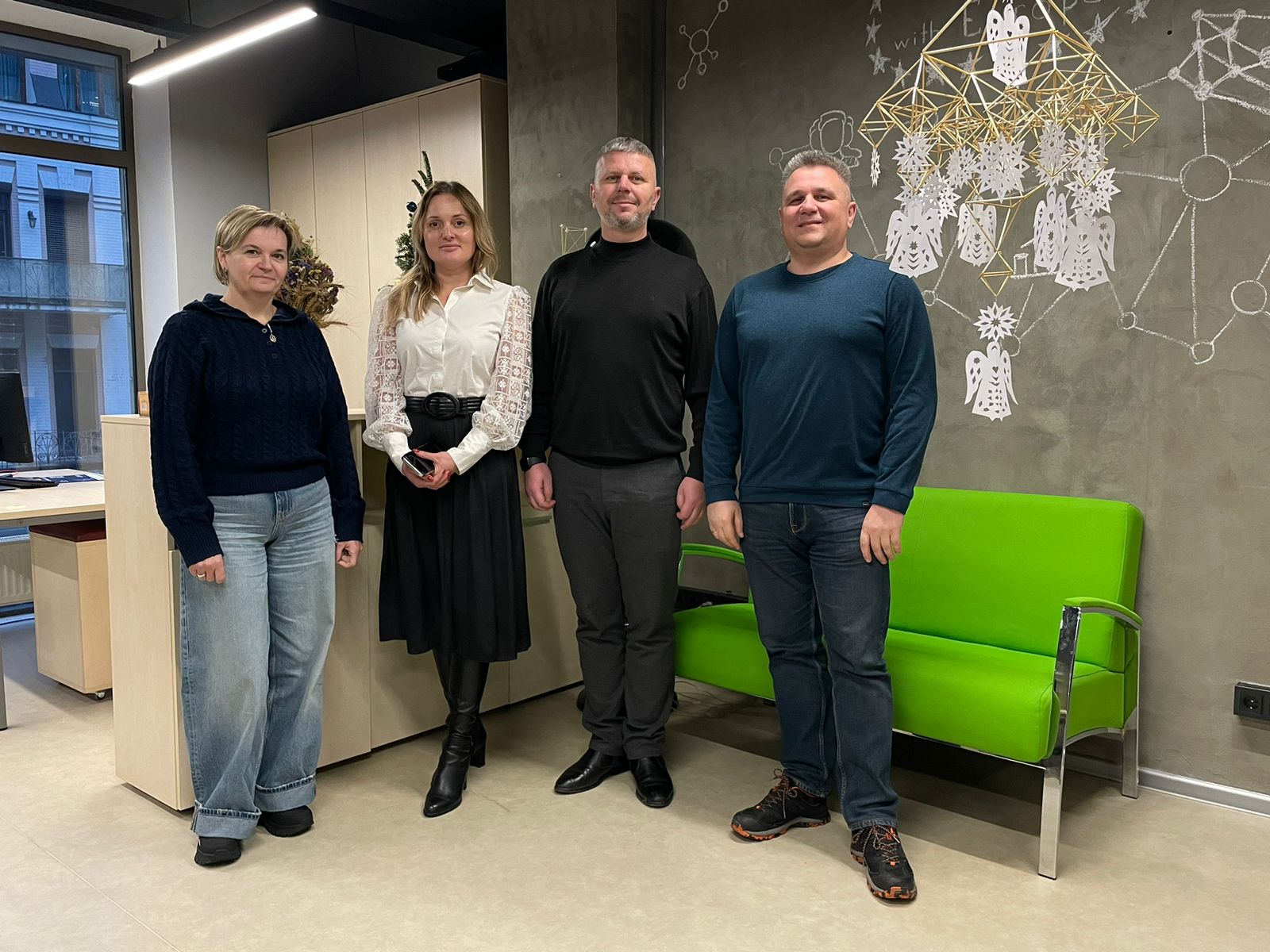






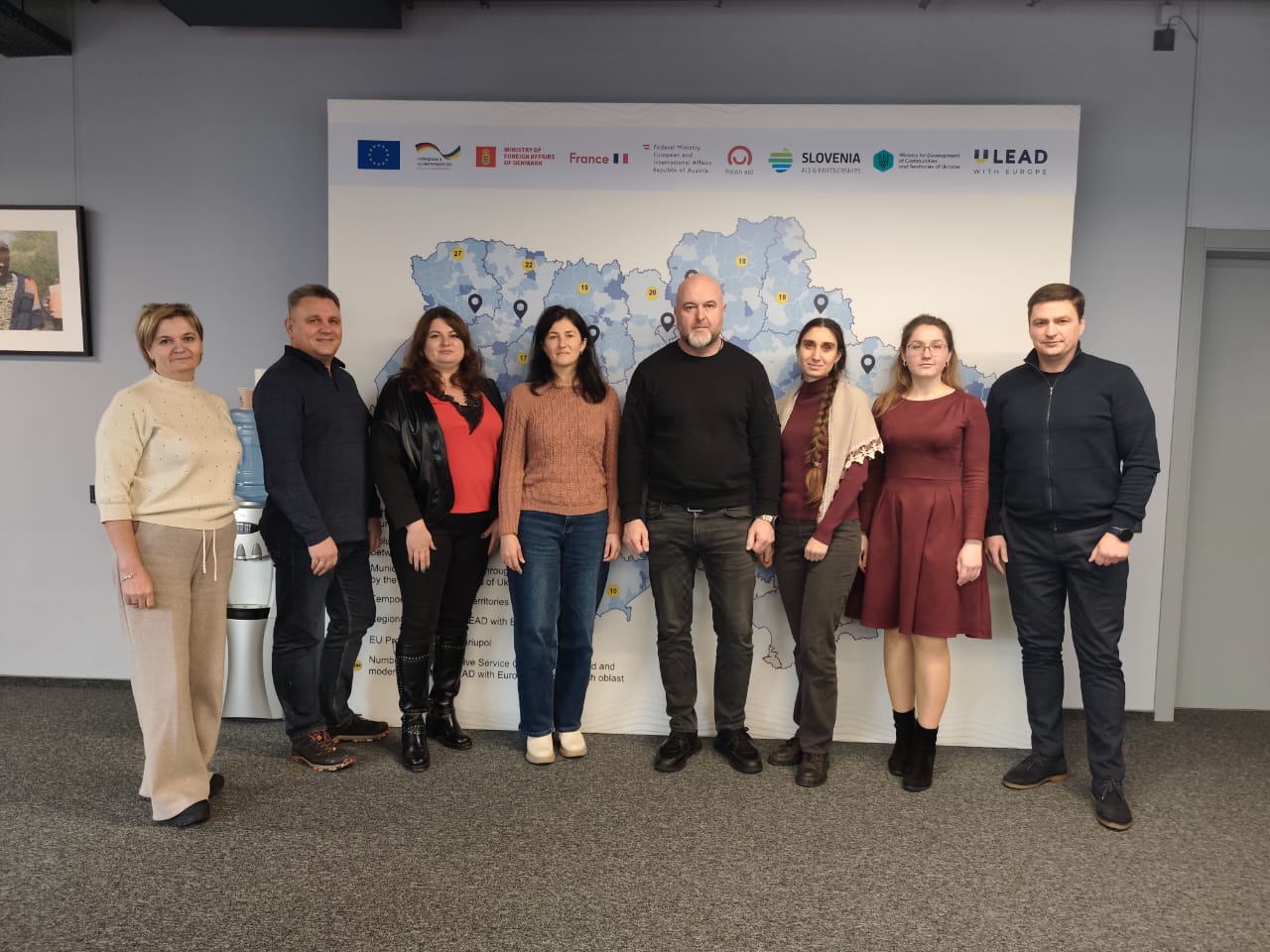
The main topics of conversation covered strategic planning and safety, strengthening governance and HR capacities, developing public investment and international partnerships.
Although municipalities and U-LEAD team are in constant communication, the format of live meetings enabled the specific needs of municipalities to be detailed and discussed with local teams. Hryhorii Pererva, the Head of the Regional Office of U-LEAD with Europe in Kyiv Oblast, commented on this:
“Even though we’re always in touch with municipalities, mostly online because of safety reasons, being able to meet up in person gave us a much deeper understanding of their needs. Heads of municipalities came to us with their teams, and we were able to discuss the issues that are most relevant to them at the moment in a comprehensive manner.”
The meetings made it clear that municipalities in Kyiv Oblast are forced to strike a balance between daily resilience and the need to plan for future development. That is why one of the first topics of discussion was strategic planning and updating key policy documents.
The need to update key policy documents
One of the key challenges for municipalities today is to devise a development strategy that addresses the challenges posed by the full-scale invasion, as well as the opportunities and needs that will arise in the future during the recovery process. There is more to it than just having something on paper; what matters is the capacity to put together a logical plan of action and set long-term goals and objectives, along with the steps needed to get there.
Serhii Knyzhnykov, the Head of Pirnove municipality, shared that his municipality was already in the process of drafting a Development Strategy and plans to finalise the document in February–March of this year.
However, municipal officials stress that they have a need not only for a review of documents, but also for procedural support to ensure that the updated strategies are workable and meet donor requirements. For instance, Olena Pashun, the Head of Tomashivka Village Council, stated:
“The assistance of experts in applying strategic planning methods, drafting a properly structured document, developing a clear system of indicators, monitoring and evaluation is vital for us.”
For this reason, the next important round of meetings focused on the need to train and strengthen the applicable skills of practitioners.
The need for practical knowledge and training
Along with the development of strategic documents, municipalities struggle with a lack of practical knowledge needed to implement planned decisions.
Taras Didych, the Head of Dmytrivka Village Council, spoke about the importance of the project component in the activities of the municipality:
“We consider it very important to develop projects, especially in accordance with European standards. It was only in 2025 that we established a strategic development department.
We are a newly formed municipality, and most departments — from education to finance — were built from scratch, which means we need to train staff in virtually all areas. Since our establishment, we have been learning and doing our job at the same time, without taking a break from the daily routine. The situation is quite different from that in large cities, which have existed for a long time. We have new people, new staff, and they need to be trained and upskilled.”
Serhii Knyzhnykov, the Head of Pirnove Village Council, also remarked on the uneven distribution of personnel across different areas of his municipality’s activities:
“When it comes to developing projects in line with European standards, the need for advisory support is evident. As an example, we can see progress in education through the efforts of a professional involved in grants and project development. In other areas, there have been attempts, albeit without success. Therefore, the key problem appears to be the lack of qualified specialists.”
Regulatory and procedural challenges
Regulatory uncertainty, which complicates the planning process, remains a significant challenge for municipalities. Mr Didych said:
“Today, we are facing issues with different interpretations of laws at different levels of government. For example, this is the case when land plots are located within the boundaries of a municipality but are managed by other authorities without the municipality’s knowledge.
Another thing is the need to put together comprehensive development plans. This requires topographic surveys, which are very expensive today. Without those, you won’t be able to conduct an inventory, adjust land-use plans or draft a Strategy.”
On the other hand, the municipalities point out that even if the regulatory procedures can be completed, the human resource issue remains critical. Hence, another key topic of discussion was staffing and demographic trends.
Staffing and demographic challenges
According to the Head of the Regional Office of U-LEAD with Europe in Kyiv Oblast, the shortage of personnel is a common problem for almost every municipality: “Virtually all heads of municipalities report a shortage of personnel due to the full-scale invasion and population outflow. In this regard, it is important to provide training and professional development for existing specialists, as well as assistance in recruiting new ones.”
Among others, Ms Pashun highlighted the following demographic risks in the near future:
“Primary challenges include demographic decline in the form of a shrinking population, ageing municipalities, a brain drain of young people and professionals to cities and low levels of civic engagement.”
Kristina Chornenka, the Head of Rzhyshchiv City Council, added that the migration situation in municipalities continues to be dynamic:
“Some people leave, some arrive as internally displaced persons. While exact statistics are unavailable, many young people have left the country. It is essential for us to create jobs so that young people stay in the municipality.”
Long-term challenges and the need for systemic support
Amid these challenges, municipalities are attempting to forecast key risks over a horizon of 1–2 years and beyond. The meetings revealed that most of the challenges are interrelated and require systemic solutions.
Notably, Ms Chornenka highlighted the safety factor and emphasised that energy risks directly affect the municipality’s economy and its fiscal stability:
“Our primary tax is PIT, which depends on industrial activity, and that in turn depends on electricity. When outage schedules are more or less bearable, businesses continue to operate. Otherwise, the production and taxes are immediately affected.”
In turn, Ms Pashun noted that her municipality recognised the importance of crisis planning and diversification of the economy:
“The priorities for the next 1–2 years are income diversification (tourism, agroclusters) and crisis planning. That is why, for us, the role of U-LEAD is, first and foremost, to facilitate the development of roadmaps, organise training for our specialists, mentor start-ups and provide advisory support on attracting donor funding.”
Given this array of challenges, the meetings also focused on identifying areas where municipalities need the most practical support.
U-LEAD’s role in strengthening the capacity of municipalities
Mr Pererva clarified that the Regional Office of U-LEAD with Europe in Kyiv Oblast has identified several areas where it is prepared to provide municipalities with the most comprehensive support possible:
“We clearly see several areas where we are ready to work with municipalities from start to finish, from the initial request to the practical outcomes. This includes strategic planning, public investment and human resources policy. A distinct area is partnerships with European municipalities. It requires a clear step-by-step plan: how to set up, promote or rebuild these partnerships. We also frequently receive inquiries regarding clarification of issues related to municipal property”.
He further stated that experts with more specialised knowledge would be involved in these efforts if necessary.
The head of the Regional Office of U-LEAD with Europe in Kyiv Oblast also underscored that support may not always yield immediate results, but its purpose is to assist municipalities in understanding the necessary steps to be taken: “Not every case will result in a finalised document; some processes require experts in specific fields and a high level of engagement from the municipalities themselves. Our task, however, is to provide a clear understanding of what needs to be done and how to do it.”
Finally, Mr Pererva emphasised that the key factor is the participation of the municipality itself, as U-LEAD support cannot replace the work of local practitioners:
“Our team of experts does not draft documents for municipalities but rather supports them in doing so. The bulk of the work still falls to the local self-government.”