




This is the second article in a series dedicated to the winners and finalists of the NEB Prize 2025. You can read about the category Prioritising the Places and People Most in Need [here].
Category — Reconnecting with Nature
This category highlights practices applicable in our towns and villages:
-
integrating green solutions into new constructions and reconstructions;
-
rethinking care for vulnerable groups through nature;
-
using natural technologies in water purification and climate-risk management;
-
rebuilding trust between people and their environment through shared use of green spaces.
Selected projects relevant to Ukraine
-
Green Elderly Care — Nature & Well-being (Ghent, Belgium)
Winner in this category
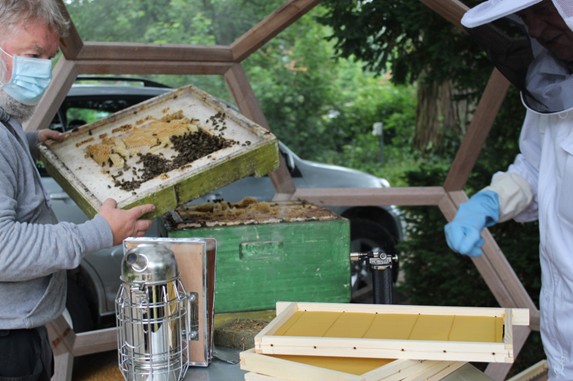
At the long-term care home Het Heiveld in Ghent, nature is woven into residents’ everyday lives. The home includes a biodiverse garden with fruit trees, greenhouses, flower meadows, chicken coops, and beehives. Older people can take part in planting, animal care, and bird- or insect-watching, which supports physical activity, reduces isolation, and benefits mental health.
The project is based on inclusivity: even residents with limited mobility can use the green areas and feel part of the community. Community engagement plays a key role — schoolchildren, students, and locals help in the garden and participate in events, transforming the facility into an open intergenerational centre.
Impact: this approach redefines elderly-care homes — they cease to be closed institutions and become vibrant, meaningful places where nature acts not as decoration but as a tool for care, learning, and connection. Involving young people and professionals in eldercare, often seen as unattractive work, gives the field new creative and social value.
For Ukraine: this experience can inspire modern social-support and rehabilitation centres where nature and community become partners in care. Even with modest budgets, Ukrainian municipalities could:
-
start small (a flower meadow or garden bed) while engaging volunteers and schools;
-
use design and nature to address not only physical but also psychological well-being — reducing isolation and restoring a sense of belonging;
-
turn care institutions into open, lively places that foster intergenerational exchange and change public attitudes toward ageing.
Source & photos: NEB Prize application 17741
-
Republica (Amsterdam, Netherlands)
Winner in the “Living” sub-category
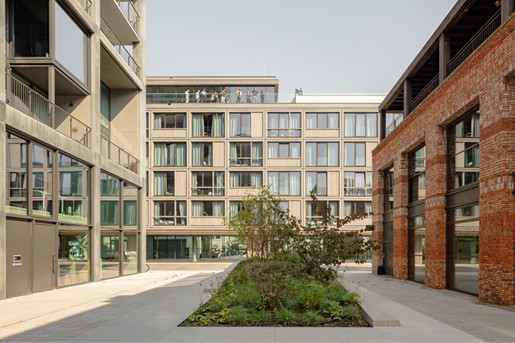
This is a new neighbourhood in the Buiksloterham district, created according to the “superblock” principle. The area is free of cars; instead, priority is given to pedestrians and cyclists. The territory combines green spaces, public areas, and modern sustainable solutions. Energy is produced locally with solar panels and heat pumps; there is an energy-storage system and a smart grid. Green roofs and façades are used, and rainwater is collected and reused. Organic waste and wastewater are processed, reducing the burden on the environment.
The architecture of the district is based on the open building principle — buildings can be flexibly redesigned for different resident needs. The area has a mixed-use function: housing is combined with offices, a hotel, and cafés, creating a vibrant and diverse urban space.
This project demonstrates how re-planning urban areas can reduce emissions, conserve resources, and ensure healthier living conditions.
For Ukraine: this idea is highly relevant for the redevelopment of outdated or damaged residential districts and the revitalisation of industrial zones. It offers ready-made solutions for energy efficiency, water conservation, and urban greening.
Source and photos: https://prizes.new-european-bauhaus.europa.eu/application/20164
-
Smart Irrigation for Resilient Berries (Kosovo)
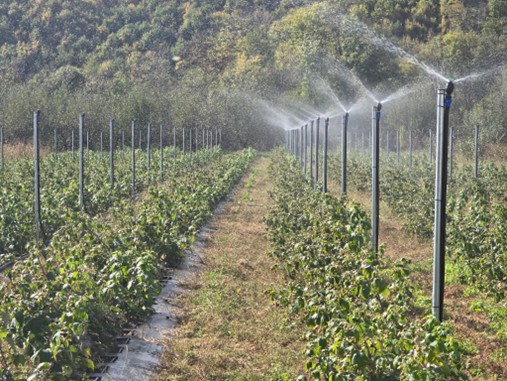
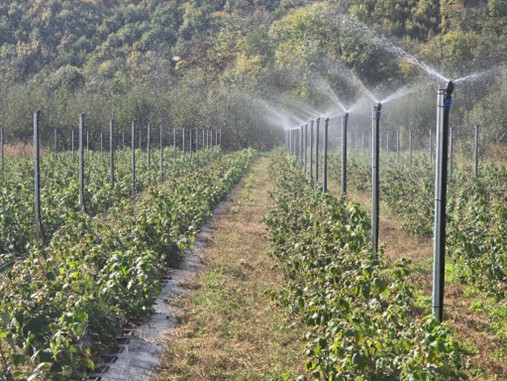
This project aims to support farmers engaged in raspberry cultivation under increasingly challenging climate conditions. The solution is based on the introduction of an innovative smart irrigation system that allows the most efficient use of water and adaptation to changing weather patterns.
The system helps reduce the negative impact of summer heat and irregular rainfall, ensures stable soil moisture, and directly contributes to higher yields and better berry quality. This approach makes agriculture more resilient to climate change while increasing farmers’ competitiveness and supporting local economic development.
For Ukraine: such technologies are particularly relevant, as the agricultural sector is one of the key drivers of the national economy. In the context of growing risks related to heat, drought, and uneven precipitation, smart irrigation systems can become an essential adaptation tool, helping farmers maintain productivity, save resources, and strengthen export potential.
Source and photos: https://prizes.new-european-bauhaus.europa.eu/application/30296
-
Green Axes and Squares of Barcelona’s Eixample (Barcelona, Spain)
Winner in this category
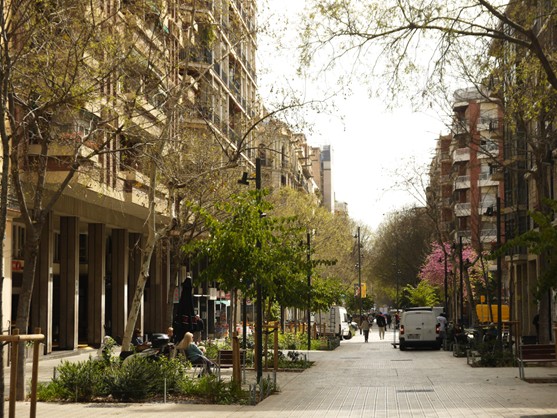
Barcelona’s urban transformation programme aims to turn the streets of the Eixample district into green corridors and public spaces. The Green Axes and Squares of the Eixample project is part of the broader “Superblocks” initiative and focuses on converting car streets into pedestrian-friendly green corridors and social spaces.
During the first phase, several streets and squares were completed, becoming new centres of social interaction and recreation for residents, creating a comfortable and safe environment.
One of the key project solutions was the creation of 21 green axes connecting different parts of the city, with a total area of 3.9 hectares of new public spaces.
The environmental component includes the use of permeable materials, rainwater management systems, and an increase in the number of trees and green plantings, which improve air quality and reduce noise pollution. In addition, the project provides for the creation of new public areas for recreation, children’s play, and social activities, which foster local community development and improve residents’ quality of life.
For Ukraine: for Ukrainian cities seeking to combine mobility, ecology, and social activity, this approach can serve as an example of integrated urban development. It shows how to effectively use limited space to create a comfortable and healthy environment for residents.
Source and photos: https://prizes.new-european-bauhaus.europa.eu/application/38546
-
Pollino (Budapest, Hungary)
Winner in the “Rising Stars” category
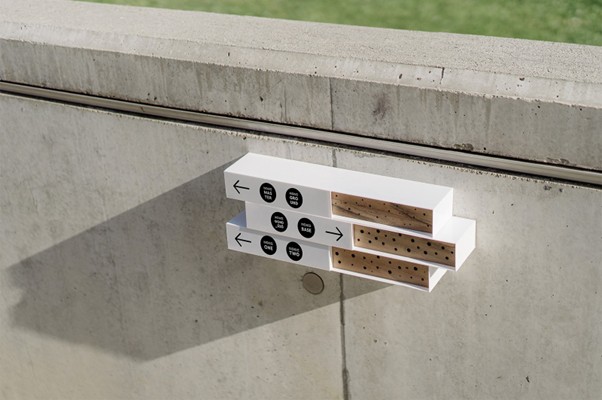
The Pollino project offers a new perspective on urban space, showing that even information signs can become part of an ecosystem. Its authors developed a system of navigation boards that simultaneously serve as habitats for wild pollinators — especially solitary bees.
The elements are made of natural materials, have a decorative and ecological design, and are installed in Budapest’s public spaces as pilot objects. In this way, Pollino combines functionality, aesthetics, and care for nature, creating a micro-network that supports the urban fauna.
The project also has an educational impact — drawing residents’ attention to the role of pollinators and the possibilities of harmonious coexistence between people and nature, even in densely built-up areas.
For Ukraine: the experience of Pollino can serve as inspiration for Ukrainian cities seeking to restore ecological connections during reconstruction. Spatial elements with a dual function — information and support for nature — can be easily integrated into urban environments without significant costs. It is a practical example of how creative design can contribute to biodiversity restoration, environmental awareness, and improved quality of urban life.
Source and photos: https://prizes.new-european-bauhaus.europa.eu/application/30767
-
Vielwald (Cologne, Germany)
Winner in the “Rising Stars” category
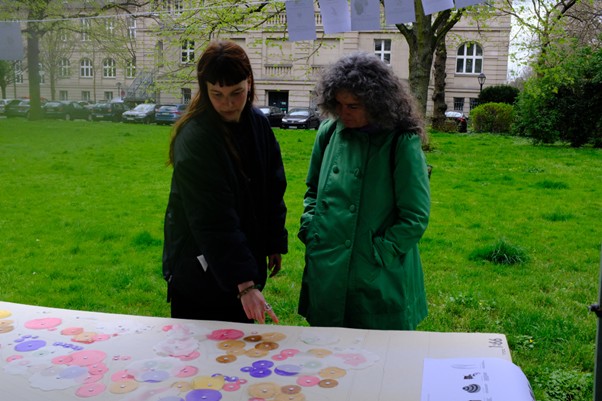
The Vielwald project is an initiative by design students who, together with local residents, created a small forest garden in Cologne — a space combining natural processes, education, and community interaction.
The forest garden is based on circular resource principles and reproduces the multi-layered structure of a natural forest — trees, shrubs, herbs, and ground cover. It grows edible and medicinal plants, as well as species that improve soil quality and attract pollinators.
The project not only creates a new type of urban green space but also becomes a platform for learning, joint work, and social integration of different groups of residents. Vielwald shows how even a small initiative can have a long-lasting ecological and social effect.
For Ukraine: Vielwald is an inspiring example for Ukrainian municipalities that want to revitalise abandoned or damaged green areas. The model of a forest garden can become a tool for environmental education, a place for collective activity, and a way to restore natural processes in cities.
In the context of Ukraine’s recovery, such spaces can unite people around caring for nature, increase food resilience, and promote a new culture of interaction with the environment.
Source and photos: https://prizes.new-european-bauhaus.europa.eu/application/32274
Summary of the Category “Reconnecting with Nature”
The Reconnecting with Nature category demonstrates that nature can be integrated not only into parks or gardens but also into residential neighbourhoods, social and educational institutions, urban infrastructure, and agricultural systems.
The projects show that through the intelligent use of resources, greening, and community involvement, it is possible to improve quality of life, reduce climate risks, and create spaces where people feel comfortable and safe.
For Ukraine, the approaches of this category are relevant for:
-
rebuilding towns and villages after destruction;
-
modernising existing housing and social spaces;
-
integrating green infrastructure and climate-adapted solutions into agricultural systems;
-
increasing social activity and inclusion of communities in caring for vulnerable groups through nature;
-
developing urban and social projects that combine ecology, mobility, and quality of life.
The category confirms that nature is not only decoration but also an instrument of care, education, connection, and sustainable development that can transform approaches to cities, municipalities, and social services in Ukraine.