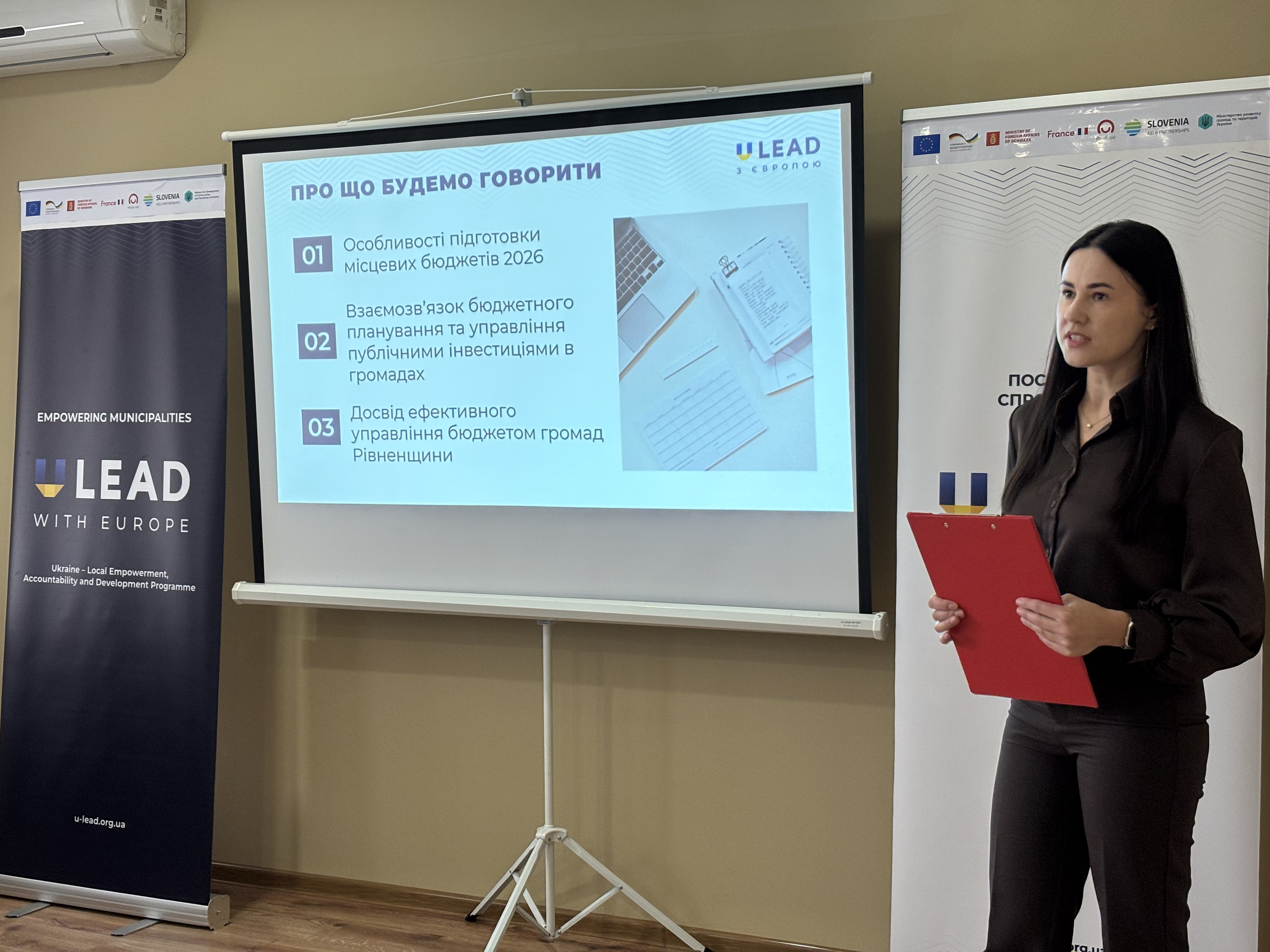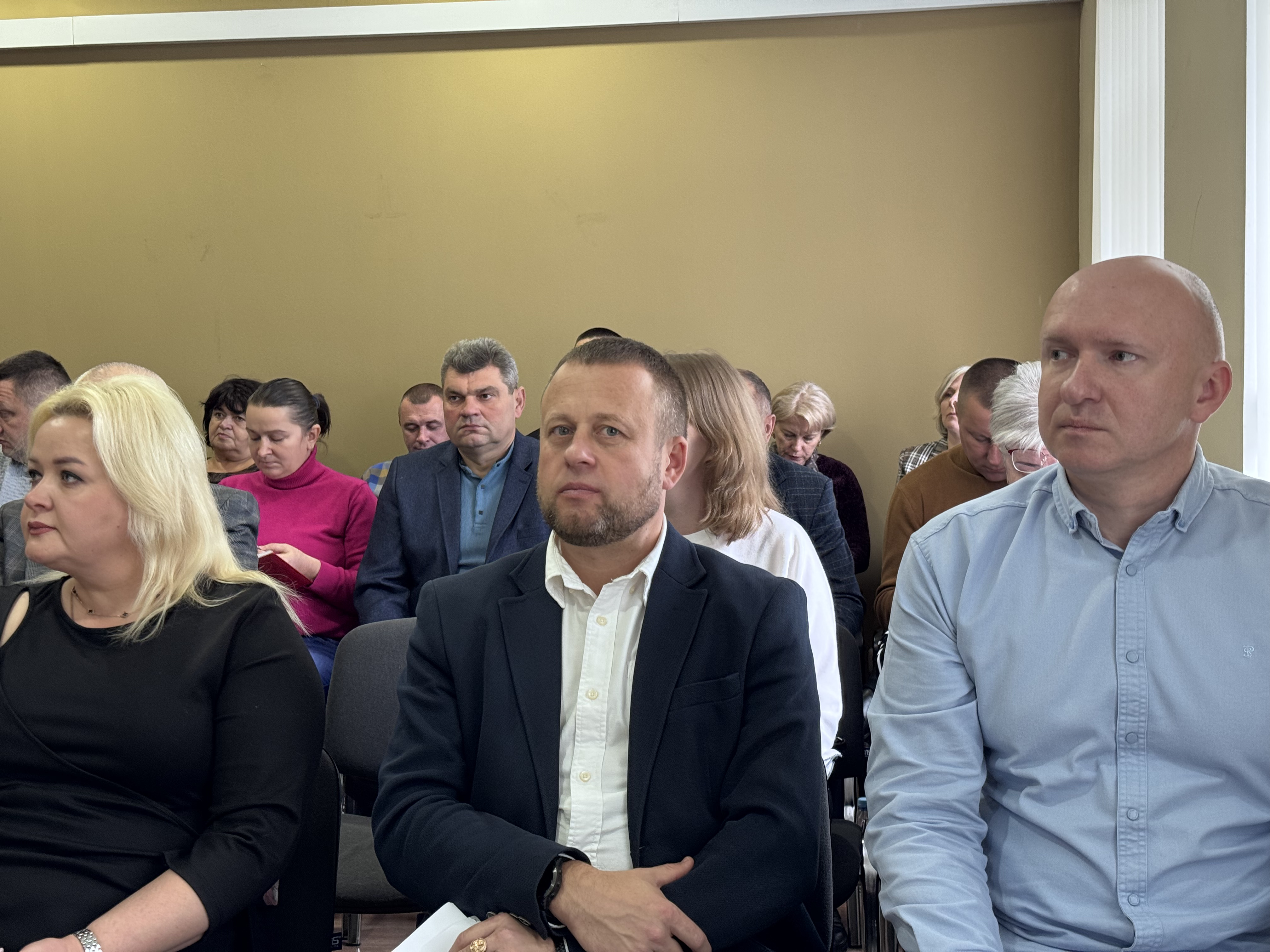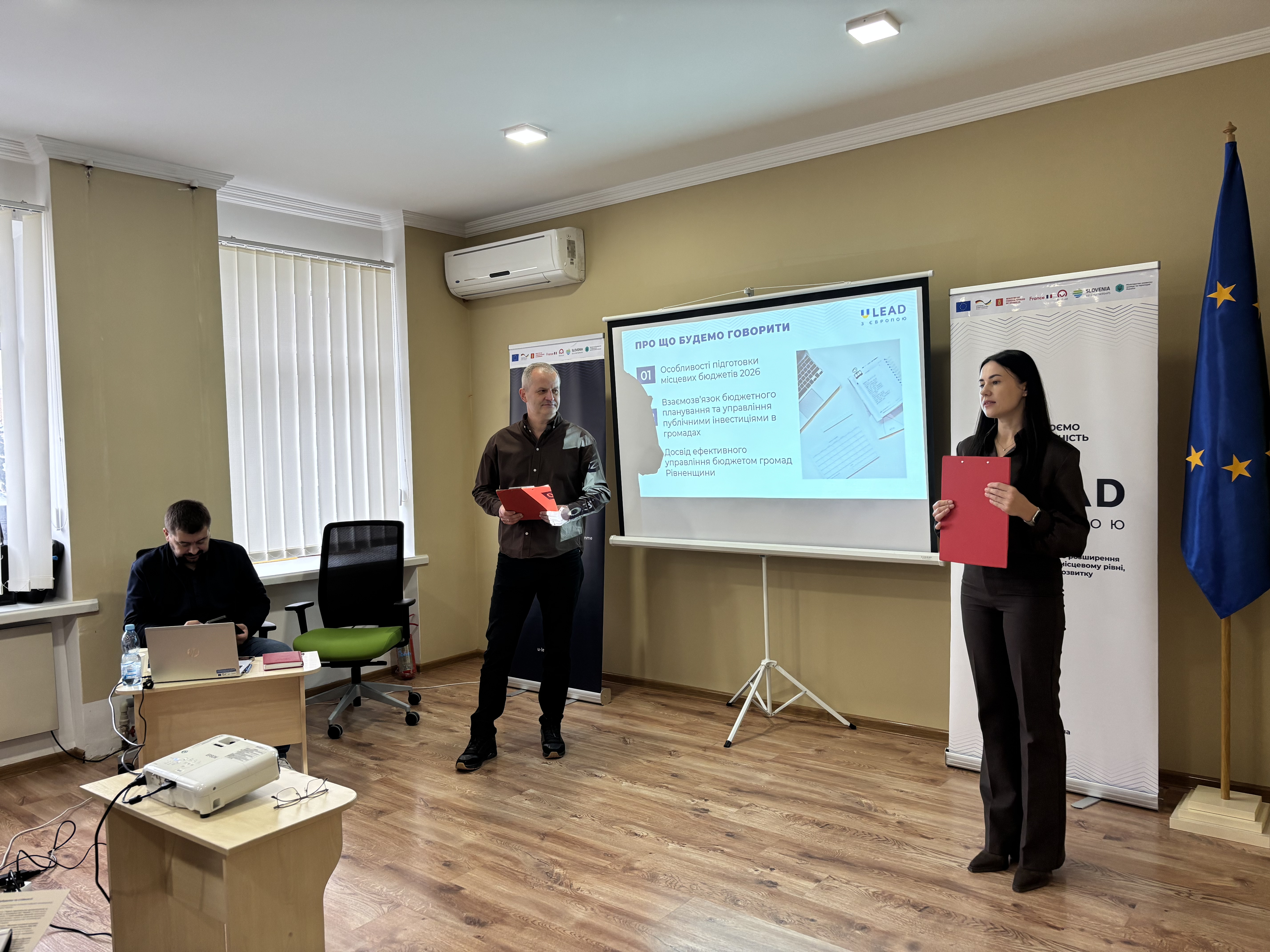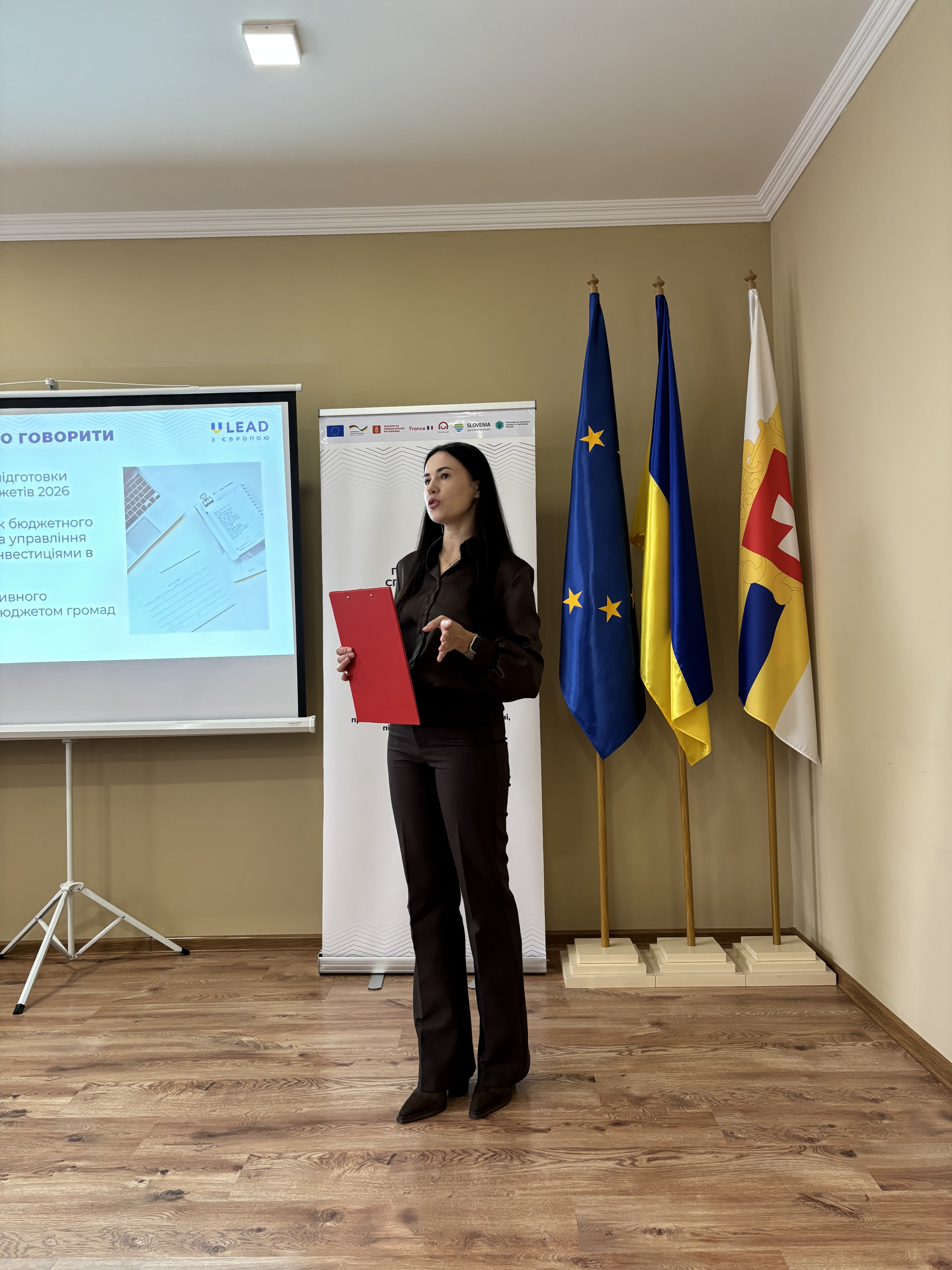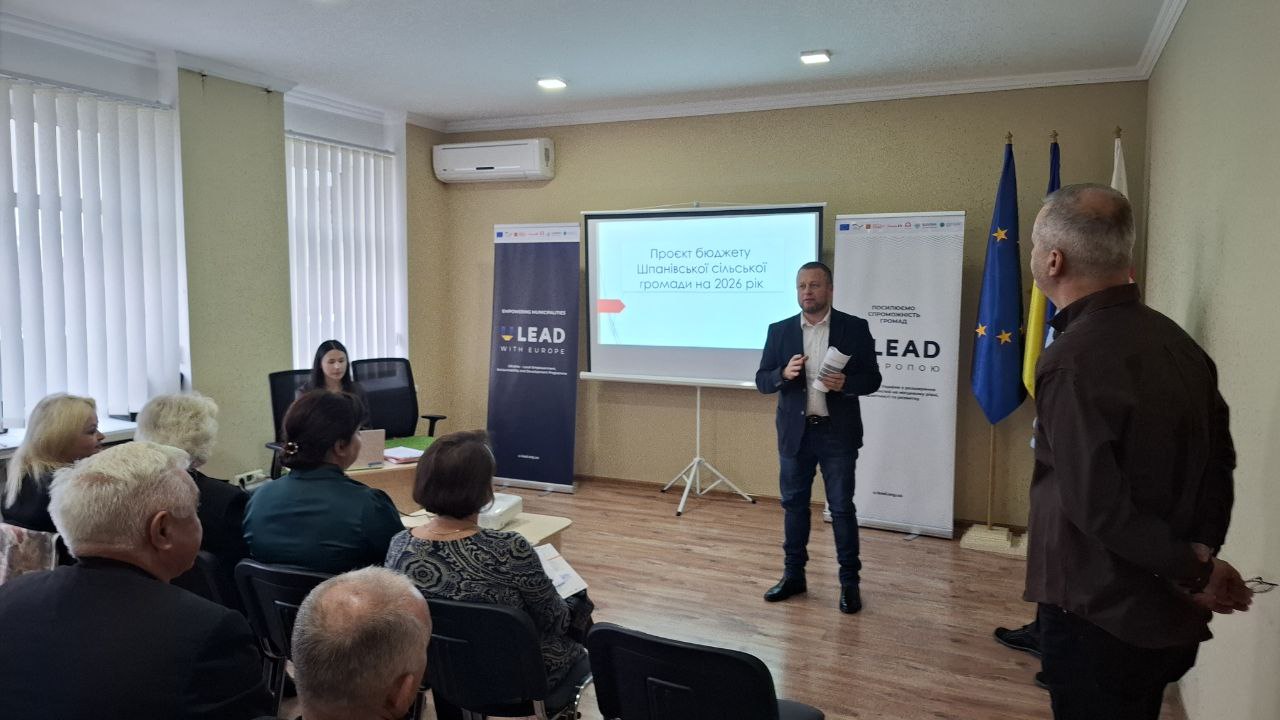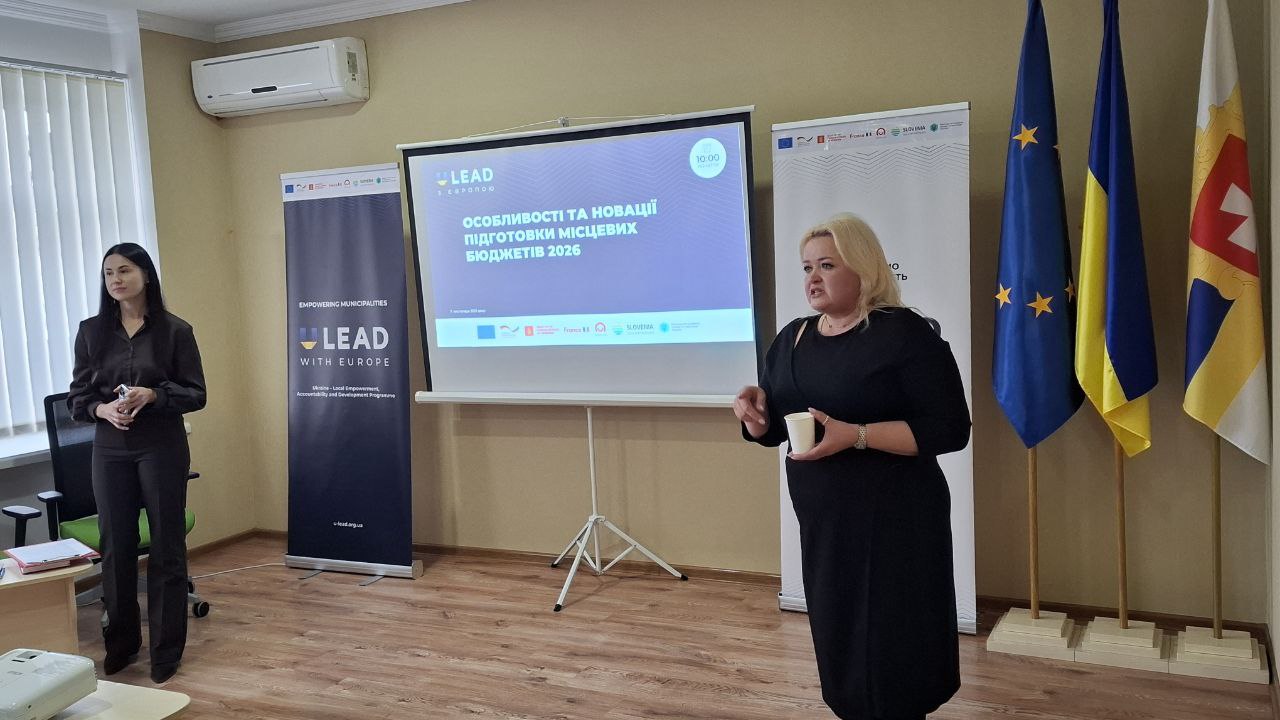



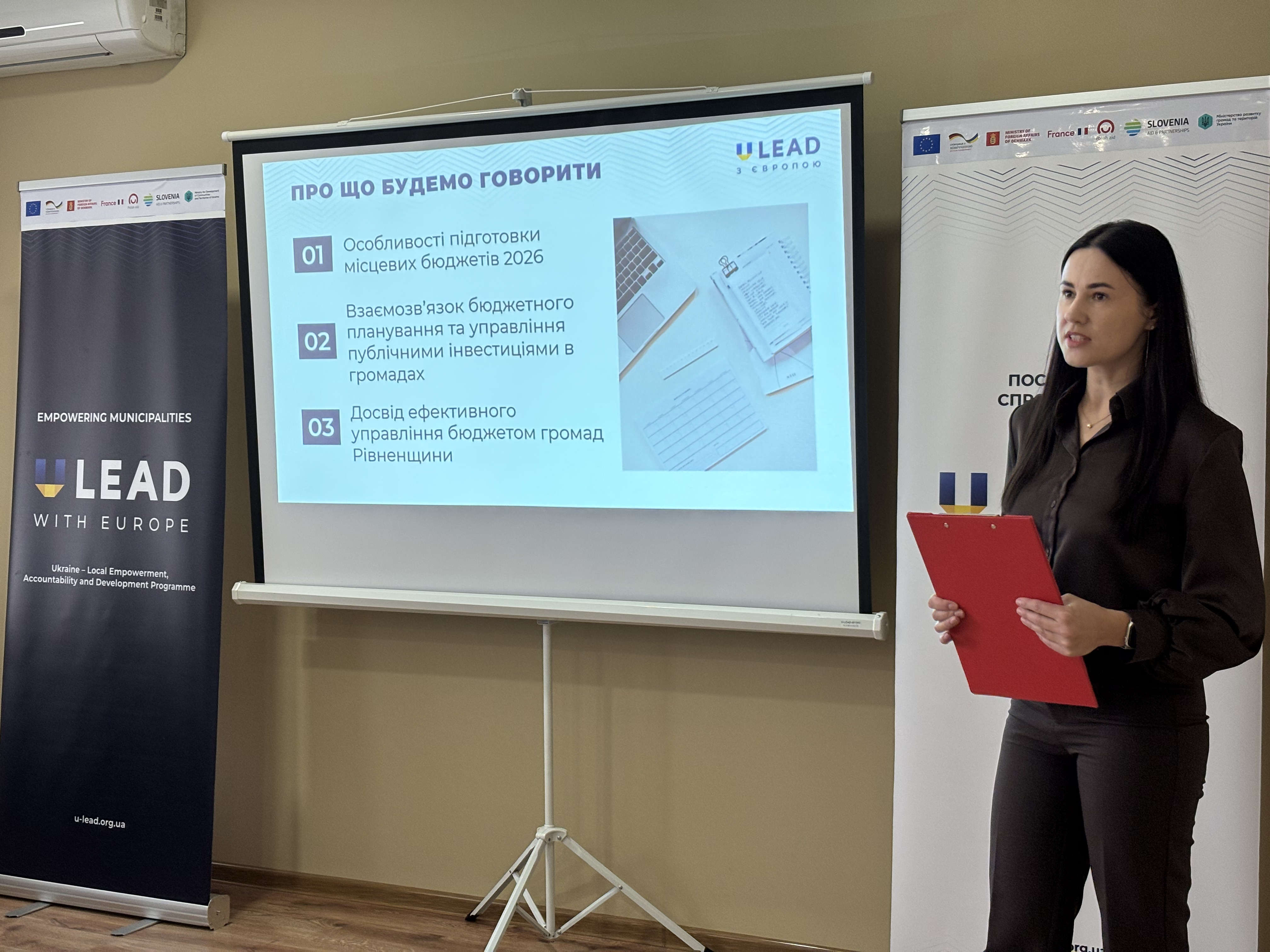
The event was as hands-on as possible, focusing on how to make municipal budgets more than just planning documents, but effective tools for development.
Ruslan Syvyi, the Head of the Regional Office of U-LEAD with Europe in Rivne Oblast, stated:
“Partnerships, mutual support and exchange of experiences between municipalities are critical at this time as everyone prepares for the new financial year. It’s not just about numbers. It’s about shared responsibility and trust between equal partners.”
The participants talked about the challenges municipalities face when preparing the 2026 budgets. These included maintaining financial stability, effective use of investments and new rules governing relations with the state budget. Separate discussions were held on how municipalities can find resources for infrastructure development, social services support and the local economy in the existing conditions.
Iryna Kondratiuk, a Policy Advisor for Local Finance and Management at the Regional Office of U-LEAD with Europe in Rivne Oblast, noted:
“Drafting local budgets for 2026 comes with its own set of challenges, such as the martial law, managing public investments at the local level and changes in interbudgetary relations. At the meeting, we discussed how municipalities can best adapt to these challenges.”
Experiences and case studies
The conversation was constructive and to the point: municipality heads shared their own experiences, talked about difficulties and solutions that help balance the process and keep it running smoothly.
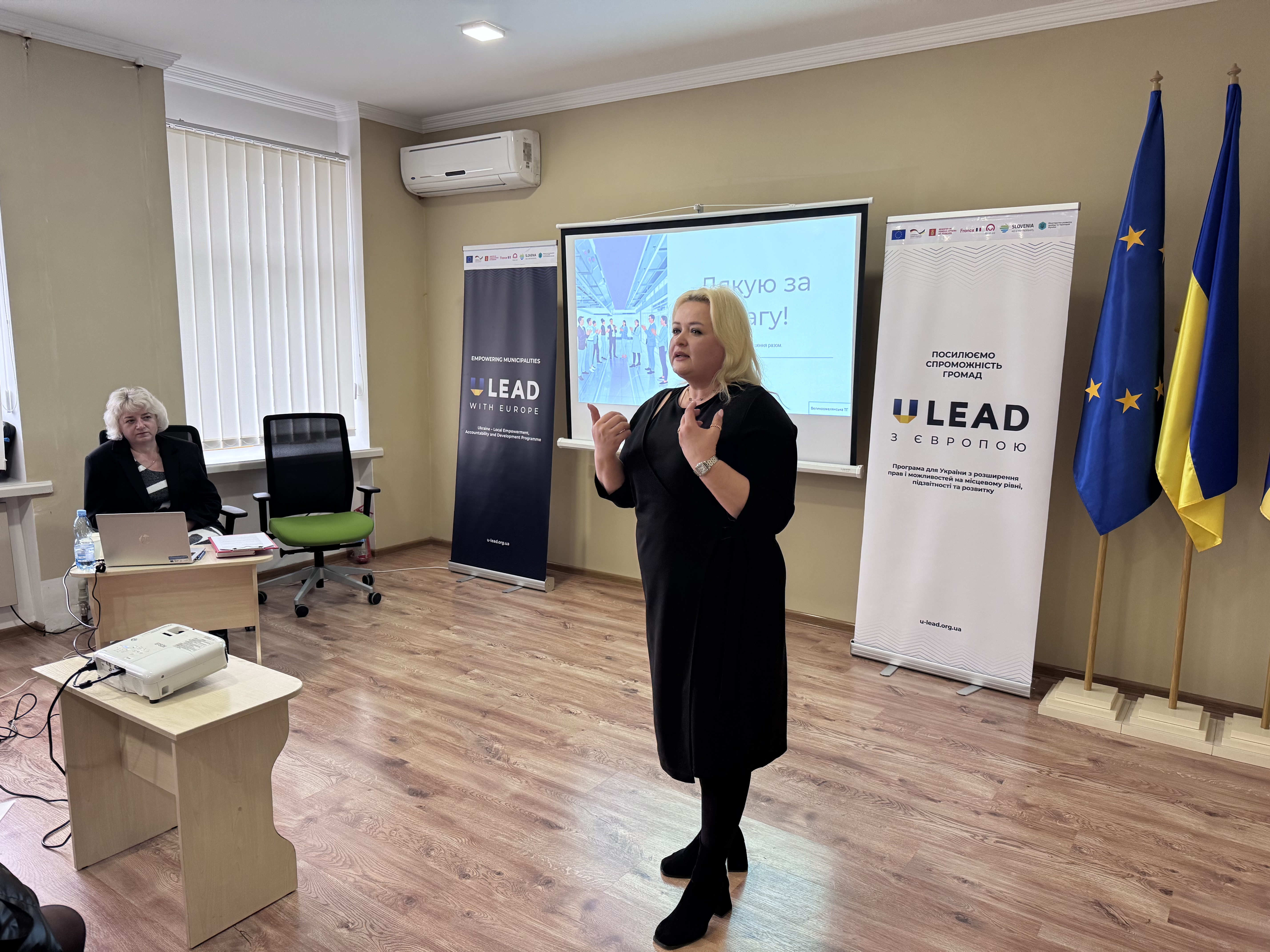
One of the most fascinating case studies was the experience of Velyka Omeliana municipality, which showed how consistent engagement with businesses and digital tools can strengthen the local economy.
“We need to work on an individual basis with taxpayers operating within the municipality,” said Alla Karpiuk, the Head of Velyka Omeliana Village Council.
The municipality has focused on ongoing dialogue with businesses, which has helped increase budget revenues and build trust. A key priority was working with companies registered in other municipalities but actually operating in Velyka Omeliana. The council’s executive bodies cooperate with the tax authorities to ensure that such companies submit data on their divisions at their actual place of business, which helps to redistribute taxes fairly.
Another important aspect is optimising the taxpayer base. The municipality’s financial body now has access to the real estate register, which has enabled them to update information about land and building owners and ensure more accurate tax calculations.
The municipality is also implementing digital innovations. Together with a banking institution and YouControl, they introduced electronic notification of taxpayers via an app. This facilitates communication, ensures timely payments and improves tax compliance.
In addition, the scope of paid services provided by the administrative Services Centre has been expanded, and the number of state registrars has been increased, which allows for faster administrative services and increased revenue from administrative fees.
Unifying experience
The event concluded with a discussion of the challenges and opportunities facing municipalities in the Rivne region in 2026. The heads agreed to continuously exchange information and experiences so that they could jointly implement effective solutions.
“Events like this show that the strength of our municipalities lies in mutual support, openness to learning and willingness to change. Together we are forging a strong and sustainable Rivne Oblast,” concluded Ruslan Syvyi.