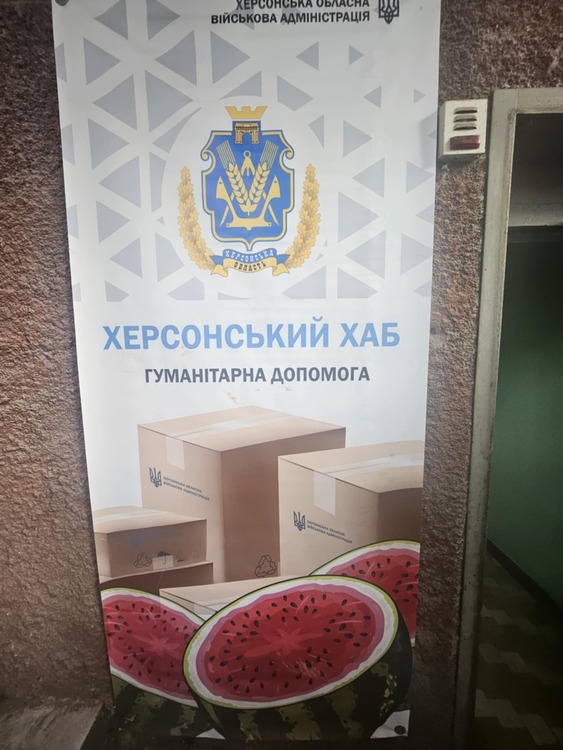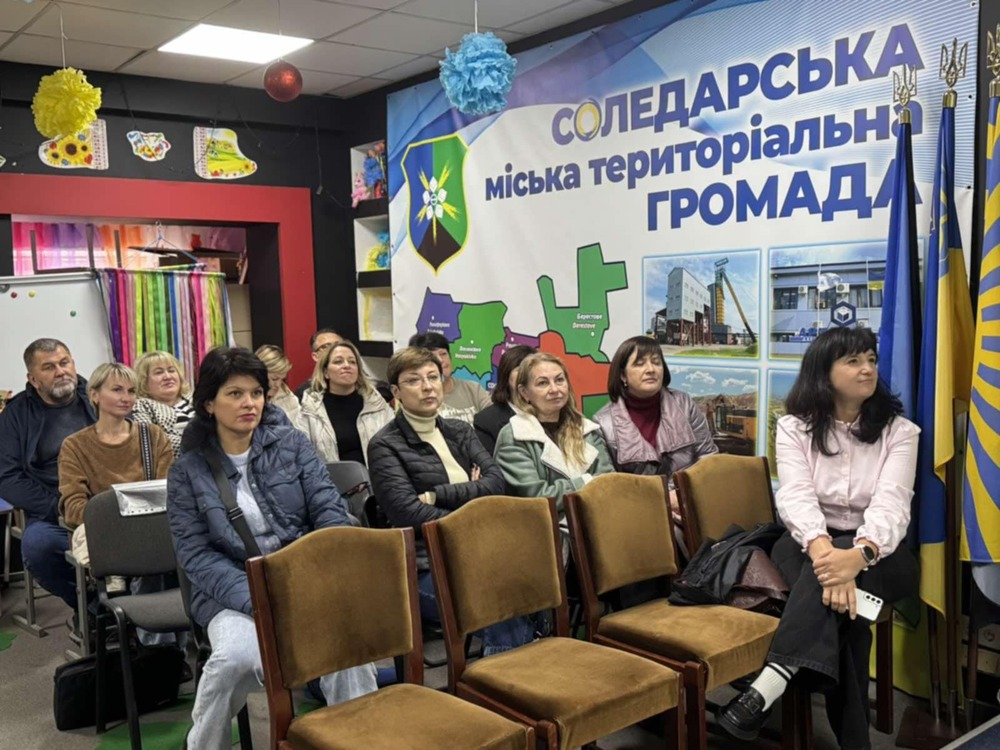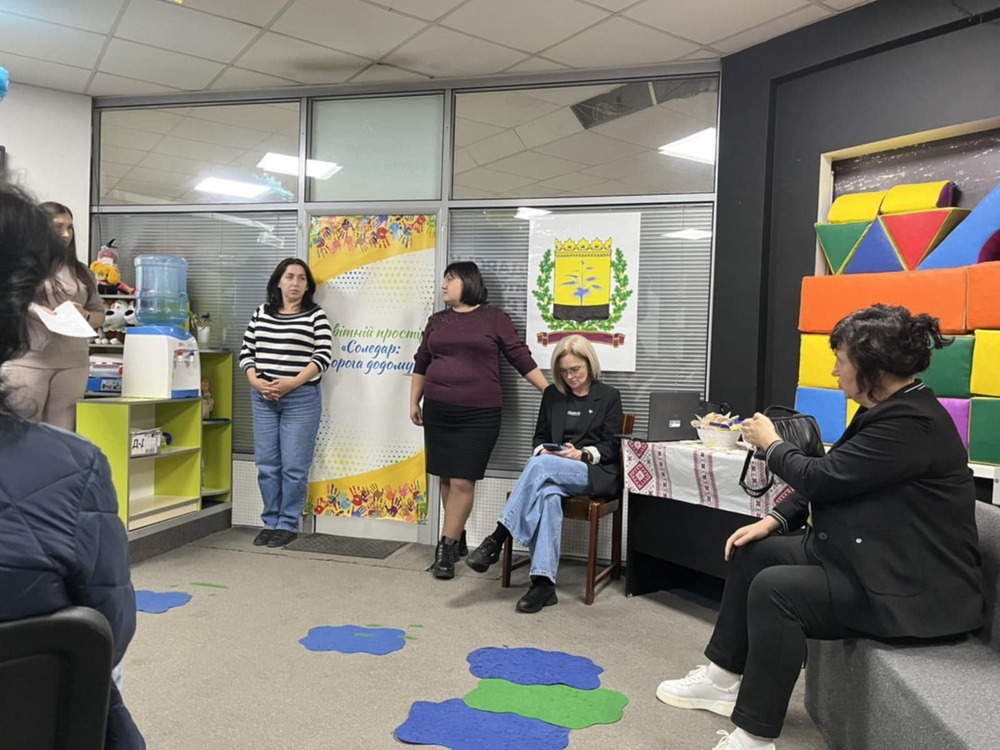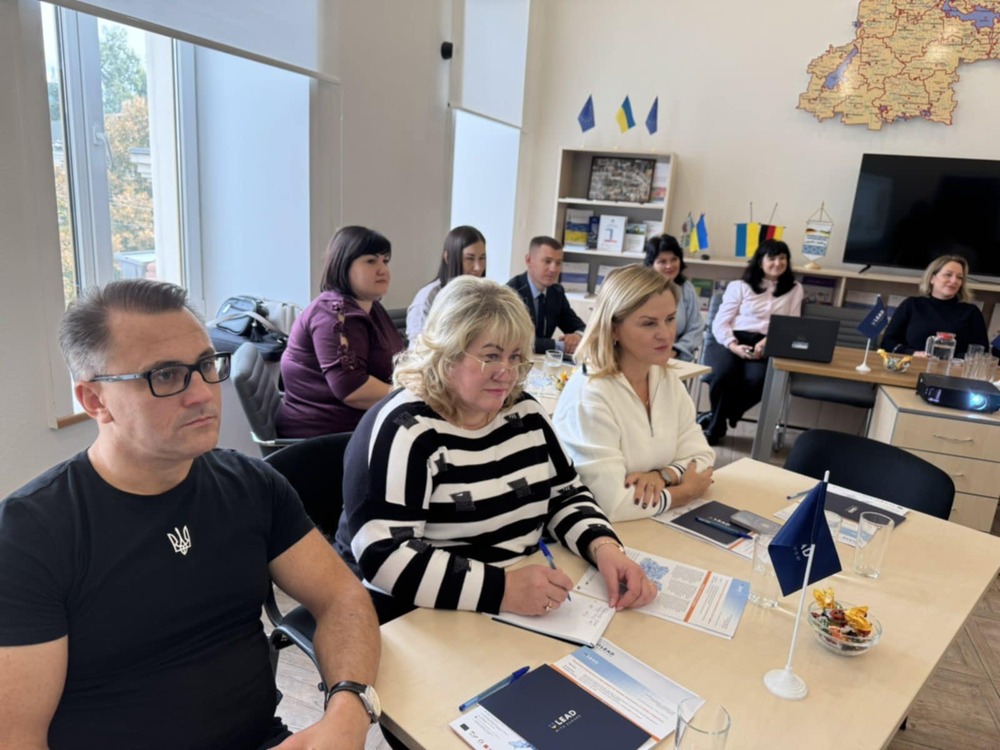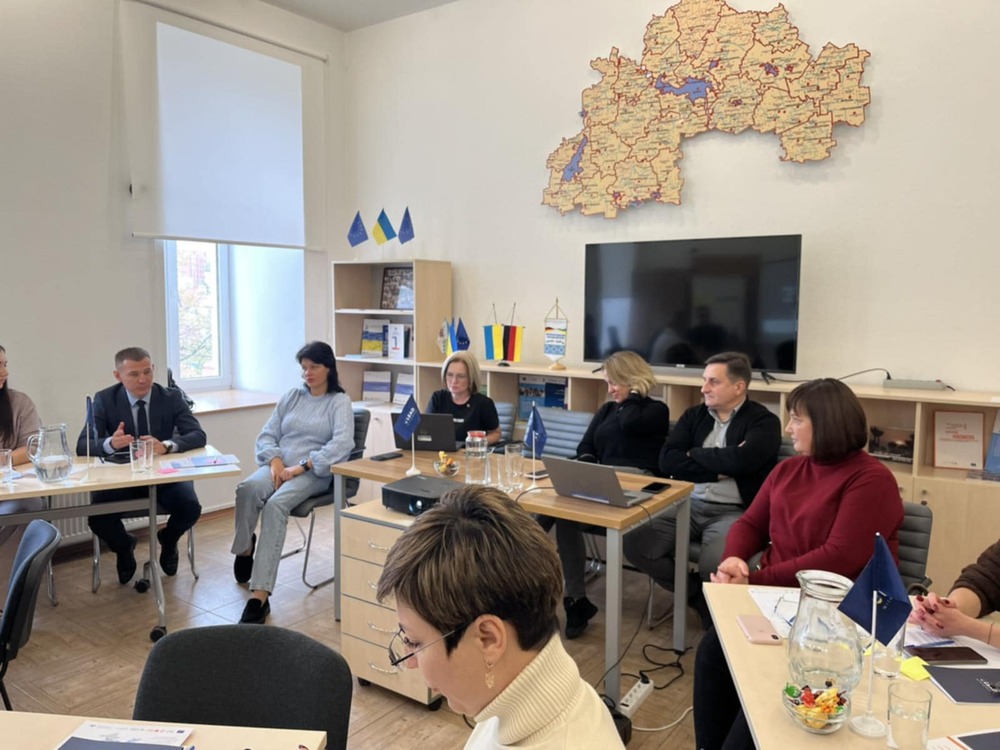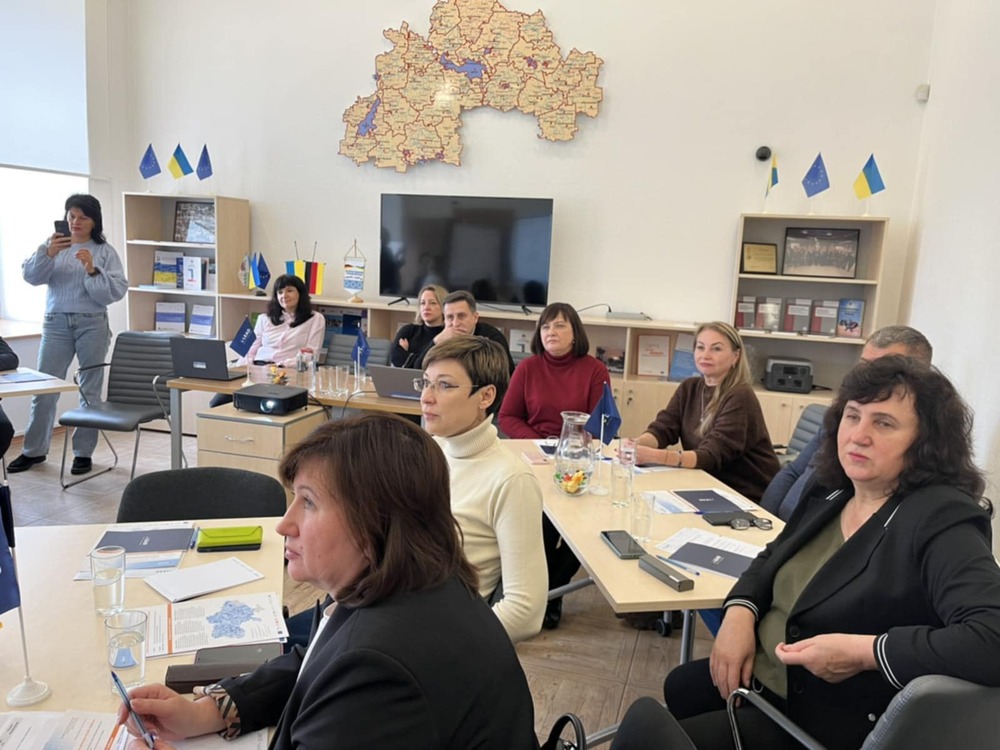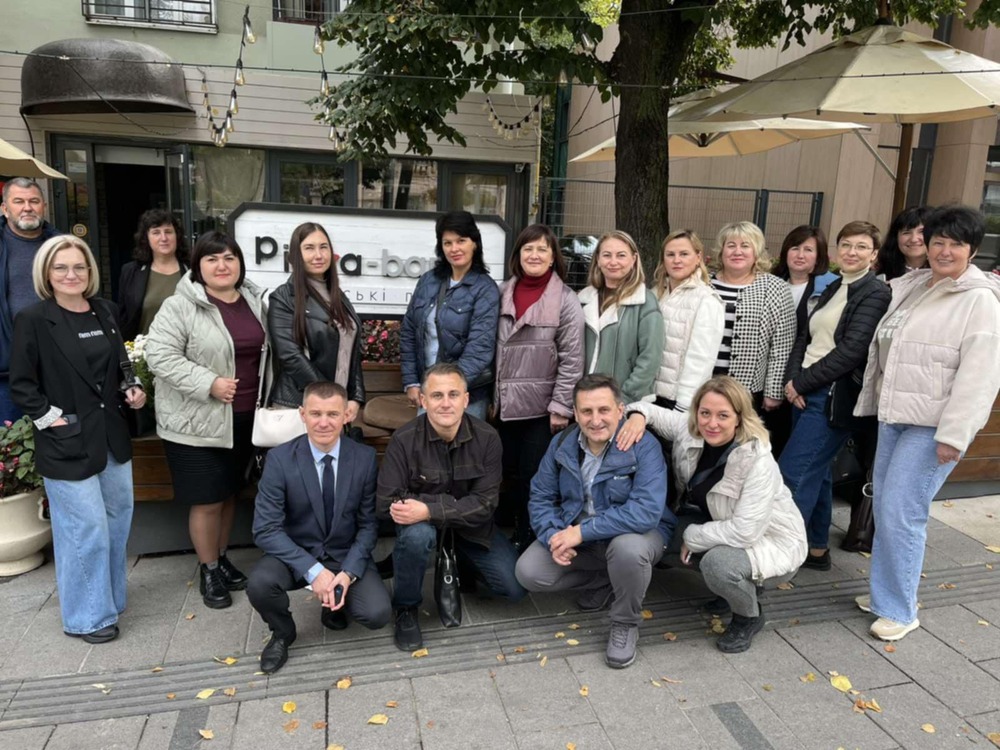




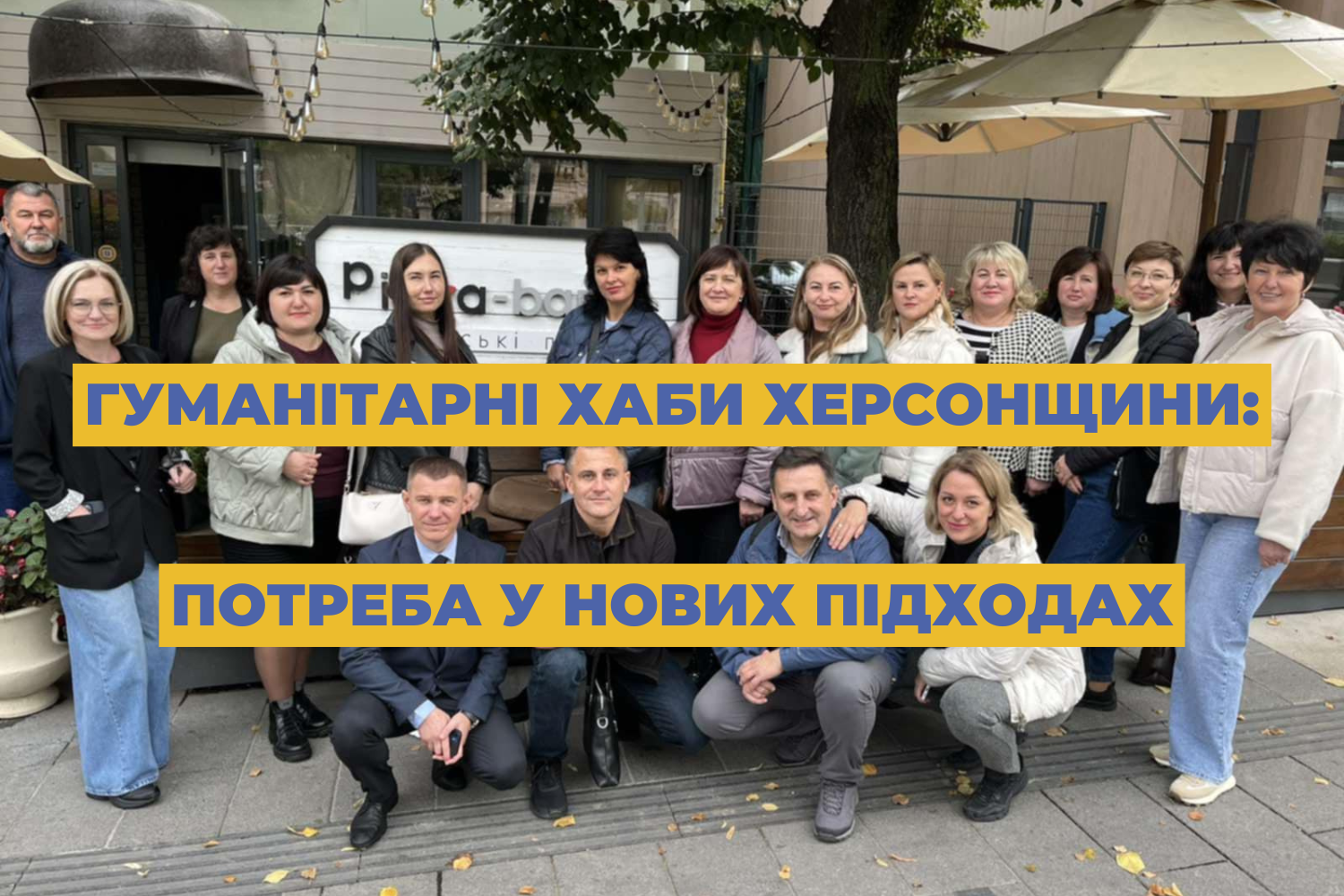
Establishing a Citizen Support Centre (humanitarian hub) for a relocated municipality was the focus of a visit organised by U-LEAD for municipal officials of the Donetsk, Luhansk and Kherson Oblasts to the Dnipropetrovsk Oblast. The visit included studying support centres in Dnipro, Samar and Kamianske, where humanitarian hubs for relocated municipalities are successfully operating, and underlined the importance and effectiveness of these institutions for supporting IDPs, their adaptation and socialisation.
Goals and objectives of humanitarian hubs
The purpose of the visit was to introduce representatives of relocated municipalities to the best practices in managing humanitarian hubs. The main objective of the hubs is to ensure access to legal, social, psychological and medical services, as well as to create conditions for the adaptation of IDPs.
Oksana Siliukova, Head of the Regional Office of U-LEAD with Europe in the Kherson Oblast, emphasised that support for the population is critically important in an uncertain military situation.
“Citizen Support Centres are not just a place to receive assistance but an opportunity to preserve their identity and ensure adaptation for people who find themselves in a new environment.”
She added that today’s biggest challenges are the gradual reductions in humanitarian aid, which requires finding new sources of funding and support, the physical impossibility for many citizens to return home and the difficulties in integrating in a new place.
Diversity of approaches to running the hubs
Analysing the visit, Viktoriia Kopchak, Adviser on Decentralisation and Local Self-Government of the Regional Office, noted the diversity of approaches to running the hubs.
According to her, each oblast that participated in the visit presented unique models of humanitarian hubs. For example, the Donetsk Oblast mostly focuses support on specific municipalities, while the Kherson Oblast brings together several municipalities in one hub. Kherson hubs in the cities of Dnipro and Kryvyi Rih cover the municipalities of Myrne, Prysyvash, Velyka Lepetykha, Hola Prystan and others to provide resources and ensure uninterrupted operation.
“Kherson hubs are unique, since each one is created as a partnership among several municipalities that seek to support their residents in a new environment. This is a model of adaptability and cooperation that other regions can learn from,” she emphasised.
Specific needs of the Kherson Oblast: challenges in financing and organising work
Among the problems discussed during the visit, the issues of financing and legal support for the hubs received special spotlight.
According to Oksana Siliukova, this event was useful for representatives of the Kherson Oblast, although it revealed differences in approaches that require adaptation. Unlike the municipalities of the Donetsk and Luhansk Oblasts, where relocated authorities have resources to support the hubs, the Kherson municipalities, reformatted into military administrations, face greater challenges:
“Having seen the operation of the hubs of the Donetsk and Luhansk Oblasts, we realised that their practices are not fully suitable for our region. These municipalities have financial capabilities and resources to support their hubs through relocated local authorities. The Kherson Oblast’s case is different as our municipalities have been reformatted into military administrations, have no funding or property of their own, and our residents have scattered throughout the country.”
What do Kherson humanitarian hubs need? Oksana Siliukova stressed that the Kherson Oblast needed to develop a new approach to organising hubs and, together with international partners, look for new, effective solutions:
“What the Kherson Oblast needs is not just to adapt existing experience, but also to build its own model that can effectively respond to the challenges and needs of our region.”
Experience of military administrations of the Kherson Oblast
After the visit, the heads of the regional military administrations who participated in the experience exchange visit seconded the need to adapt existing practices of other oblasts and form their own models of humanitarian hubs.
Valentyna Holovata, Head of the Myrne Military Administration, extended her gratitude for the opportunity to adopt the experience of other regions, noting, however, that it was not always suitable for the Kherson Oblast:
“The hubs of the Donetsk and Luhansk Oblasts serve compactly located residents of their municipalities, while our people are scattered throughout the country. However, seeing examples of the successful work of hubs of, say, the Mariupol and Popasna municipalities, we plan to use some of their experiences in our initiatives.”
Yevheniia Hliebova, Head of the Novomykolaivka Military Administration, highlighted the importance of discussing different formats of humanitarian hubs:
“It was a useful visit. The organisation of humanitarian hubs is something that military administrations of the Kherson Oblast need to talk about; we should study other regions’ formats and develop our own, as well as seek a legal framework for this”.
Support and adaptation to regional needs
Viktoriia Kopchak focused on the need to support military administrations in finding new approaches to organising humanitarian hubs:
“Municipalities of the Kherson Oblast have an urgent need for assistance and mentorship in order to build a support system for residents of temporarily occupied municipalities of the Kherson Oblast that will be effective in a situation where resources are limited and the population is scattered across the country.”
She also voiced recommendations on running humanitarian hubs for military administrations of the Kherson Oblast:
- Create a single channel for hub specialists to communicate and exchange best practices among regions.
- Introduce project management to facilitate the creation of NGOs in hubs and implement training in order to attract donor funds.
- Expand opportunities for cooperation with businesses and public associations to strengthen the range of services provided in hubs.
“The visit encouraged further improvement of the work of humanitarian centres. The example of municipalities of the Kherson Oblast shows how, through joint efforts, a reliable network of centres can be built to become “pockets of identity” for IDPs and contribute to their adaptation,” said Ms Kopchak.