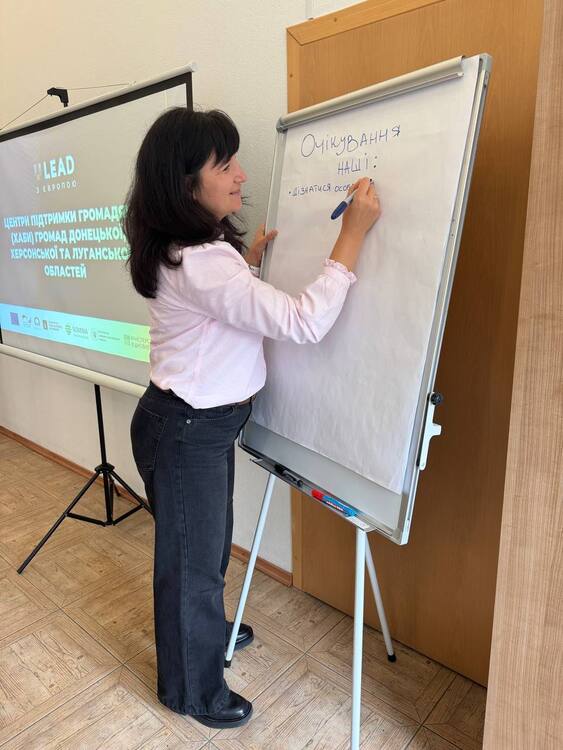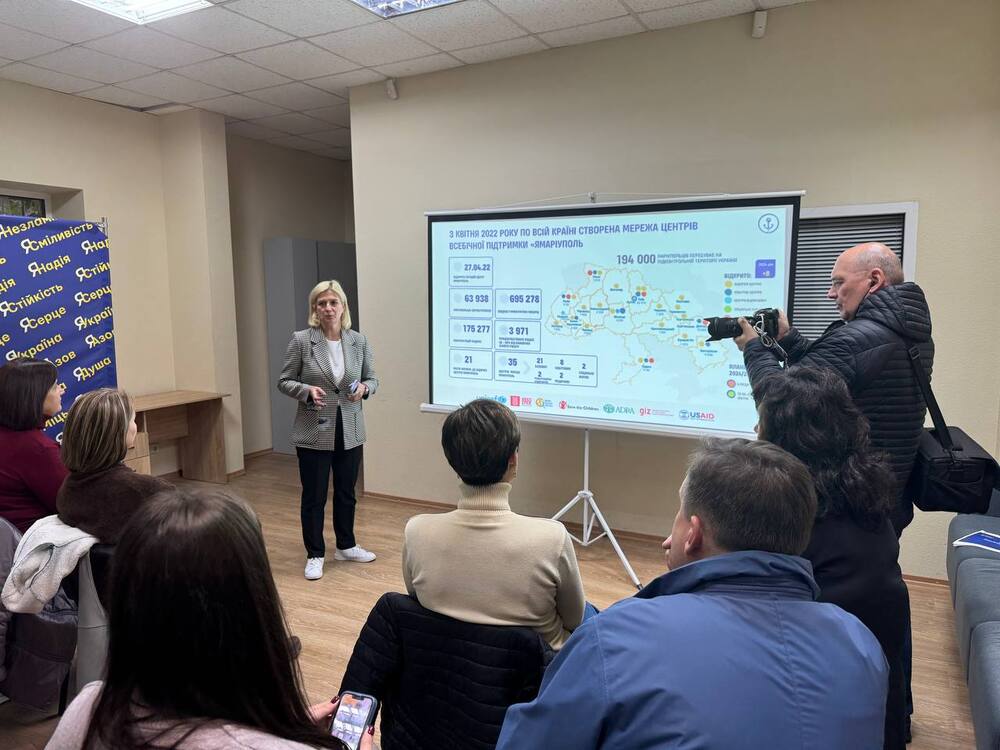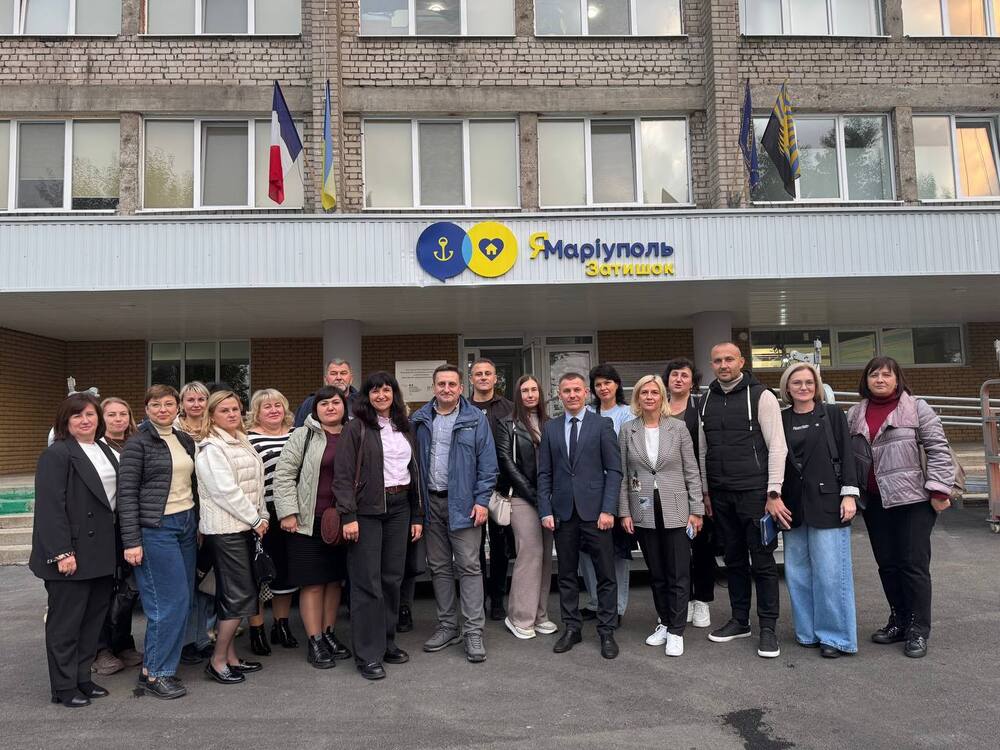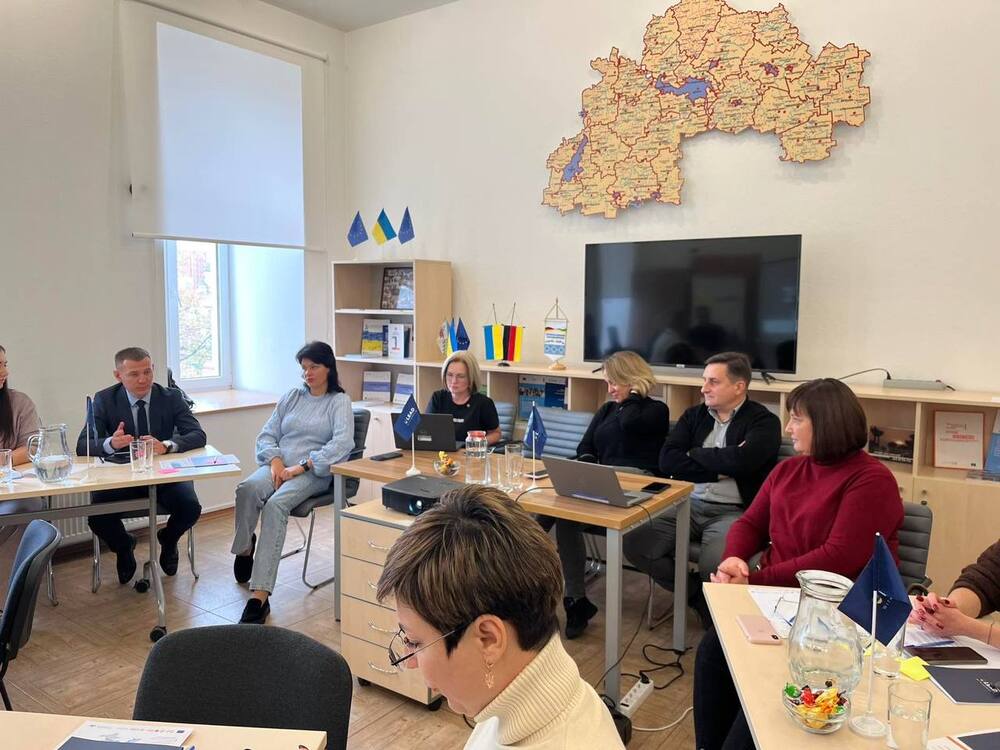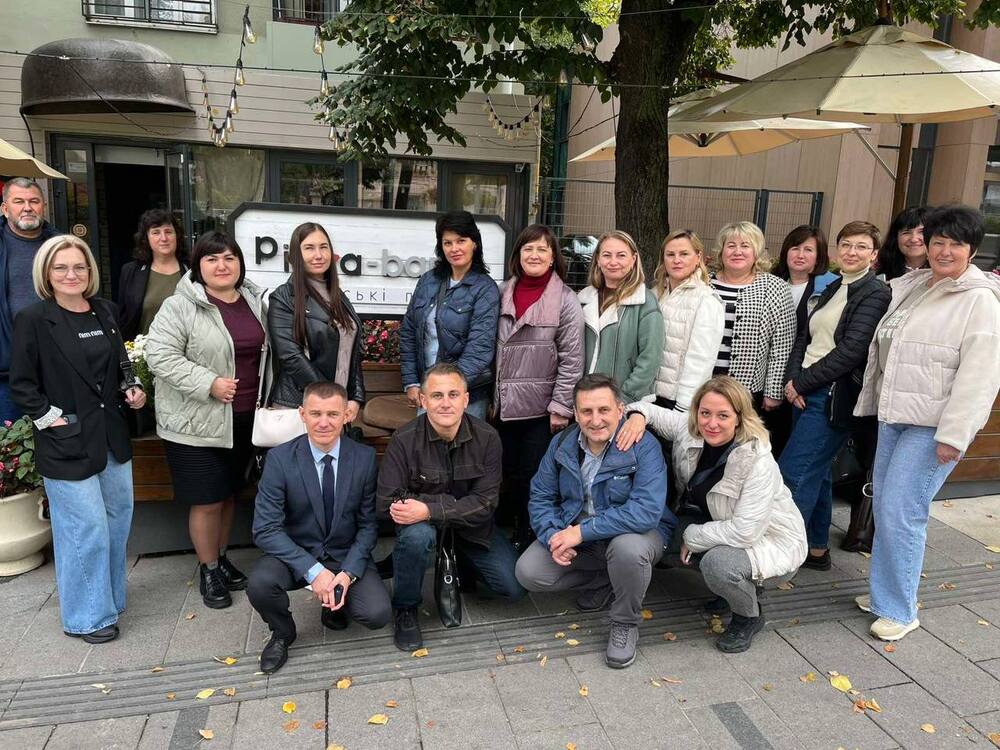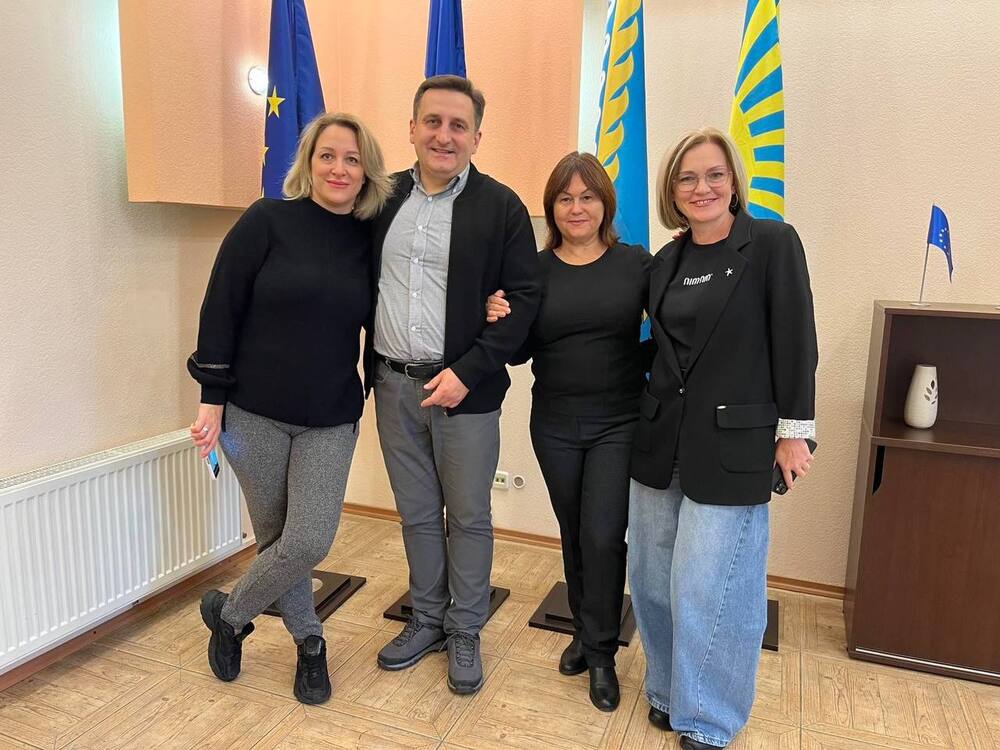




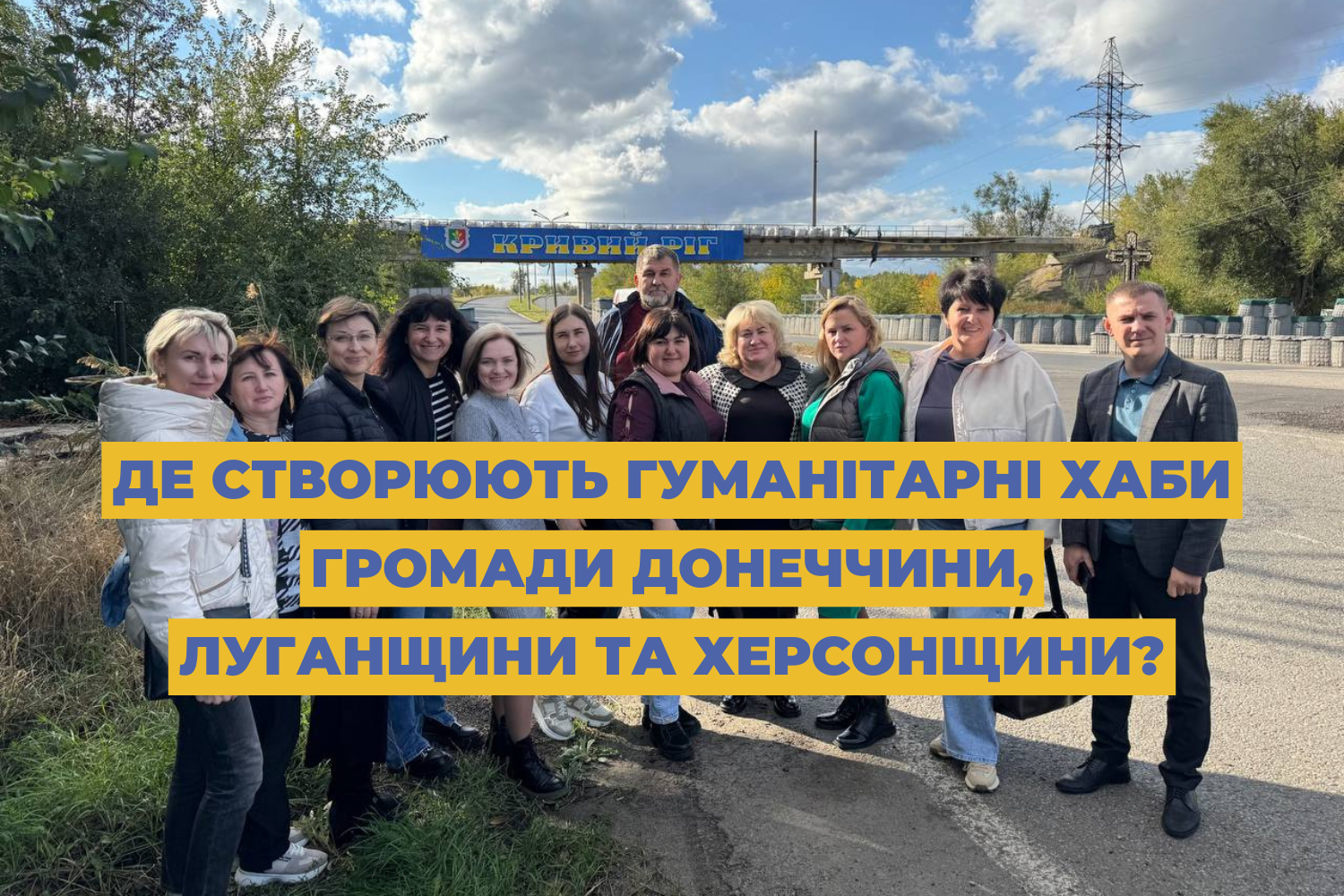
U-LEAD organised a study visit for the officials representing the municipalities of the Donetsk, Luhansk and Kherson Oblasts to introduce them to Citizen Support Centres operating in the Dnipropetrovsk Oblast.
Victoriia Kopchak, Adviser on Local Self-Government at the Regional Office of U-LEAD in the Kherson Oblast, stated:
“So far, the topic of humanitarian hubs is yet to be sufficiently explored. Seeing the demand among municipalities to study this issue, we decided to organise this visit and help them explore certain aspects of the creation and functioning of humanitarian hubs. Our team worked out the concept of this visit that would offer a comprehensive perspective on the operation of the hubs. We started by studying the activities of hubs in the Dnipropetrovsk Oblast, but later we will plan trips to other oblasts where local self-government bodies have relocated. The long-term objective here is to find out all the practical aspects of the operation of citizen support centres or hubs and further develop certain guidelines for their improvement.”
The first day of the visit began with a trip to the Regional Office of U-LEAD in the Donetsk Oblast, which is headquartered in Dnipro. The team explained the basics regarding the relocated municipalities. According to Victoriia Trotsenko, Head of this Office, the Dnipropetrovsk Oblast is a leader in the number of humanitarian hubs created by relocated municipalities in Ukraine. Kyiv and the Kyiv Oblast rank second, while the number of humanitarian hubs in other oblasts is much smaller.
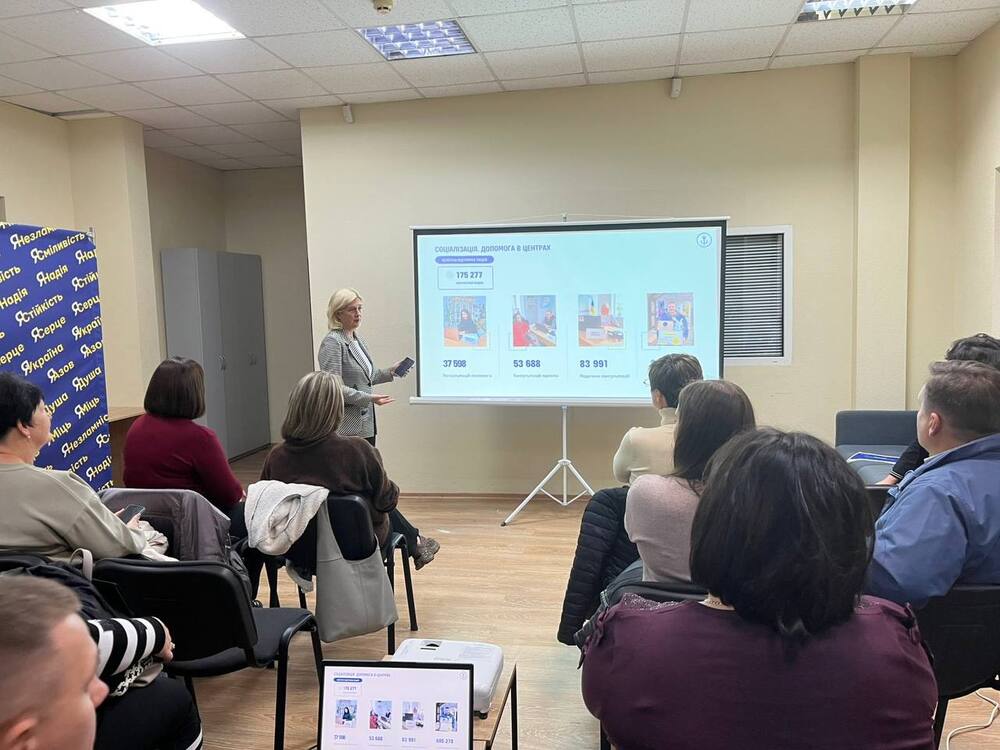
Olena Tertyshna, Head of the Regional Office in the Dnipropetrovsk Oblast, presented statistics on the number of IDPs in the municipalities of the Dnipropetrovsk Oblast and talked about cooperation between hosting and relocated local self-government bodies. U-LEAD expert Vadym Gaiev shared his experiences and some results from the research on humanitarian hubs.
The municipal officials first visited the “Soledar: The Way Home” Support Centre. Svitlana Loshchakova, Deputy Head of the Soledar City Military Administration, told the visitors about the prerequisites for the creation of the centre and certain organisational and legal difficulties and explained the functioning of the hub in the current conditions:
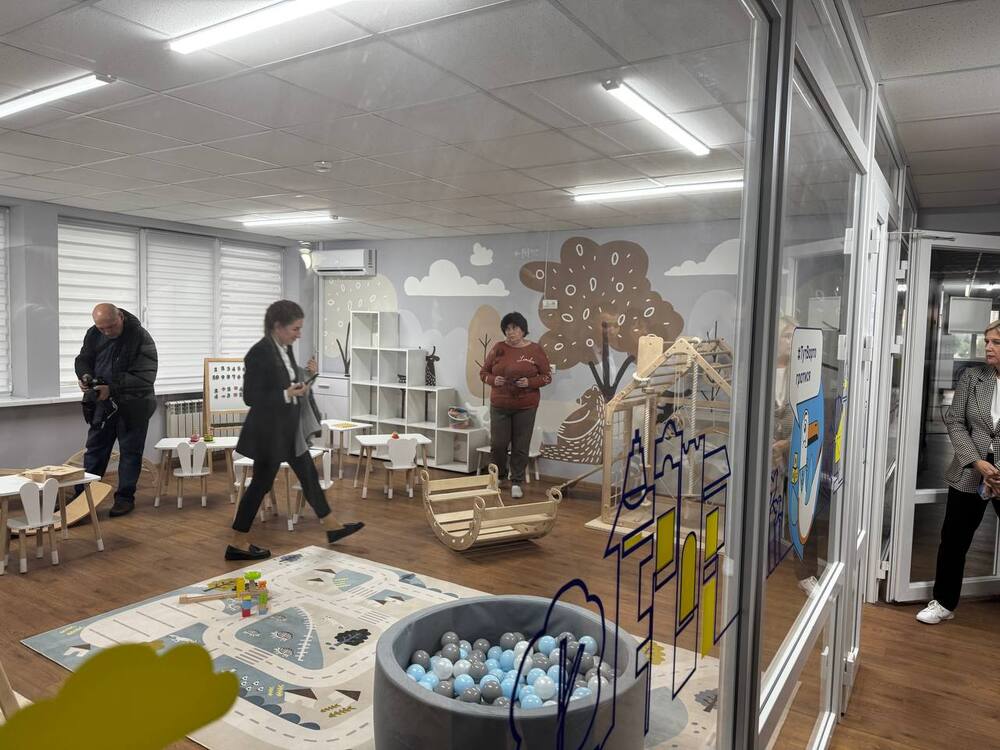
“We set up an educational space and the Administrative Services Centre and provide social protection services in the Soledar Citizen Support Centre in Dnipro. The educational space itself also hosts an inclusive resource centre where children receive consultations from a psychologist, speech therapist and other practitioners. We focus on finding partners and grant activities, so in 2023 we managed to set up a sensory room in the centre.”
She also talked about the mechanisms of seeking humanitarian aid and the process of its distribution. According to Svitlana Loshchakova, their municipality has humanitarian hubs in other regions as well, in particular in Kyiv, Cherkasy and Kryvyi Rih:
“We created the first hub in Dnipro, since the largest number of our residents live there, as we found out by conducting a survey. We studied the basic needs and created a hub in Dnipro.”
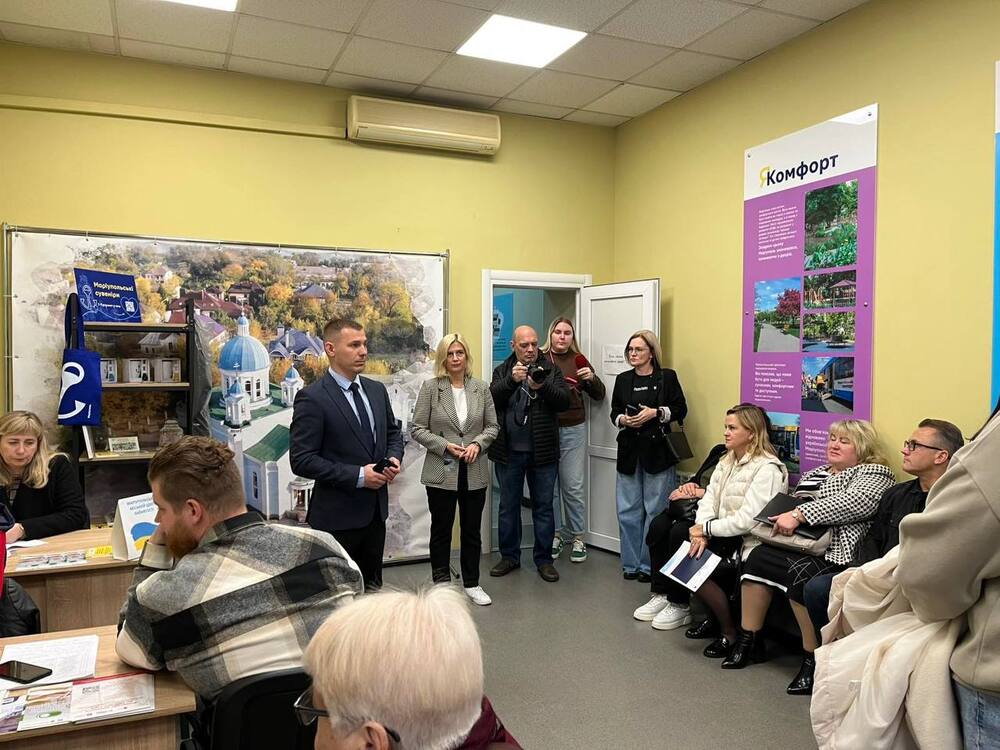
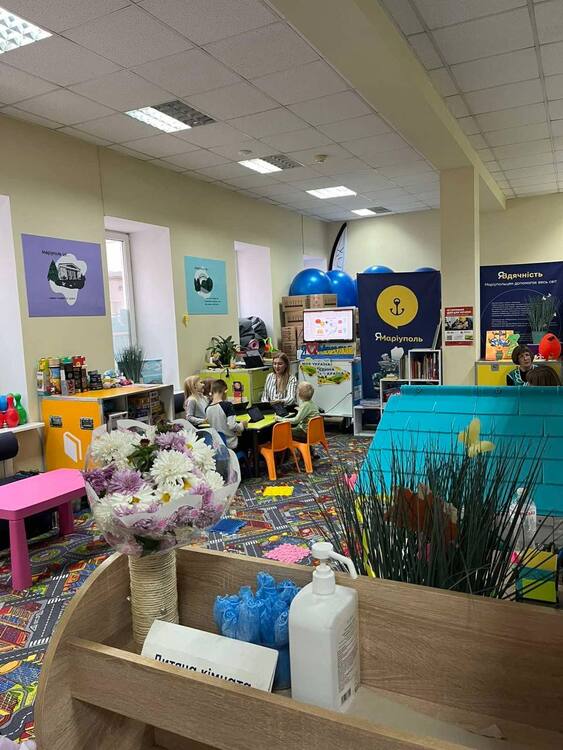
The second hub visited by the delegation of municipal officials of the Donetsk, Kherson and Luhansk Oblasts was the “I – Mariupol” Centre. 35 of these Centres have already been created across Ukraine. They specialise in certain directions such as healthcare or social services or are multifunctional.
“The Dnipro-based ‘I – Mariupol’ Centre offers a wide range of services to its guests, including administrative, social and household services and humanitarian assistance. The Centre has a social laundry and a dentist’s office and hosts other practitioners. All these services are provided either for a minimal fee or free of charge. The Centre also has a co-working space and other amenities. Perhaps the most impressive is the local social dormitory where the people from Mariupol can live,” said Oleksandr Haliavynskyi, Head of the Centre.
This is a modern renovated facility equipped with everything necessary to accommodate people who settle there according to a specially developed rating, which includes a number of criteria.
The visitors also studied the experience of supporting relocated businesses. Among the examples is Lysychansk Engineering and Construction Company, a relocated business creating social infrastructure for IDPs and cooperating with local authorities, including the Popasna City Military Administration.
In the “Selydove, UA” Support Centre, the participants of the visit studied the experience of the municipality of Selydove in arranging educational, cultural and sports services. They were able to see the Social Services Centre, a local library, a gym and other institutions at work. Employees of municipal facilities of the Selydove municipality work with children and young people. Inna Tereshchenko, deputy head of this municipality, stated:
“These events are important because we can talk about our experience and study the experience of our colleagues from other municipalities in running humanitarian hubs. We all have different capabilities for creating hubs and arranging them, but it is important to establish them for residents who live in other regions. We are grateful for the help from charities, that allows us to provide some support to our residents. I am impressed with the good practices presented by other municipalities, such as those regarding the format of cooperation between local self-government bodies, public communication or attracting additional resources for their development.”
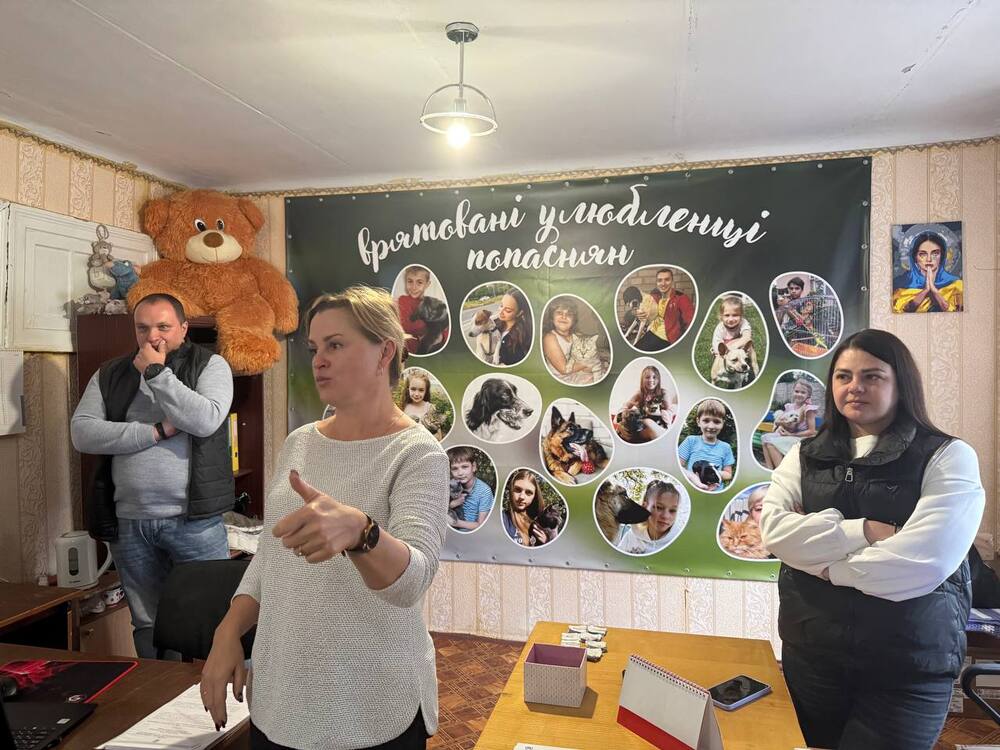
The Popasna Military Administration created its humanitarian hub in the city of Novomoskovsk. Senior officials and employees of Popasna and Novomoskovsk municipalities are committed to the integration of IDPs with local residents. The hub provides social, administrative and other services.
“This visit was very pertinent to all its participants. On the one hand, we have experience in creating humanitarian hubs, but it was also very useful to hear out our colleagues and learn about their achievements. The practical dimension of events like this is crucial, since rather than studying theory, we went to hubs and talked with municipal officials. We have similar challenges and difficulties, so we discussed them together and worked out certain steps to come up with optimal solutions,” Mykola Khanatov, Head of the Popasna City Military Administration, shared his impressions of the visit.
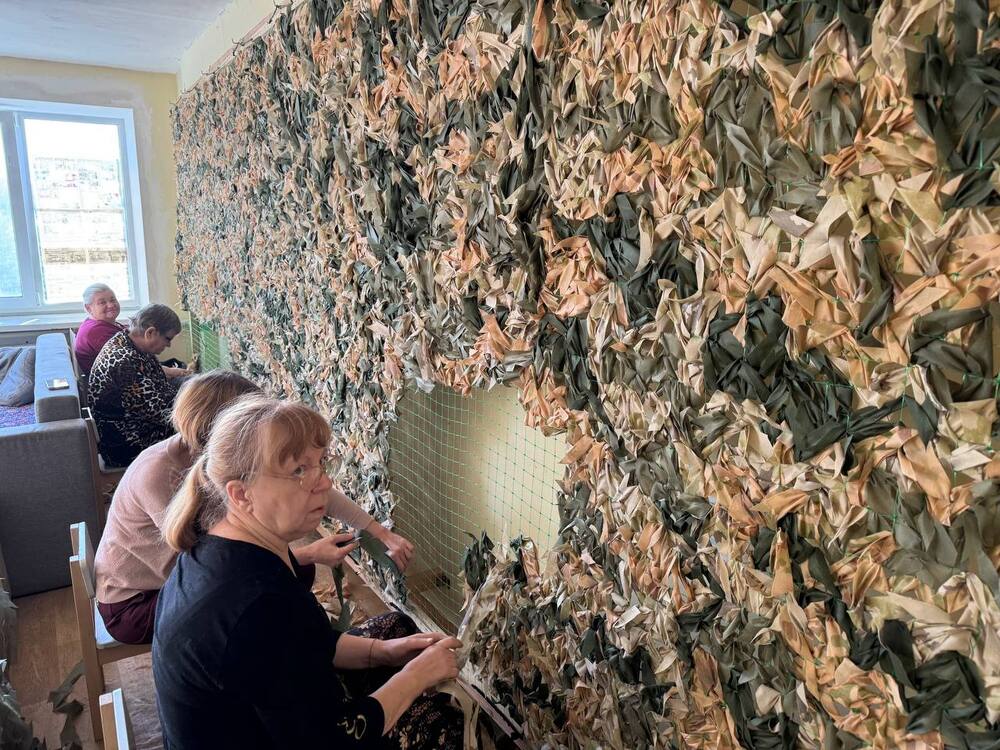
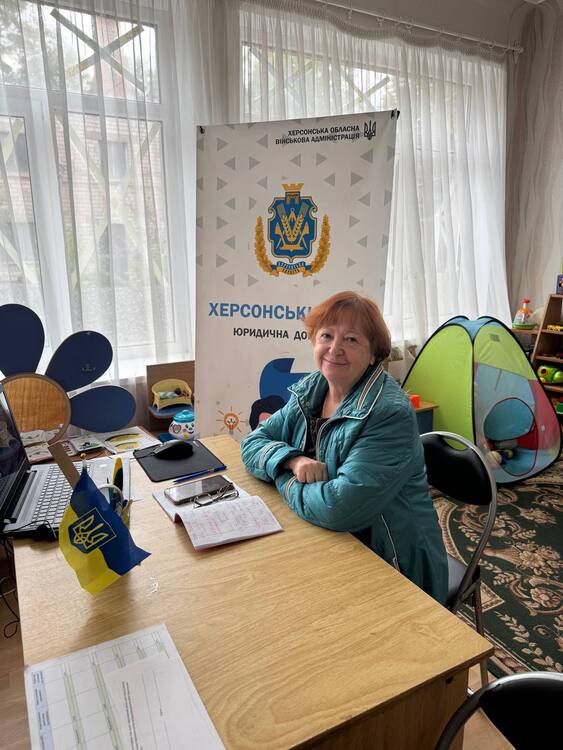
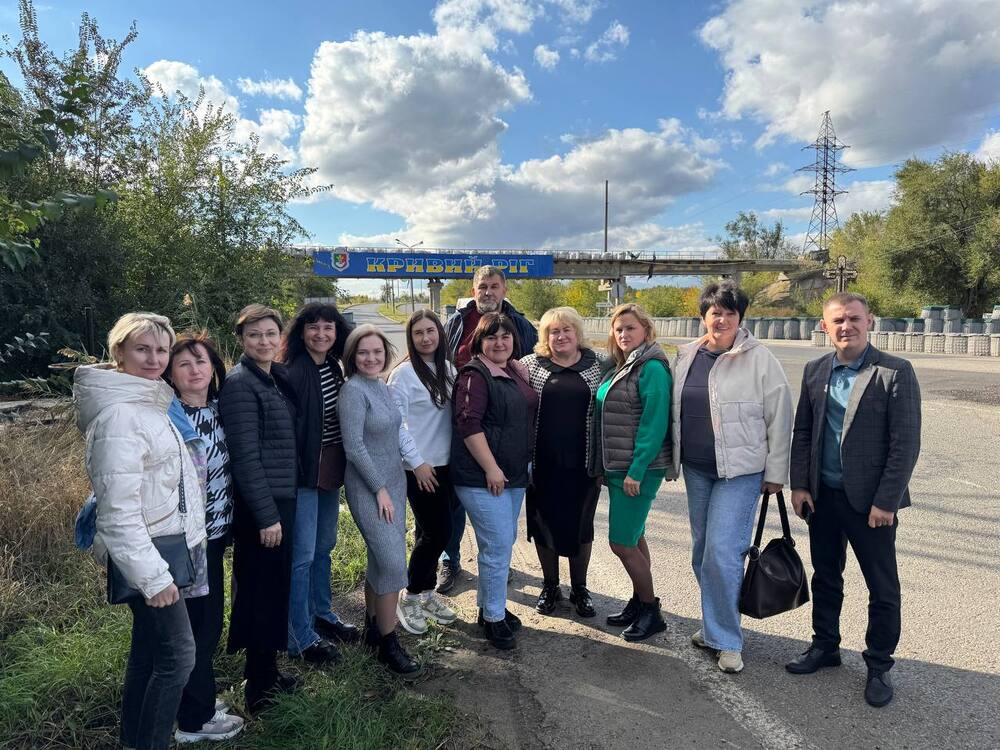
The participants also visited Kryvyi Rih, where they inspected the humanitarian hub of the Kherson Oblast, which operates for evacuees from the Hola Prystan, Khrestivka, Ivanivka and Chaplynka municipalities.
This hub is run differently from the others. Unlike those created by individual municipalities, the humanitarian hub of the Kherson Oblast is an umbrella hub covering several municipalities. Conditions are created here to provide various services for citizens and establish public communication.
Summarising the results of the visit, Valentyna Holovata, Head of the Myrne Military Administration noted: “The hubs of the Donetsk and Luhansk Oblasts serve compactly located residents of their municipalities, while our people are scattered throughout the country. However, seeing examples of the successful work of hubs of, say, the Mariupol and Popasna municipalities, we plan to use some of their experiences in our initiatives.”
“All hubs are different, both in scale and capabilities, as their creation and operation are directly tied to the financial component. It is vital that all of them fully provide their residents with the necessary services and help them with everything they need. People are aware of these hubs and often visit them because they know that they will be supported there. Despite how difficult it is for municipalities to create hubs and certain legal hurdles, they overcome all challenges and achieve their goal,” said Victoriia Trotsenko.