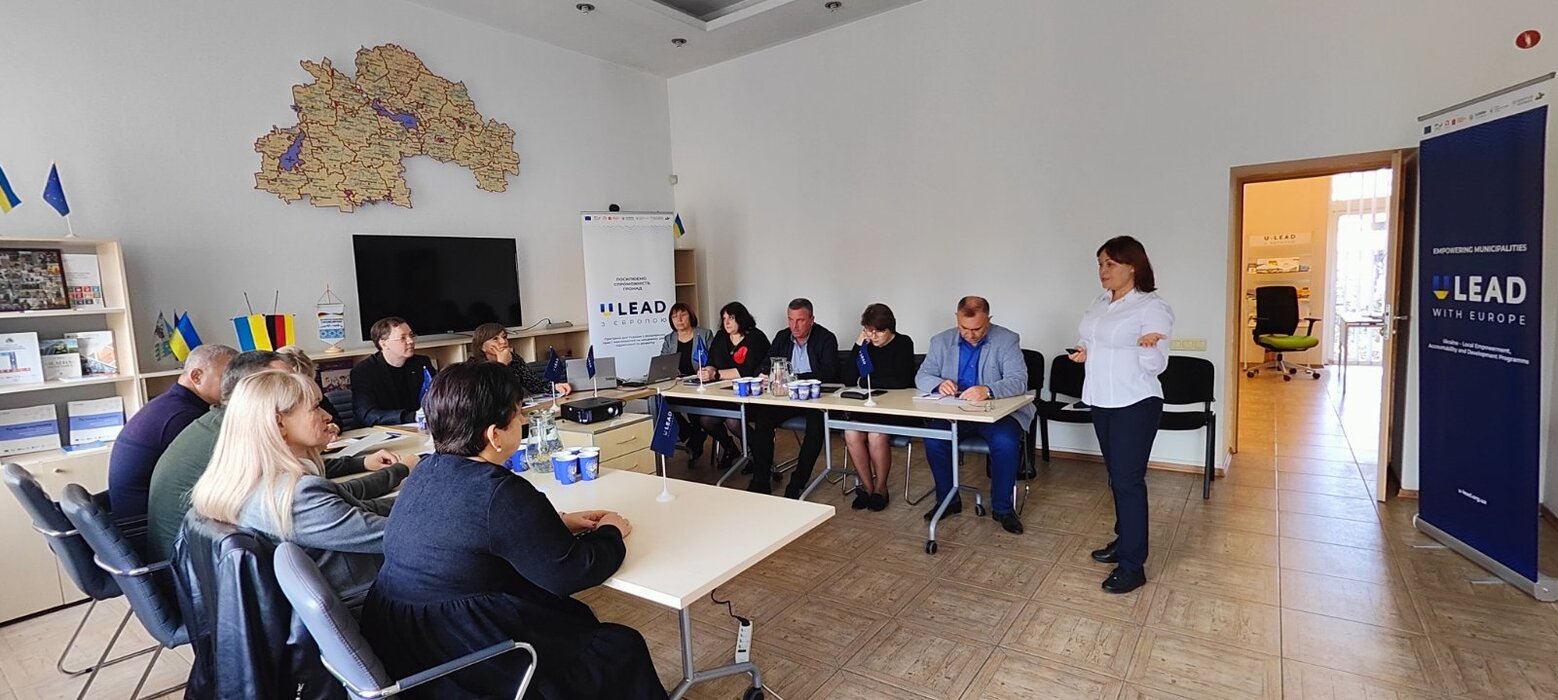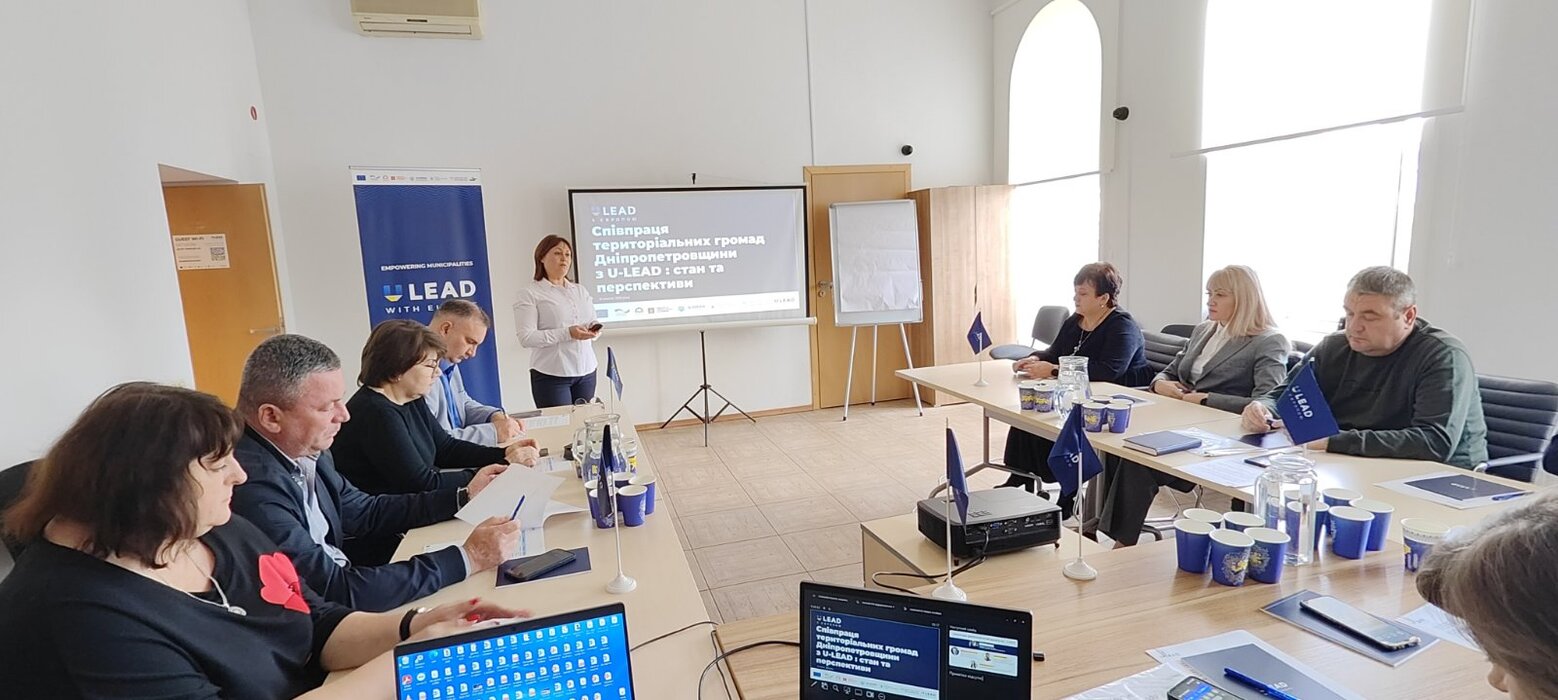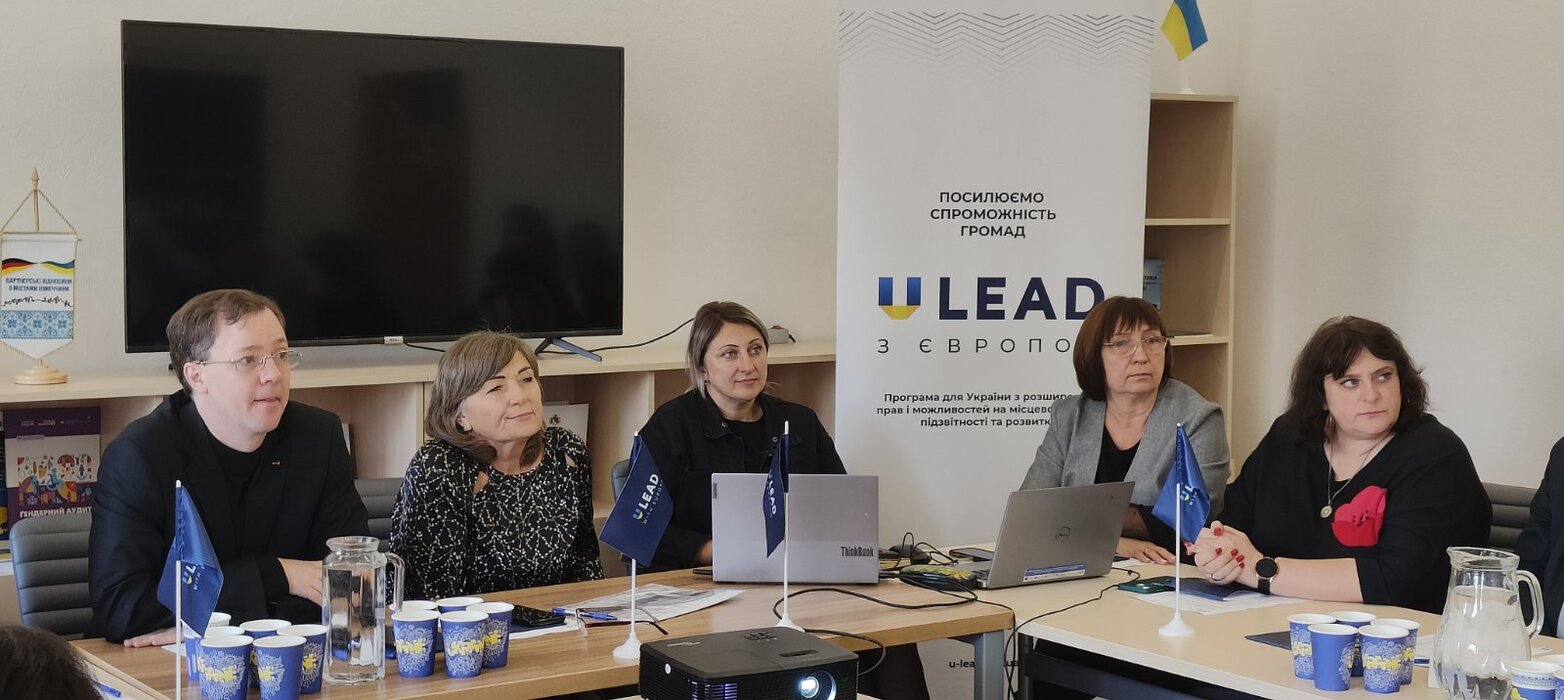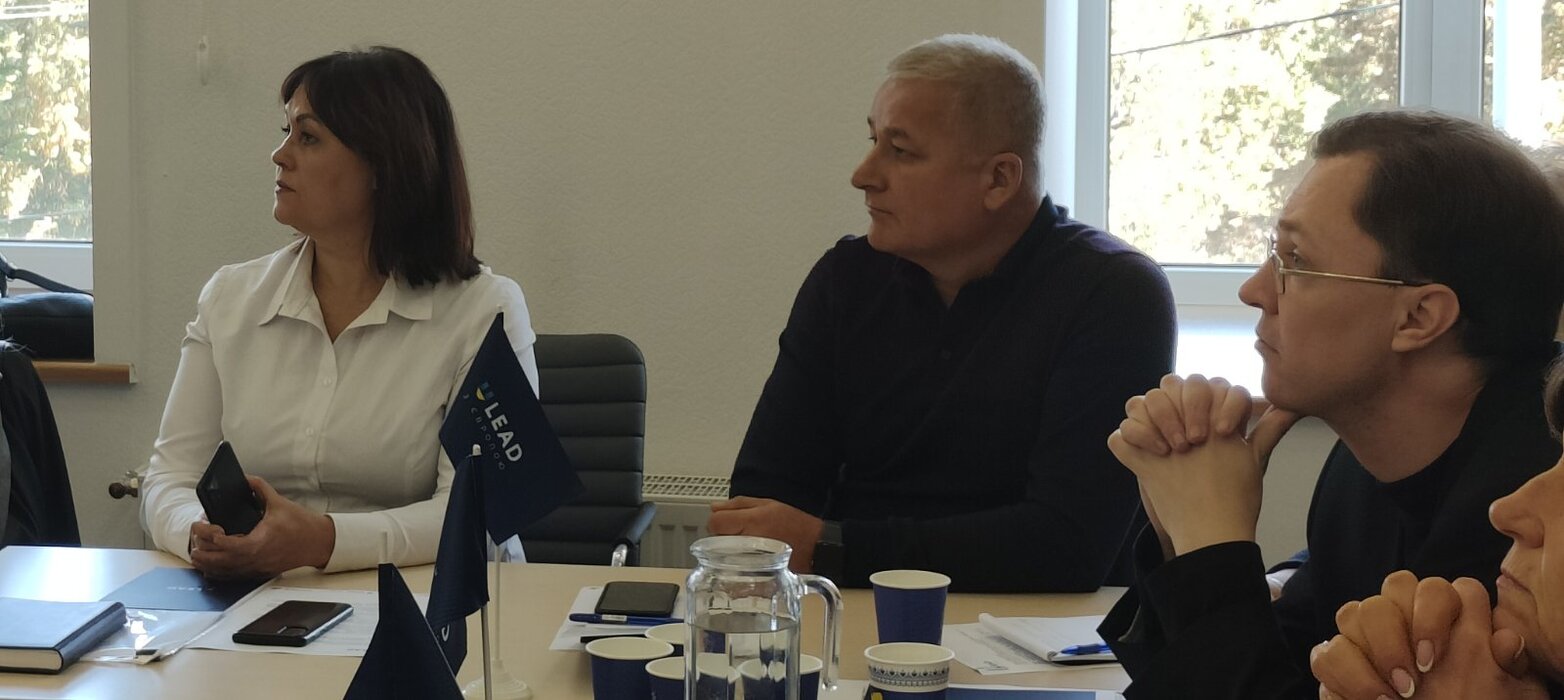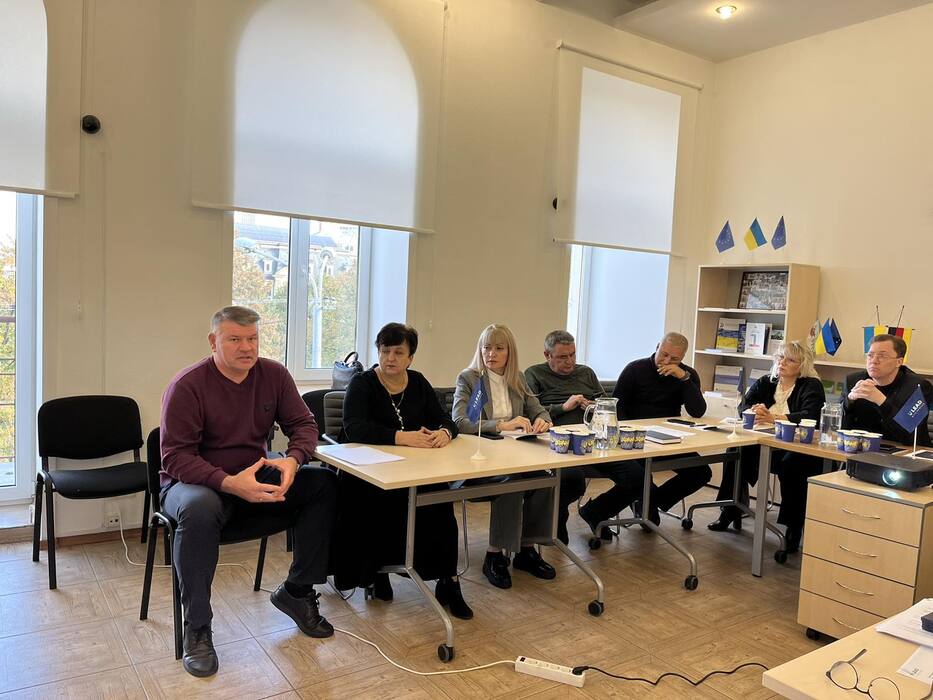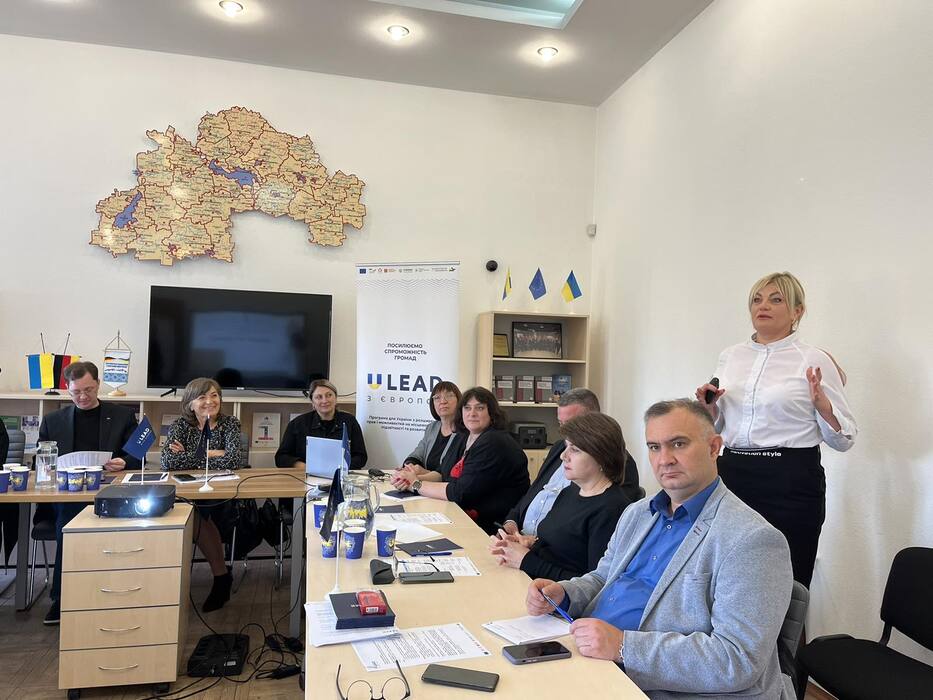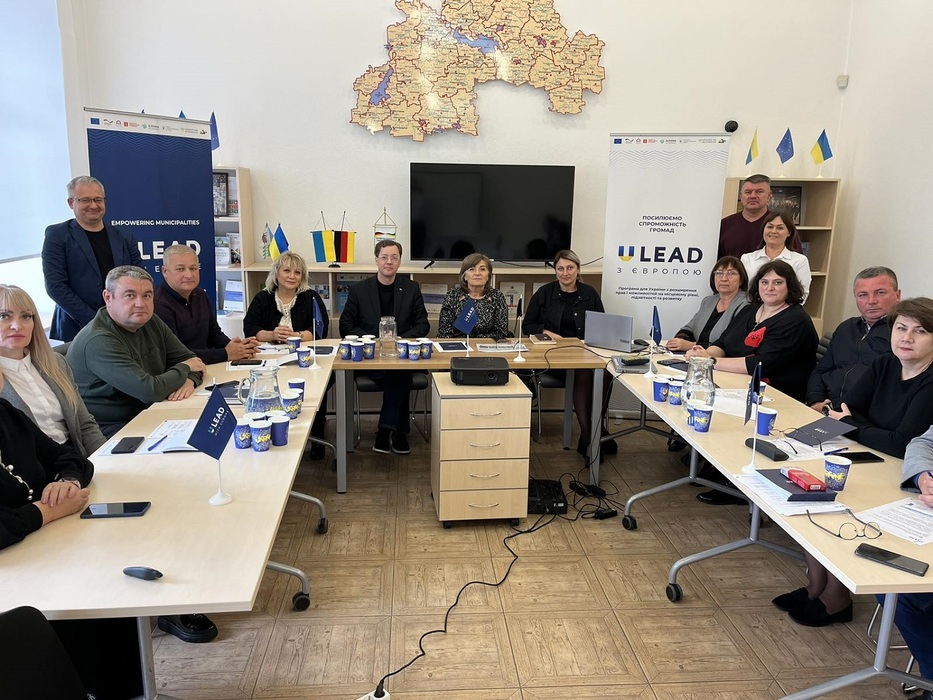




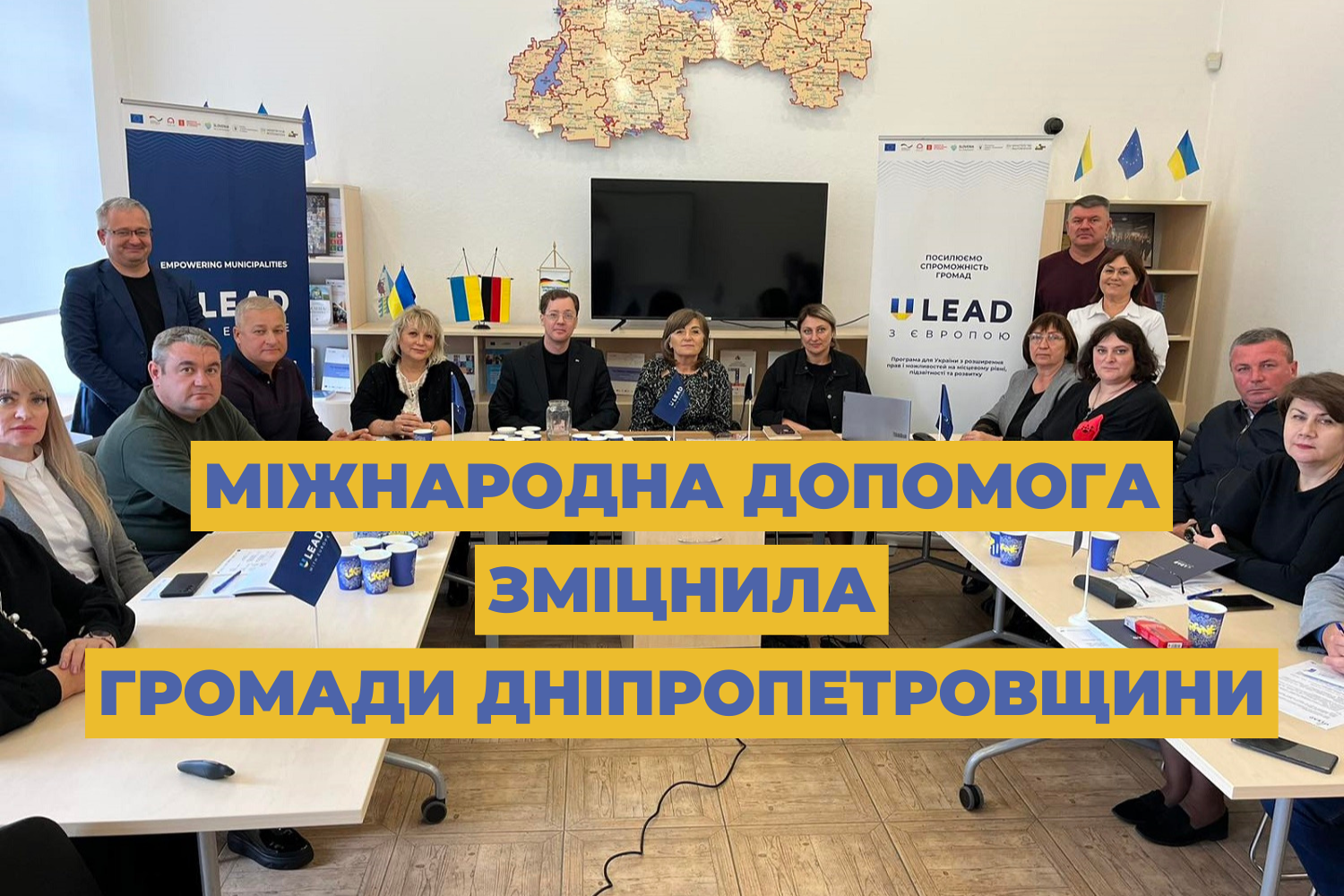
Olena Tertyshna, Head of the Dnipro Regional Office of the U-LEAD with Europe Programme, stated that 32 municipalities of the oblast benefited substantially from U-LEAD support over the period of 2022-2023. This support included shelter, mobility and restoration packages. Another 10 municipalities have been assisted in 2024 to increase the resilience of local self-government bodies in response to crises caused by martial law:
“This assistance has significantly enhanced the capacities of municipalities and their ability to address challenges.”
In the course of the event, municipalities actively shared their experience of using international technical assistance. For example, Yevhen Fisak, head of the Velykomykhailivka village council, shared the experience of his municipality in implementing ITA from U-LEAD and emphasized the multifunctionality of the assistance received:
"The vans provided have significantly enhanced the mobility within the municipality, while powerful generators ensure the stable functioning of critical infrastructure facilities, as well as construction tools became the main resource for the restoration units renovating the facilities damaged by enemy shelling. Not only does U-LEAD respond promptly to the needs of municipalities, but it also helps them to be prepared for future challenges.”
Sharing their experience, Klavdiya Monakh, head of Mezhyrich rural municipality, emphasized that ITA is not only a significant support for restoration opportunities in affected municipalities like theirs, but a direct response of the international partners to the needs of the municipality and necessary resources to restore the destroyed infrastructure.
The head of Verbky village council, Vitaliy Kryvosheya, also took part in the discussion. In his opinion, there are two essential components of this work to make this a common case: the receipt of ITA as the necessary reconstruction equipment and resources, and the joint efforts to restore the facilities destroyed by the enemy.
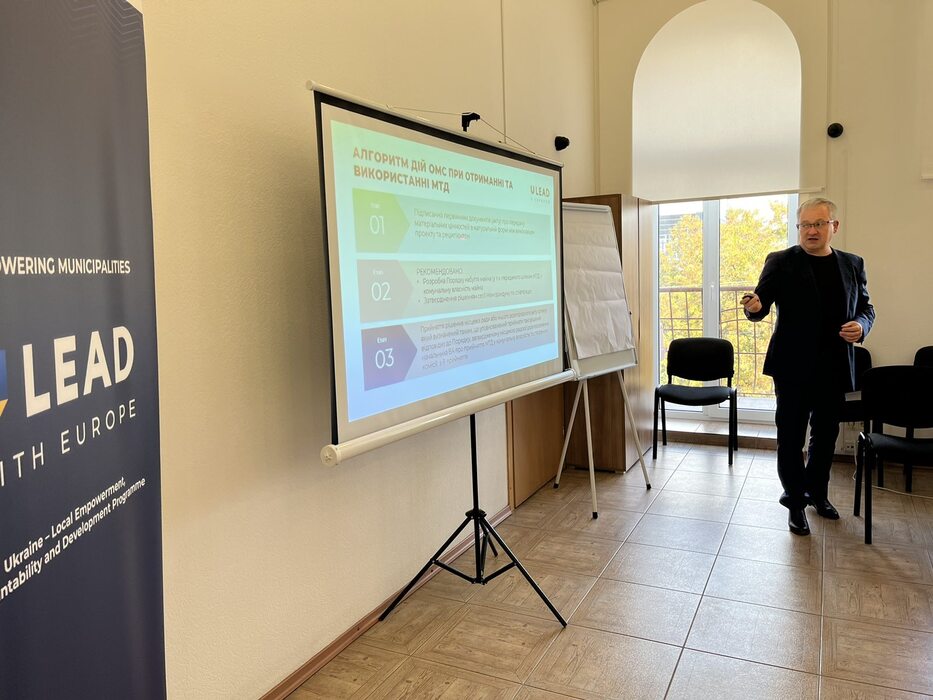
Vyacheslav Nevinchanyi, Municipal Services and Restoration Advisor of the Regional Office, summarized the results of the discussion, emphasizing the importance of joint work of municipalities to address challenges in the implementation of ITA projects. He proposed to analyse the ITA implementation algorithm and highlighted the most challenging stages for municipalities, and in cooperation with the heads of local self-government bodies, they developed proposals to more effectively overcome problematic ways of implementing such projects to ensure their sustainability.
All participants concluded that their cooperation with the U-LEAD Programme and the implementation of ITA projects contribute to increasing municipal resilience and developing sustainable functional areas of reconstruction and recovery.